
The 1000 Miglia is the rare event that justifies a route no guidebook would propose. It links Brescia to Rome and back along roads chosen for their beauty rather than their convenience, and in doing so it gives an Italian journey a spine: a sequence of towns and landscapes with no other reason to be visited in order, suddenly connected by a single moving line. Deciding where to watch the Mille Miglia in 2026 is, in the end, less a question of logistics than of choosing which stretch of Italy to be standing in when the cars come through. For the traveler who builds a trip around it, the race becomes less a spectacle than a pretext, a way of seeing the country sideways and at its own pace.
The event carries its history lightly. First run in 1927 as a genuine speed race between Brescia and Rome, and revived since 1977 as a regularity re-enactment open only to models that raced between 1927 and 1957, it is the contest Enzo Ferrari called the most beautiful race in the world. That phrase has outlived the speed era it described, and it still fits, because the appeal now lies less in the contest than in the country the cars cross.
Early June, when the modern race runs, is among the best windows for this part of the country. The hills of Tuscany and Umbria are still green before the summer drought, the Apennine passes are open and cool, the northern lakes are luminous, and the heat and crowds of July and August are still to come. The light is long, and the roadsides are uncrowded. It is a season that rewards slowness, which is precisely what watching the race well requires.
In this article
Mille Miglia 2026 dates, route, and format
In 2026 the historic re-enactment runs from 9 to 13 June, five days, starting and finishing in Brescia. It is the forty-fourth edition, the last before the centenary in 2027. Crews from dozens of nations, in more than four hundred cars, all of them models that raced between 1927 and 1957, set out from the ramp on Viale Venezia in the late morning of 9 June, the first car leaving at around half past eleven. As a rough guide, the convoy reaches each day's lunch town around midday and arrives at the evening stop after dark, with Rome, the turning point, reached on the third day. Exact passage times for each town shift from year to year, so the official 1000 Miglia website is the only reliable source for the current roadbook.
The 2026 course takes the form of a figure-of-eight, close to two thousand kilometers in the shape of the earliest speed editions, crossing its own path near Ferrara on the way home. From Brescia it climbs into the Valle Trompia and the Valle Gobbia to Lumezzane, ground the race has never covered before, then crosses the Passo del Cavallo into the Valle Sabbia, skirts the western shore of Lake Garda, and passes through Palladio's Vicenza to reach Padua at the close of the first day. The second day runs west across Emilia, through Renaissance Ferrara and the Motor Valley at Modena, before climbing the Apennines over the Abetone pass to the Liberty-era spa town of Montecatini Terme.
The third day is the long descent south, from the marble country around Pietrasanta and the Versilia coast through Siena to the volcanic lakes of Bolsena and Vico, and on to Rome, the turning point of the whole route. The return, on the fourth and fifth days, climbs past Assisi and the medieval hill town of Gubbio, threads the Roman gorge of the Gola del Furlo, reaches the Adriatic at Rimini, and comes home along the coast through the salt pans of Cervia and the lagoon town of Comacchio, then Mantua, before the finish back in Brescia.
Where to watch the Mille Miglia along the route
Five places along the route repay the effort, chosen for the quality of the land they cross rather than for fame or convenience. Watching from the open road is free wherever the course runs through public streets; only the Brescia village and a handful of official events are ticketed.
The start in Brescia
The start, in Brescia, is the obvious place and still the best introduction. Brescia is a Roman and Lombard city, with a UNESCO-listed monastic complex and a forum at its heart, and it wears the race lightly, as something it has always done. In the late morning of 9 June the cars leave Viale Venezia one at a time, at short intervals, before a crowd that has gathered since dawn. The sound in the enclosed boulevard, engine after engine, is the reason to come, and arriving by mid-morning secures a place near the line.
The Abetone pass on the Apennine crossing
The Abetone pass, the highest point of the whole course, belongs to a different kind of spectator. As the route climbs toward it on the second day, the cars slow on the hairpins and can be heard laboring uphill long before they appear, against a backdrop of beech forest and open mountain. There are almost no international visitors here, only the trees, the altitude, and the occasional cluster of locals at a bend. A half day on the pass, taking lunch in a stone-roofed village like Fiumalbo on the Emilian slope or Cutigliano on the Tuscan descent, is among the quietest and most beautiful ways to see the race up close.
Siena's Piazza del Campo and Lago di Bolsena
On the third day the convoy pauses for lunch in Siena, in the Piazza del Campo. Few sights in Italy match a field of pre-war cars at rest in that shell-shaped square, the single richest stop on the route, with the Torre del Mangia above and the whole medieval city sloping in toward the center. Those who prefer landscape to crowds will find the opposite later the same afternoon, in the hills above Lago di Bolsena, the largest volcanic lake in Europe, which the cars cross on the way to Rome: a straight stretch of road above the water, a village or two, the convoy passing and the country doing the rest. The roads of southern Tuscany and the Lazio uplands are among the most photographed in Italy, and in early June they are at their greenest.
The return leg through Assisi, Gubbio, and the Furlo gorge
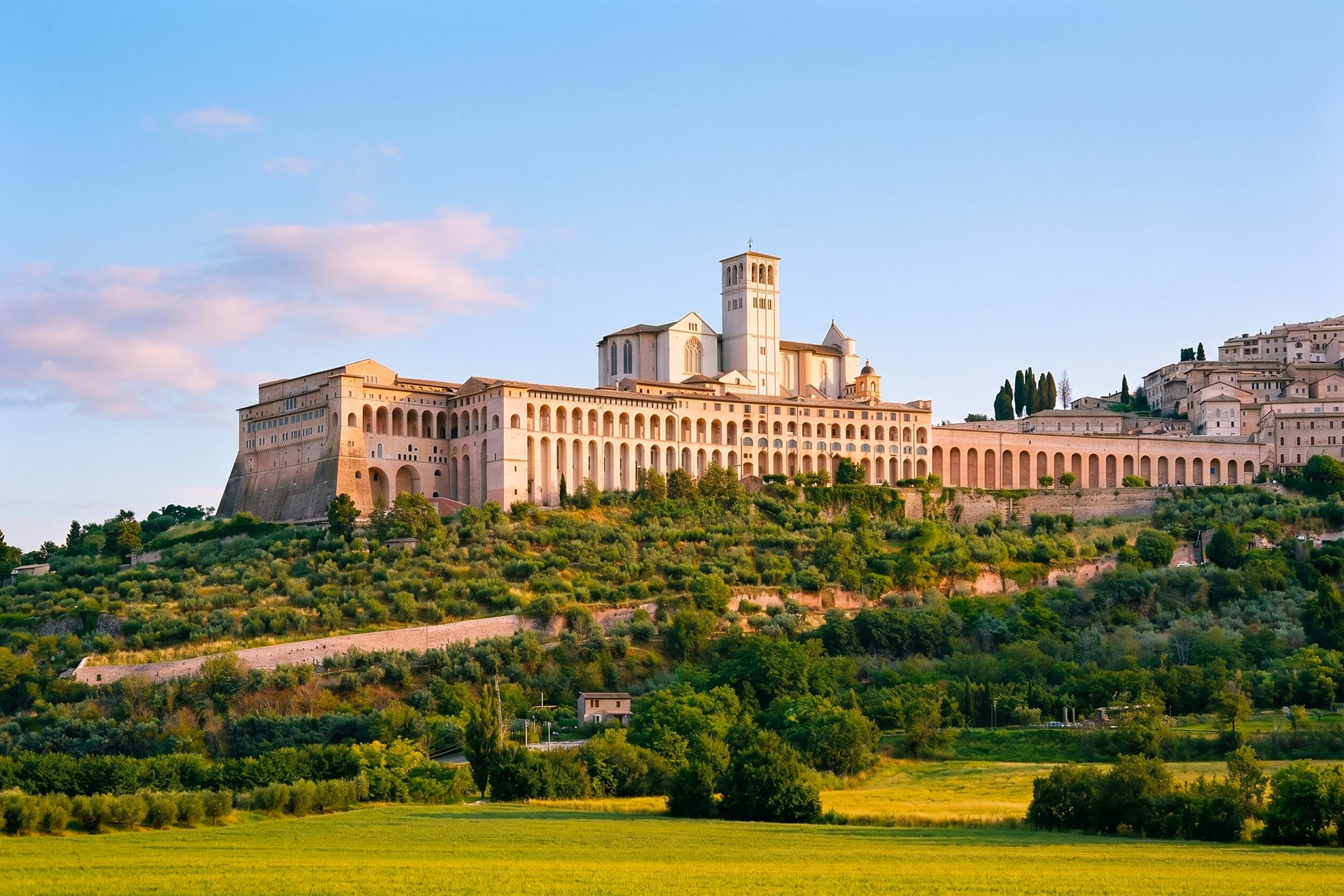
The return leg, on the fourth day, climbs into Umbria past Assisi, which in 2026 marks the eight-hundredth anniversary of the death of Saint Francis, and it is the race at its most intimate and arguably its most beautiful. The route then halts for lunch in the medieval square of Gubbio before threading the Gola del Furlo, a narrow limestone gorge cut by a Roman road, where the river runs green between sheer walls. The spectators are thinner here, the local population more present, the landscape at its most dramatic, and it is the stretch most visitors overlook and the one that tends to stay longest.
The final day through Comacchio and Mantua
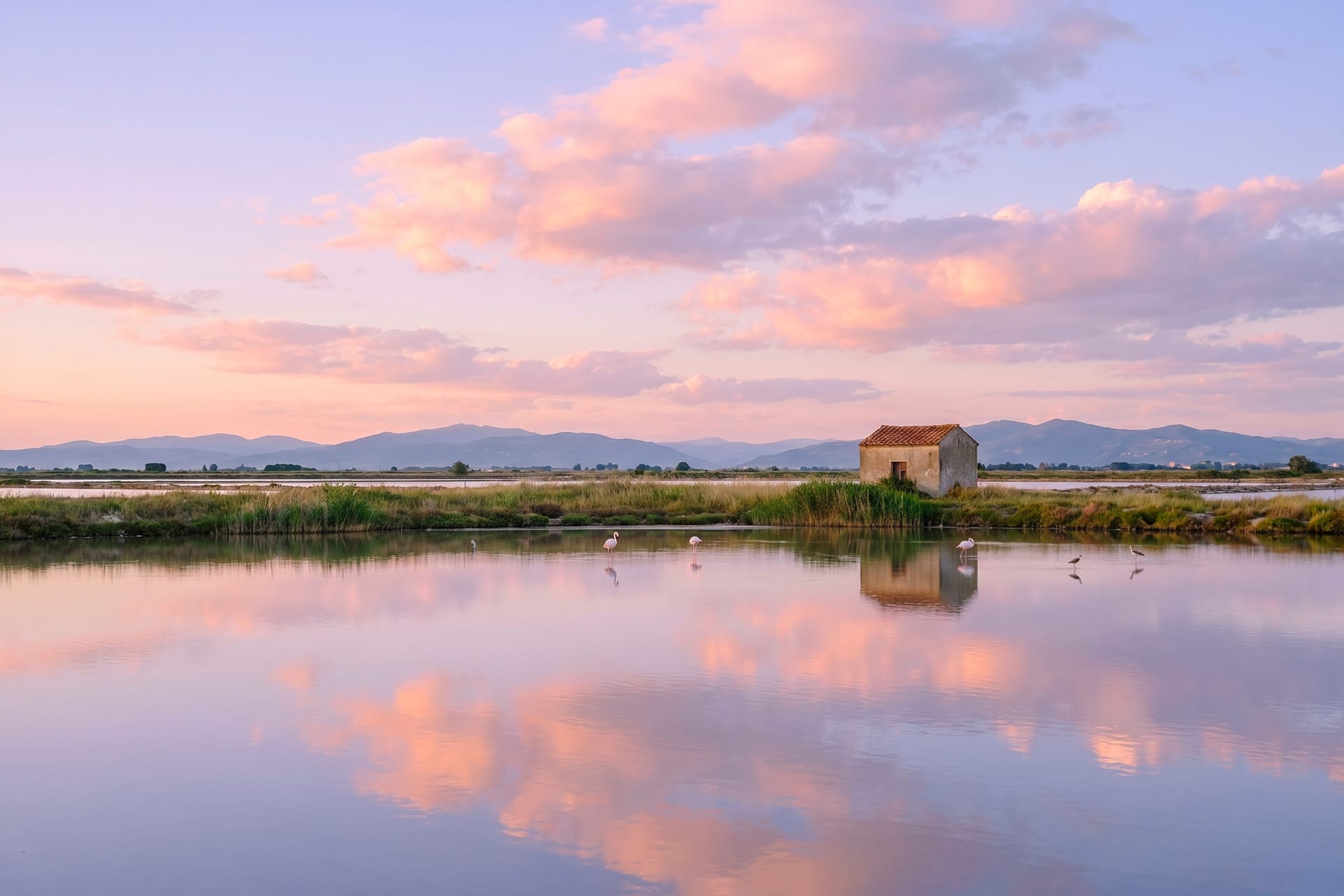
The final day runs inland from Rimini through the salt pans of Cervia and the lagoons of Comacchio, in the Po delta, and most visitors miss it. It is a flat, luminous country of fishing huts and migrating birds, before the route reaches the Gonzaga city of Mantua, ringed by its three lakes, and turns for home. It is the gentlest leg of the route, and for a traveler willing to follow the race to its end, the most surprising.
Events around the Mille Miglia in Brescia
The race is preceded by three days that belong as much to Brescia as to the cars. On 7 and 8 June the entrants pass through scrutineering and the ceremonial sealing of each car, the punzonatura, while the Villaggio 1000 Miglia takes over Piazza della Vittoria with displays, meetings, and official ceremonies, most of it open to the street. Across the city, historic cars are shown in the courtyards of Brescia's palazzi, and the program fills out with photographic exhibitions, conferences, and screenings. On the evening of 7th June the Trofeo Roberto Gaburri sends a hundred cars, drawn from both the 1000 Miglia and the Ferrari Tribute, through timed trials in the streets of the center and around the Castello, a free and unhurried way to see the machines in motion before the race itself begins.
Running alongside the historic field is the separate Ferrari Tribute to the 1000 Miglia, now in its seventeenth edition: around a hundred and twenty modern Ferraris that set out from Desenzano del Garda, on Lake Garda, and cover the route just ahead of the vintage cars, so that a spectator at any point sees the contemporary Cavallino pass before the old machines arrive. The race returns to Brescia on the afternoon of Saturday 13 June, where the finish on Viale Venezia is followed by the prize-giving and 1000 Miglia The Night, the closing public celebration in the heart of the city. For the days before and after, the Mille Miglia Museum, in the former monastery of Sant'Eufemia at Viale della Bornata 123, is worth a morning in its own right. The full program and ticketing are published on the official website.
Getting around and where to stay along the route
A car is necessary for the mountain and countryside sections. The passes and the smaller roads have no useful public transport, and part of their pleasure lies in being able to arrive early, choose a bend, and leave only once the last car has gone. The Brescia start, by contrast, is easily reached by train, and the city is walkable, which makes it the simplest base for a first encounter with the event.
Where to stay on the route
A room in a small town on the route changes the experience more than any other decision. With the cars passing in the morning and the square returning to itself by evening, it is a different proposition from a hotel in a city, and the most characterful places, the converted farmhouses, the family-run alberghi, the quiet addresses off the main road, reward planning ahead. Securing a room in a restored estate near San Casciano dei Bagni, or finding a stone retreat overlooking the hills of the Val d'Orcia, anchors the trip in the landscape and guarantees quiet when the day's engines have moved on.
The moment that stays
The way to watch the Mille Miglia is to choose one point, arrive early enough to feel the place before the race reaches it, and wait. The sound comes first. The note of a supercharged Alfa Romeo or a Ferrari V12 carries for several seconds before the car itself appears around the bend, and that interval, between hearing and seeing, is what the serious spectator comes for. No film reproduces it, and no grandstand seat at a circuit offers it. It belongs to the open road, to a particular stretch of Italy on a particular morning in June, and it cannot be had any other way.
That is finally what the event offers the traveler who is not a motorsport enthusiast: not a race to be followed but a reason to be somewhere exact, at an exact hour, paying attention. The cars are only the occasion. What stays is the village waking before they arrive, the light on the hills as the road empties again, the few minutes in which a whole landscape seems to hold its breath, and the long quiet afterward, when the place is handed back to the people who live in it. The 1000 Miglia gives a journey its shape and then, having passed, leaves the country exactly as it found it. The traveler who was there carries the rest.
Mille Miglia 2026
Keep reading: the complete guide to the Mille Miglia 2026 route, stage by stage.
Now that you know where to watch, plan the rest of the journey. Our main guide follows the figure-of-eight route across northern and central Italy, with every town the race passes between Brescia and Rome.
Latest Info
You can also find all the latest information on the official 1000 Miglia website.
1000miglia.it
Guide to Italy is a letter from an Italy that doesn't write to everyone.
Become a member


