
On a July night inside the Roman amphitheater at Verona, the lights drop, an overture rises, and a crowd that secured its seats months earlier falls silent at once. The best Italian summer festivals of 2026 turn on nights like this, and on something quite unlike it: in a village whose name appears in no guidebook, a piazza fills slowly with trestle tables, a band tunes its instruments, and the air carries the smell of one dish cooked in quantity. Both belong to an Italian summer, the season that runs between mid-June and mid-September, and the distance between the two is the first thing to grasp before planning around either. Neither is a substitute for the other.
The season runs on two calendars that resemble each other and behave in opposite ways. One is the calendar of the great festivals: ticketed cultural events, programmed years ahead, built for an audience that travels expressly to attend. The other is the calendar of the sagre (local food and patron-saint feasts, singular sagra) and the parish celebrations, organized by a community for itself and not staged for visitors at all. The finest few days of an Italian summer come not from choosing between the marquee festival and the village feast, but from understanding what each delivers and building a short trip around the right one.
In this article
- 01 Italian festivals versus sagre: the distinction that organizes the summer
- 02 The best Italian summer festivals of 2026, and who they suit
- 03 More Italian summer festivals worth a detour, from Puccini to Taormina
- 04 Italian sagre and patron-saint feasts worth traveling for
- 05 How to plan an Italian summer festival trip in 2026
- 06 Choosing your Italian summer of 2026
Italian festivals versus sagre: the distinction that organizes the summer
A festival rewards the planner. The seats are numbered, the program is published, the night matters, and the payoff for booking early is a specific performance on a specific evening; arriving without a ticket means standing outside a town that has sold out. A sagra inverts every term of that equation. There is nothing to reserve and no performance to miss, yet there is a right evening within a multi-day feast and a wrong one, and no English-language page will tell the two apart.
The standard error is to treat the two as one category and to apply the wrong instinct to each. A traveler who approaches a sagra like a festival arrives expecting a show and finds a community eating dinner. A traveler who approaches a festival like a sagra arrives without a booking and finds the hotels full and the tickets gone. The whole of the season opens up once those two reflexes are held apart, and the wider shape of the Italian summer comes into focus alongside it.
The best Italian summer festivals of 2026, and who they suit
Six cultural festivals anchor the season, spread across the country and the three months of summer, and each does something the others do not. A further handful, more specialized or more remote, reward a detour for the right traveler. What follows is a selection rather than a catalogue: the question is not which events exist, but which one is worth shaping several days around, and for whom.
Arena di Verona Opera Festival 2026: open-air opera at full scale
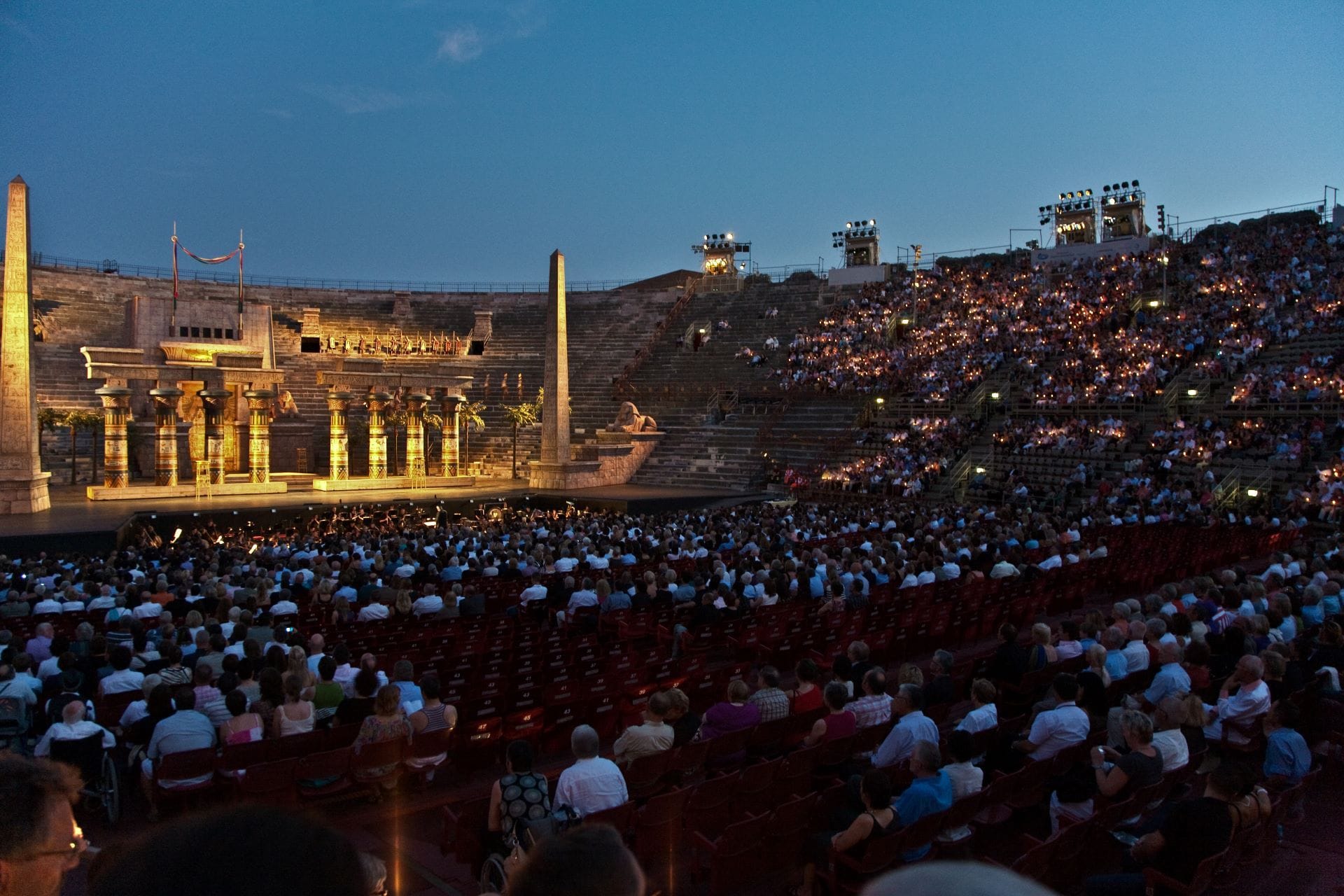
The Arena di Verona Opera Festival is the reference point for open-air opera, and the place to begin. Its 103rd edition runs from 12 June to 12 September 2026 across roughly fifty evenings in the Roman amphitheater, and the season turns on a centenary: Giacomo Puccini’s Turandot, which had its world premiere in 1926, returns in the historic production by the late director and designer Franco Zeffirelli. A new La Traviata opens the festival, Aida appears in two stagings, the monumental Zeffirelli version alongside a new production by the director and designer Stefano Poda, and Nabucco and La Bohème complete the program.
At the Arena, the decision that shapes the night is the seat, and it should be made before arrival. Performances begin after nine in the evening, when the stone has cooled and the light has gone, and the audience lights small candles across the tiers as darkness falls, a custom older than any production on the bill. The unreserved stone steps, the gradinata, start at a little under thirty euros: they are atmospheric, far from the stage, and genuinely uncomfortable past the second hour, and a rented cushion is close to essential. The numbered poltronissime on the arena floor are expensive, comfortable, and close. One choice is for the experience of the amphitheater itself, the other for the music; the mistake is to spend heavily on a seat without deciding which of the two is wanted.
Festival dei Due Mondi, Spoleto: a hill town turned into a stage
Spoleto, in Umbria, offers the opposite proposition: not one great event but an entire medieval hill town given over to performance. The Festival dei Due Mondi reaches its 69th edition from 26 June to 12 July 2026, the first under the new artistic direction of Daniele Cipriani, on the theme “Radici” (Roots). It opens with the composer Samuel Barber’s opera Vanessa, on a libretto by the festival’s founder Gian Carlo Menotti, and closes on 12 July under the conductor Gianandrea Noseda, with opera, dance, theater, classical music, and visual art filling the squares and theaters across seventeen days.
The character of Spoleto is geographic. Performances run from the Teatro Nuovo Gian Carlo Menotti to the open-air stage in the Piazza del Duomo, and the town itself, steep, walled, and compact, becomes the connective tissue between them. It suits the traveler who wants to inhabit a festival for several days, moving on foot between a morning concert and a late-night performance, rather than attending a single headline night and leaving.
Umbria Jazz 2026: the ticketed concert and the free city
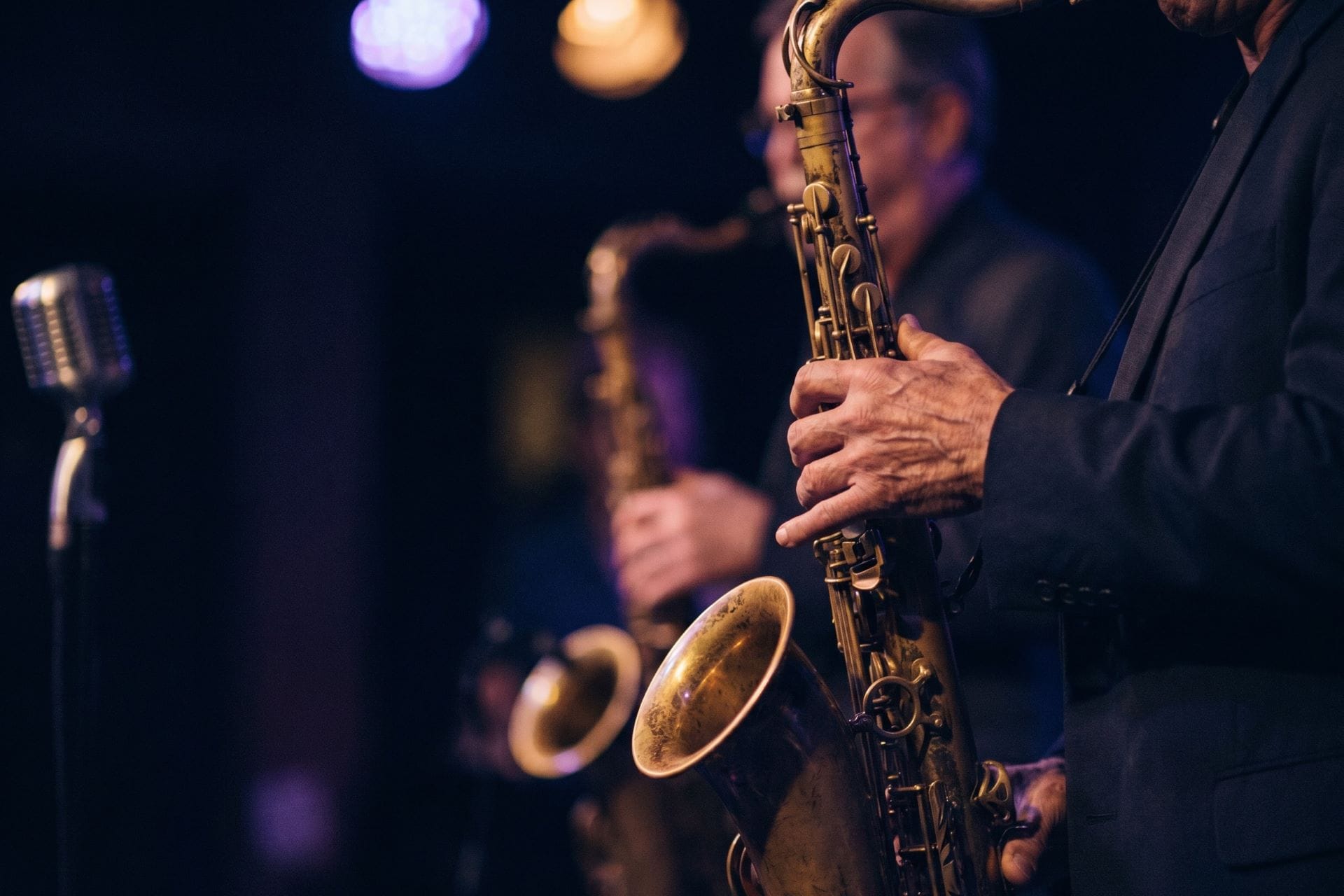
Perugia, an hour north of Spoleto, runs on a different current entirely. Umbria Jazz reaches its 53rd edition from 3 to 12 July 2026, opening with Sting at the Arena Santa Giuliana on 3 July and continuing with Zucchero, Jon Batiste, and Elvis Costello among the announced headliners. The paid concerts at the Arena are only one layer of the festival. More than half of the program is free, spread across the historic center, and treating the free and the ticketed as a single experience is the difference between attending a concert and attending the festival.
The free stages cluster in the Giardini Carducci and the Piazza IV Novembre in front of the cathedral, running from afternoon into the early hours, while the Teatro Morlacchi and the Galleria Nazionale dell’Umbria hold the seated, ticketed sessions for closer listening. A single evening can move from a paid headline act at the Arena to free music in the squares until very late, and the travelers who do best are the ones who plan for both rather than for one.
Macerata Opera Festival: opera at the Sferisterio
For opera away from the spectacle, the Marche holds the quieter counterpart to Verona. The Macerata Opera Festival reaches its 62nd edition from 17 July to 9 August 2026 in the Sferisterio, a neoclassical open-air arena completed in 1829, with around 2,500 seats and a curved brick wall roughly a hundred meters long that gives the venue acoustics admired across the opera world. The 2026 program offers a new Nabucco, a revival of the director Daniele Menghini’s Il Barbiere di Siviglia, Il Trovatore, and Carl Orff’s Carmina Burana on 7 August.
The difference from Verona is one of scale and distance. The Sferisterio seats a fraction of the Arena’s crowd, the audience sits far closer to the stage, and Macerata stands off the main tourist axis, inland in the Marche, which keeps the experience serious and the town uncrowded. It rewards the traveler who already knows the repertoire and wants to hear it well, rather than the one who wants the sheer event of an opera under the stars.
La Notte della Taranta: the festival that behaves like a feast
The Salento offers something no concert hall can. La Notte della Taranta, in its 29th edition, is an itinerant festival of pizzica (the traditional dance-music of southern Puglia, rooted in the old rituals of tarantismo) that moves through about twenty villages of the Grecìa Salentina, the cluster of historically Greek-speaking towns south of Lecce, across the whole of August. Most of these village dates are free, held in the piazzas late into the night, and they culminate in the free Concertone, the great closing concert, at Melpignano on Saturday 22 August 2026, led by the maestro concertatore Ermal Meta on the theme “Mediterraneo” and broadcast live on RAI, the national network.
The Melpignano Concertone is the most crowded and least intimate night of the whole festival. The itinerant tour traditionally opens at Corigliano d’Otranto and works its way through the smaller towns before Melpignano, and the detailed stage calendar is published by the foundation each year between May and June. Catching one of those village nights, where the pizzica is closer and the crowd local, is often the better experience than the immense finale, for which Ferrovie del Sud Est runs special trains and shuttles to manage the crowds. It is the closest the list comes to the spirit of a sagra while operating at the scale of a festival.
Venice Film Festival 2026: the season’s last act
The summer closes on the water. The Venice Film Festival, formally the Mostra Internazionale d’Arte Cinematografica, reaches its 83rd edition on the Lido di Venezia from 2 to 12 September 2026, directed by Alberto Barbera, with the American actor and filmmaker Maggie Gyllenhaal as jury president. It is the oldest film festival in the world, founded in 1932, and while the red carpet is the headline, a large share of the screenings is open to the public.
The detailed daily program and public tickets appear online, through labiennale.org, only in mid-August, and the most sought-after screenings sell out within hours of going on sale, so the practical approach is to watch for the program’s release and book the moment it opens. The evening galas in the Sala Grande are open to the public rather than reserved for the industry, single tickets are modest by the standards of an event of this stature, and reductions apply for those under twenty-six and over sixty-five. The red carpet itself can be watched from the pedestrian area without a ticket, and is shown on a large screen nearby. The real constraint is lodging: rooms on the Lido are extremely limited and book out months ahead, which makes the decision about where to stay the first one to settle.
More Italian summer festivals worth a detour, from Puccini to Taormina
Six further festivals deserve a place in any serious account of the summer, each defined less by scale than by a setting or a repertoire found nowhere else. The Festival Puccini at Torre del Lago, in Tuscany, reaches its 72nd edition from 17 July to 5 September 2026 and is the only festival in the world devoted to Giacomo Puccini, staged in a 3,400-seat open-air theater on the shore of Lake Massaciuccoli, beside the villa where the composer lived, worked, and is buried. The 2026 season marks the same Turandot centenary as Verona, performed within sight of the water that shaped it. It suits the traveler for whom the place a work was written matters as much as the work itself.
The Ravello Festival, on the Amalfi Coast, runs from 4 July to 5 September 2026 in its 74th edition, the oldest Italian music festival after the Maggio Musicale Fiorentino, born in the last century from concerts held in homage to Richard Wagner, who found inspiration in the town. Almost all of its symphonic, chamber, jazz, and operatic concerts take place on the belvedere of the Villa Rufolo, a stage projecting over a sheer drop to the sea, and its signature is the concert at dawn, played as the sun comes up over the Gulf of Salerno.
In Puglia, the Festival della Valle d'Itria at Martina Franca, in its 52nd edition from 14 July to 2 August 2026, takes place in the courtyard of the Palazzo Ducale and exists to revive rare, neglected, and bel canto opera, often in original versions heard nowhere else; the 2026 program includes the 1874 version of Georges Bizet's Carmen. It is opera for the listener who already knows the standard repertoire and wants what lies beyond it. The Marche offers the same reward at the other end of the calendar: the Rossini Opera Festival at Pesaro, in the birthplace of Gioachino Rossini, reaches its 47th edition from 11 to 23 August 2026, opening with a new production of Le Siège de Corinthe under the conductor Carlo Rizzi and closing with the Stabat Mater on 23 August. It is the definitive festival for Rossini, and pairs naturally with Macerata for a traveler willing to base in the Marche for a week of opera.
The most unusual of the group is Time in Jazz, founded and directed by the trumpeter Paolo Fresu in his native Berchidda, in the Sardinian interior. Its 39th edition runs principally from 8 to 16 August 2026, after a June prologue, and spreads more than seventy events across Berchidda and some fifteen towns of northern Sardinia, staging concerts not only in squares but in pine forests, country churches, and on beaches, several of them at dawn. The 2026 theme, "Kind of Blue," marks the centenary of Miles Davis. It rewards the traveler willing to drive the back roads of an island for music heard in landscapes no concert hall could supply.
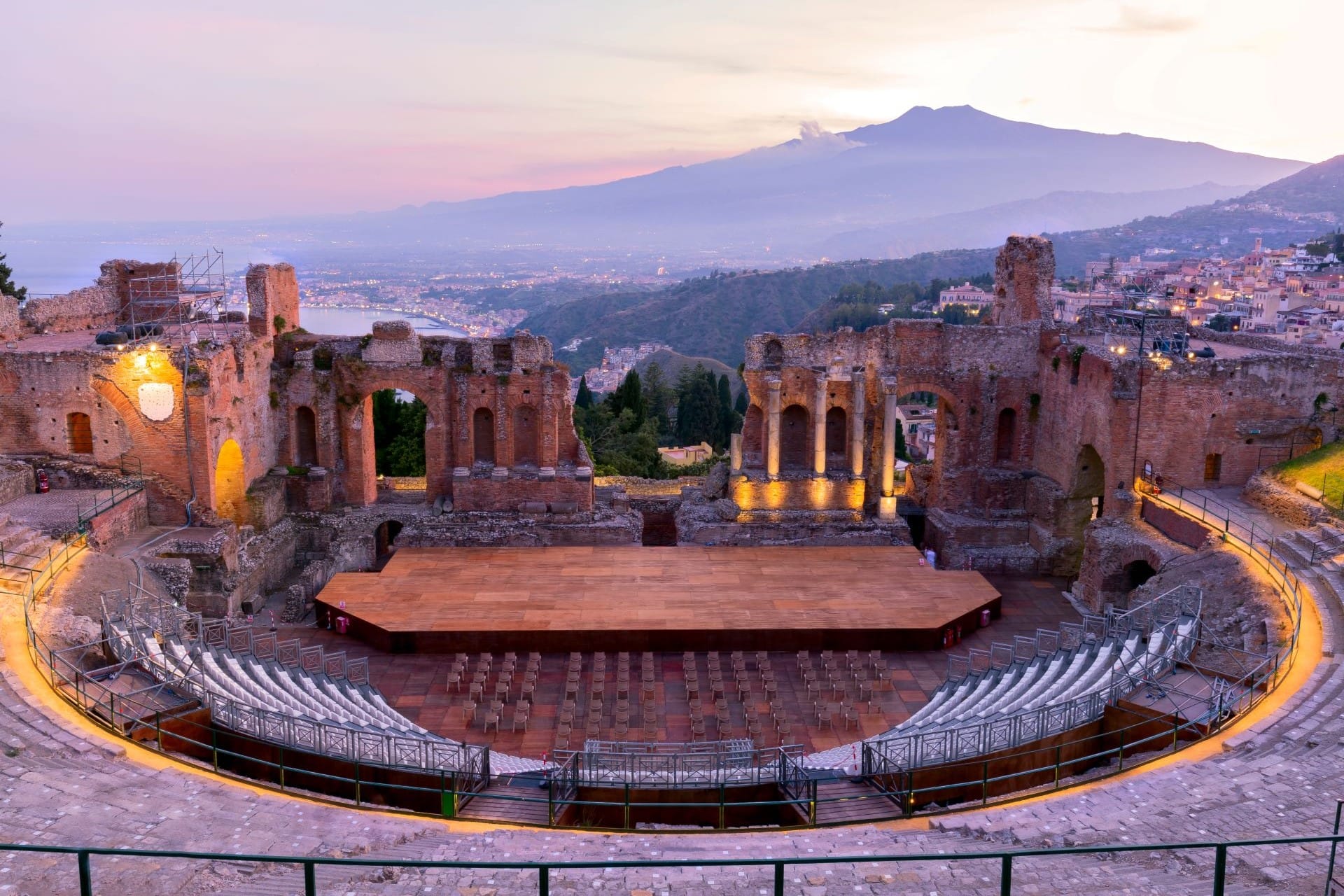
The other island closes the loop, and its festivals turn on a single extraordinary stage. The Teatro Antico di Taormina, a Greek theater built in the third century BC and rebuilt by the Romans, sits on a cliff terrace above the Ionian Sea with Mount Etna framed beyond its ruined backdrop, and across the summer it stages opera, concerts, and theater under the Taormina Arte programming. Its best-known fixture is the Taormina Film Festival, Italy's second-oldest, founded in 1955 and anchored at the Teatro Antico since 1971, which reaches its 72nd edition from 10 to 14 June 2026 and screens premieres under the stars where the ancient stone meets the sea. Where Venice closes the film year in September, Taormina opens it in June, and between the two Sicily also keeps the season's grandest patron-saint feast, the Festino di Santa Rosalia at Palermo described below. The island rewards the traveler who treats the journey south not as a detour from the Italian summer festivals of 2026 but as their southern pole.
Palio, Redentore and Giostra: the civic spectacles between festival and sagra
Three fixed-date events sit between the two categories, partly ticketed yet rooted in their cities the way a feast is. The Palio di Siena runs twice, on 2 July (the Palio di Provenzano) and 16 August (the Palio dell'Assunta) in 2026: a bareback horse race of about ninety seconds in which ten of the city's seventeen contrade (the historic neighborhood districts) circle the Piazza del Campo three times. Standing in the center of the square is free but fills hours ahead of the early-evening race, which follows a long Corteo Storico (historical procession), and there is no leaving once the square is closed; the grandstand and balcony places cost in the hundreds of euros and sell out far in advance. The trial races, the prove, run over the three preceding days and are far easier to attend than the Palio itself.
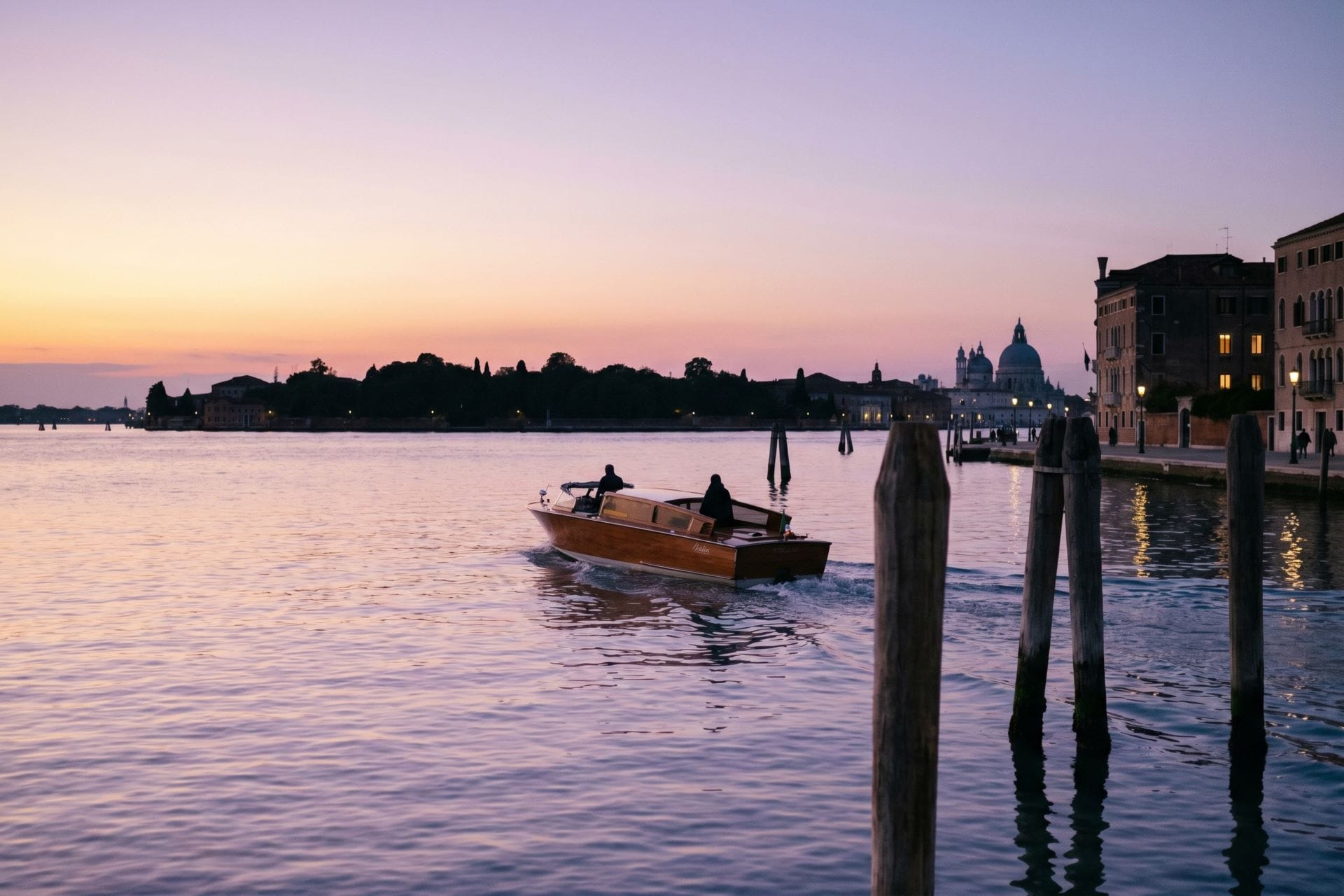
The Festa del Redentore takes Venice back onto the lagoon on the third weekend of July, 18 and 19 July 2026, with fireworks over the Bacino di San Marco on the Saturday night, watched from boats and from the Zattere and the Giudecca, and a votive bridge of boats laid across the water to the architect Andrea Palladio's Redentore church. The Giostra del Saracino, a medieval jousting re-enactment in the Piazza Grande of Arezzo, runs on the evening of 20 June and again on 6 September 2026, the September running marking its 150th edition. That last event is the natural bridge into the unscripted half of the summer.
Italian sagre and patron-saint feasts worth traveling for
The unscripted half of the summer has two registers. One is the small village feast built around a single food; the other is the great patron-saint spectacle, civic and religious at once, that can fill a city. They differ enormously in scale, yet they share the quality that sets them apart from the festivals: neither is staged for visitors, and both reward the traveler who arrives understanding what is actually happening.
The summer sagra: Italy’s village food feasts
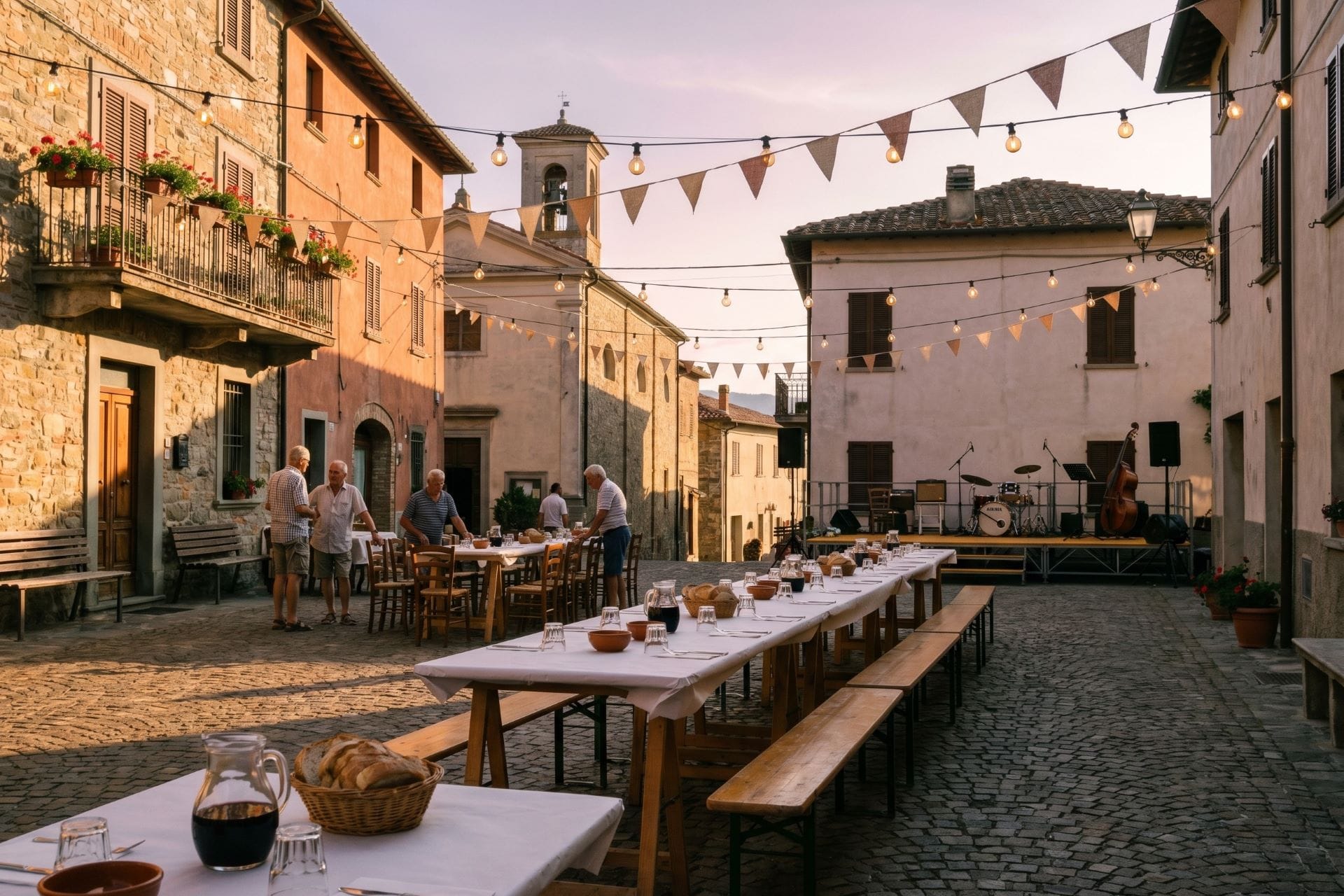
The most famous sagre belong to autumn: the white truffle at Alba, the wine harvests of the Langhe, the chestnut feasts of the hill country. The summer sagra is a different creature. It is built around seafood on the coast, the patron-saint calendar of the interior, and the long light of the evening, and it is run by the pro loco (the local volunteer tourist association) and the parish rather than by any cultural institution. The form is consistent across the country: trestle tables, a band, and one dish prepared properly and in quantity.
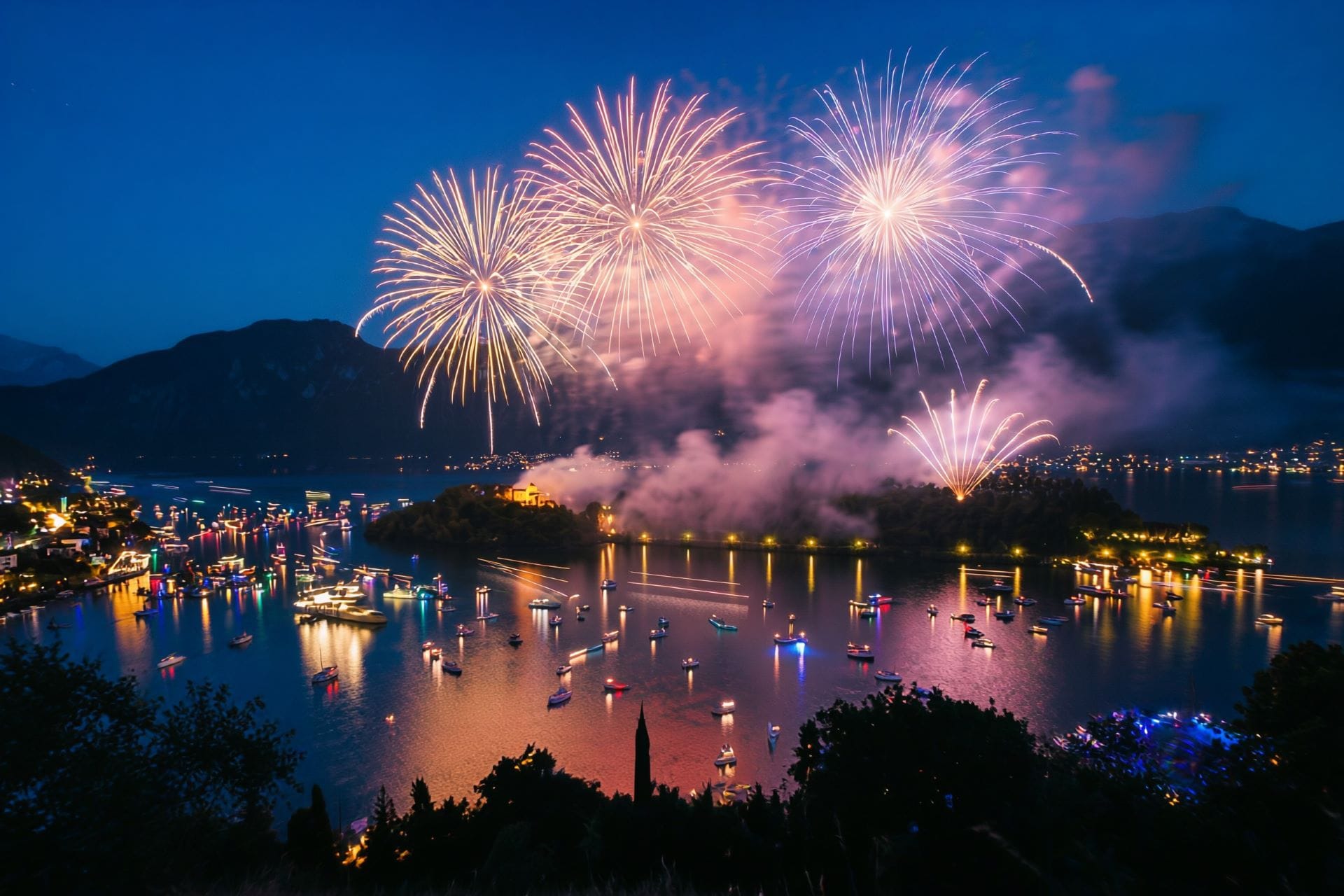
San Giovanni on the Isola Comacina, on Lake Como, is the model of a feast worth traveling for. Across 27 and 28 June 2026, the smallest island on the lake hosts the oldest recurring event on Lake Como. On the Saturday evening a piromusicale, a choreographed sequence of fireworks set to music, re-enacts the burning of the island on the night of 24 June 1169, when Como, allied with the emperor Frederick Barbarossa, destroyed the Milanese stronghold there. On the Sunday a procession of the historic Lucia boats crosses to the ruins of the basilica of Sant’Eufemia for Mass. The full account of the night, and how to be on the right shore for it, is set out in the dedicated guide to the Festa di San Giovanni. What makes it the model is the balance it strikes: it has institutional backing from the Comune di Tremezzina and a fixed calendar, which makes it findable, and yet it remains a feast the community holds for itself.
Finding the other genuine ones takes more work, precisely because they are not marketed. The reliable sources are in Italian: the comune (municipal) and pro loco event calendars, the parish feast days clustered around fixed dates such as San Lorenzo on 10 August and the Assumption on 15 August, and the regional tourism listings. The absence of any English-language page is, more often than not, a point in the feast’s favor. The sagra announced on a hand-printed banner strung across the road into a village is the one to find.
The great patron-saint feasts of Pisa, Nola, Palermo, Ischia and Sassari
The other register is older and larger, and some of its examples are among the most singular sights in Italy. On the evening of 16 June, the eve of its patron San Ranieri, Pisa stages the Luminara: around a hundred thousand wax candles set in white wooden frames, the biancherie, trace the outlines of the palaces and churches along the Lungarni, the embankments of the Arno, and double in the still water of the river, with fireworks over the Arno at the close. The tradition dates to 1688, and the effect is unlike anything else in the season: not a performance, but a city drawing its own architecture in fire.
Two of the summer’s feasts belong to the UNESCO-recognized network of the Macchine a Spalla, the great shoulder-borne processional structures. At Nola, near Naples, the Festa dei Gigli unfolds in late June, on the Sunday following the feast of San Paolino on 22 June: eight wooden obelisks some twenty-five meters tall, built on frames and clad in painted decoration, are shouldered through the streets alongside a “boat,” each carried by a team of around a hundred and fifty men moving in time to a band. At Sassari, in Sardinia, the Faradda di li Candareri, the descent of the great carved “candlesticks” of the medieval guilds, is run every 14 August, the eve of the Assumption, in fulfillment of a vow made after the plagues of the sixteenth century, and it is the city’s defining day.
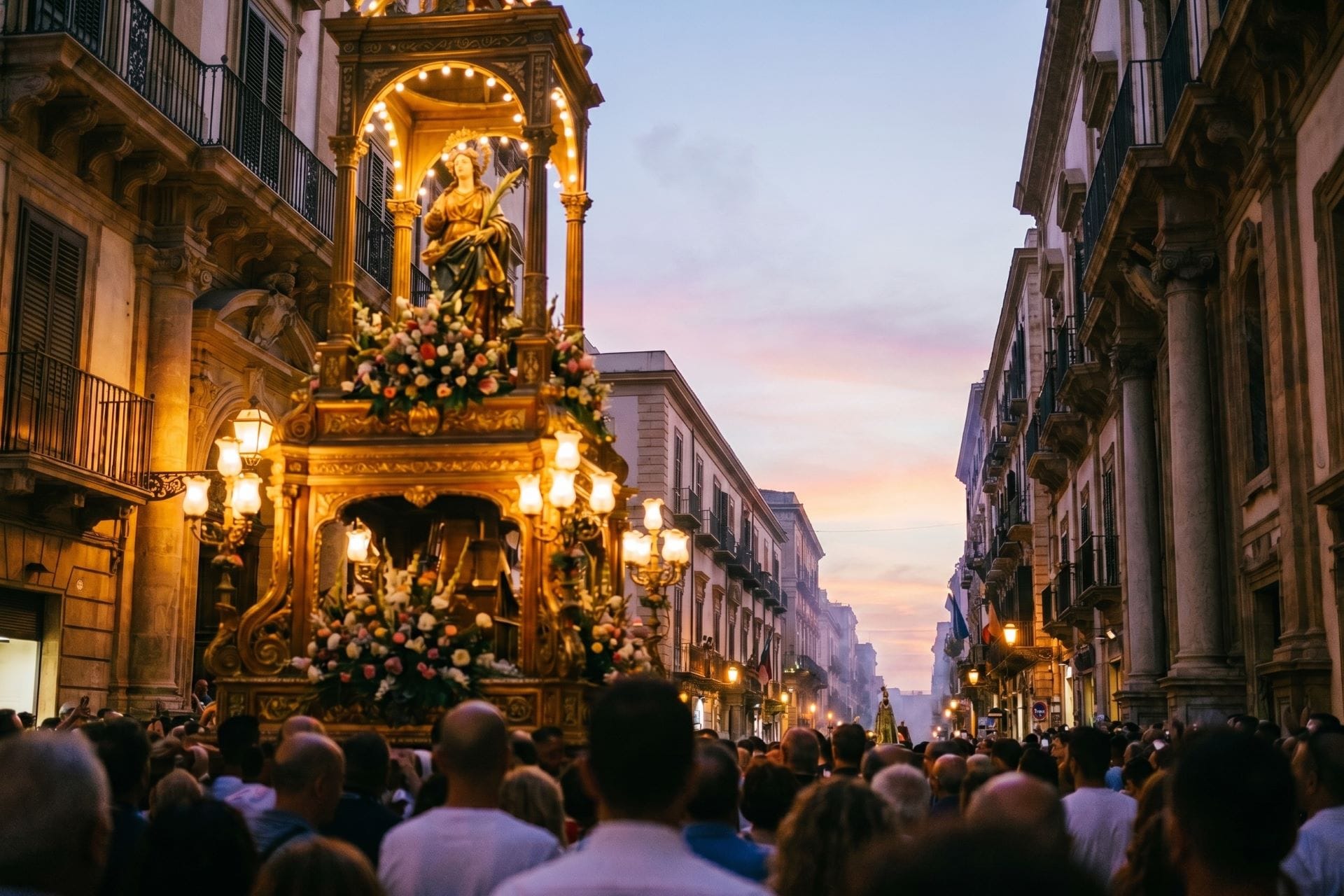
Sicily keeps the grandest of them. At Palermo, the Festino di Santa Rosalia reaches its 402nd edition in 2026, centered on the night of 14 July within a program that runs from around the 10th to the 15th. It honors the Santuzza, the patron whose relics were credited with ending the plague of 1624, and its heart is the triumphal cart, a towering scenic structure rebuilt to a new theme each year, drawn from the Cattedrale down the Cassaro through the Quattro Canti toward the sea, ending with the collective cry “Viva Palermo e Santa Rosalia” and fireworks over the water. It is one of the largest civic and religious feasts in the Mediterranean, free and open, and entirely the city’s own.
Ischia keeps a different kind of fire: on 26 July, in the Baia di Cartaromana, the Festa di Sant’Anna sends a procession of allegorical boats across the water and ends with fireworks and the symbolic burning of the Castello Aragonese, a tradition that took its present form in 1932. None of these is staged for an audience in the way a festival is, and all of them reward the same patience: arrive early, stand among the residents, and let the evening unfold on its own terms.
How to plan an Italian summer festival trip in 2026
The two halves of the season demand opposite habits, and a trip built well around them rests on a few clear decisions about money, timing, and movement rather than on a long itinerary.
Booking tickets and lodging for Italy’s summer festivals
The marquee festivals require tickets and lodging secured months in advance, while the genuine sagre require no tickets at all. Festival towns such as Spoleto, Perugia, and the Venice Lido sell out and raise their rates for the run, and the Venice tickets follow the festival’s own clock, with the program and the sale opening only in mid-August through labiennale.org. For the ticketed events the only reliable channel is each festival’s own official box office; the resale market around the Arena and the Palio in particular should be treated with caution. The sagre, by contrast, reward arriving on the correct evening of a multi-day feast, which means reading the program rather than the marketing.
The choices within each event matter as much as the choice between them. At the Arena, the decision between the gradinata and the reserved seats is the real one, and it should be made deliberately rather than by price alone. At Umbria Jazz, the free program across the center is not a consolation for those without Arena tickets but a genuine half of the festival. At La Notte della Taranta, there is a strong case for an itinerant village date over the Melpignano finale. The recurring principle is that the most expensive or most famous option is rarely the one that defines the night.
Visiting Italy during Ferragosto on 15 August
The calendar trap of the summer is Ferragosto, the national holiday on 15 August. The country closes around it: cities empty, a great many restaurants and shops shut for the week, and the coast and the feasts fill with Italians on their own holiday. The instinct to avoid the date is the mistake. The better approach is to be where the celebration is, on the coast or at a patron-saint feast such as the Sassari Candelieri on its eve, rather than in a city standing empty behind closed shutters, and to settle accommodation and travel well before the holiday, when both grow scarce.
Planning around the southern summer heat
Heat sets the rhythm of everything else. Midsummer in the south and the interior is genuinely hot: afternoon highs across the southern interior regularly reach the mid-thirties Celsius, the mid-nineties Fahrenheit, and Sicily and the Apulian interior can climb past forty, above 104°F. The best of these events, the operas, the Concertone, the fireworks, the sagre, happens after dark for exactly that reason. The day is best inverted: the middle hours spent in shade or on the water, the energy saved for an evening that often runs past midnight. Planning that follows the heat rather than fighting it is planning that follows the events themselves.
Getting around and where to base for each festival
The northern festivals sit on fast, reliable rail: Verona and Venice are on the high-speed line, and Perugia and Spoleto are reachable by train from Rome or Florence, which makes a car unnecessary for the Arena, the Lido, and the Umbrian cluster. The Marche, the Salento, and the Sardinian interior are the opposite case, thinly served by rail and far easier with a car, though Ferrovie del Sud Est lays on extra services to Melpignano for the Taranta finale. The Lido is reached from Venice by vaporetto, the public water bus, which runs heavily during the festival.
Where to base depends on the cluster. Verona or the southern shore of Lake Garda serves the Arena, with Torre del Lago and the Puccini festival a short way down the Tuscan coast; an Umbrian hill town such as Assisi or Spello covers both Umbria Jazz and Spoleto within a short drive; the Marche rewards a week based near Macerata or Pesaro for the two opera festivals; Lecce is the natural base for the Salento, the Taranta, and the Valle d’Itria; the Amalfi Coast or Naples serves Ravello and the feasts of Campania; Palermo anchors the Sicilian summer around Santa Rosalia; and for the film festival a room on the Lido is the convenient choice and the scarce one, with Venice proper the fallback. In every case the lodging is the constraint that should be fixed first.
Choosing your Italian summer of 2026
The Italian summer rewards the traveler who decides what kind of evening is wanted before deciding where to spend it. An opera under the cooled stone of a Roman amphitheater, a free concert in a Perugian square at one in the morning, a hundred thousand candle flames doubled in the Arno, the slow procession of lantern-lit boats toward a burned island on Lake Como, a piazza in the Grecìa Salentina turning into a dance floor under the stars: these are not interchangeable, and none is improved by being approached as if it were one of the others. The best Italian summer festivals of 2026 lay them out across the country between mid-June and mid-September, and the few days that stay in memory are the ones built deliberately, around the right event, at the right hour, in the right place.
That is the whole of the method, and it scales from a single night to an entire trip. Choose the festival and secure it early; find the feast and arrive on the right evening; let the heat set the hours and the calendar set the route.
The season at a glance
The fixed points of the Italian summer of 2026, from mid-June to mid-September: the ticketed festivals to book ahead, and the feasts that ask only that you arrive on the right evening.
| Event | When (2026) | Where | Worth knowing |
|---|---|---|---|
| Taormina Film Festival | 10 to 14 June | Taormina, Sicily | Italy’s second-oldest film festival (72nd edition), at the cliffside Teatro Antico facing Etna. Opens the season’s film strand. |
| Luminara di San Ranieri | 16 June | Pisa, Tuscany | A hundred thousand candles tracing the palaces along the Arno, reflected in the river. A civic feast, not a show. |
| Giostra del Saracino | 20 June and 6 September | Arezzo, Tuscany | A medieval joust in the Piazza Grande; the September running is the 150th edition. |
| Arena di Verona Opera Festival | 12 June to 12 September | Verona, Veneto | Open-air opera; Turandot centenary in the Zeffirelli production. Choose between the cheap gradinata and the comfortable reserved seats. |
| Festa di San Giovanni | 27 and 28 June | Isola Comacina, Lake Como, Lombardy | A piromusicale re-enacting the 1169 burning of the island; the oldest event on the lake. |
| Festa dei Gigli | late June, the Sunday after 22 June | Nola, Campania | UNESCO feast: twenty-five-meter obelisks shouldered through the streets by teams of about 150. |
| Festival dei Due Mondi | 26 June to 12 July | Spoleto, Umbria | Multidisciplinary; a whole hill town as the stage. Opens with Barber’s Vanessa; theme “Radici.” |
| Palio di Siena | 2 July and 16 August | Siena, Tuscany | A ninety-second bareback race around the Piazza del Campo. Free in the square, costly in the stands, fiercely local. |
| Umbria Jazz | 3 to 12 July | Perugia, Umbria | Opens with Sting; over half the program is free across the historic center. |
| Ravello Festival | 4 July to 5 September | Ravello, Amalfi Coast, Campania | Concerts on a belvedere above the sea at the Villa Rufolo, including a concert played at dawn. |
| Festival della Valle d’Itria | 14 July to 2 August | Martina Franca, Puglia | Rare and bel canto opera in original versions, in the Palazzo Ducale courtyard. |
| Festino di Santa Rosalia | 14 July (program 10 to 15 July) | Palermo, Sicily | 402nd edition. The triumphal cart of the Santuzza drawn down the Cassaro to the sea, with fireworks. Civic and religious. |
| Festival Puccini | 17 July to 5 September | Torre del Lago, Tuscany | The only festival dedicated to Puccini, beside the lake where he composed; Turandot centenary. |
| Macerata Opera Festival | 17 July to 9 August | Macerata, Marche | Open-air opera at the Sferisterio; smaller, closer, and quieter than Verona. |
| Festa del Redentore | 18 and 19 July | Venice, Veneto | Saturday-night fireworks over the lagoon and a votive bridge of boats to the Giudecca. |
| Festa di Sant’Anna | 26 July | Ischia, Campania | A regatta of allegorical boats and the symbolic burning of the Castello Aragonese, seen from the sea. |
| Time in Jazz | 8 to 16 August (June prologue) | Berchidda and northern Sardinia | Paolo Fresu’s festival in squares, pine forests, churches, and beaches; 2026 honors Miles Davis. |
| Rossini Opera Festival | 11 to 23 August | Pesaro, Marche | 47th edition. The world’s festival dedicated to Rossini, in his birthplace; opens with Le Siège de Corinthe. |
| Faradda di li Candareri | 14 August | Sassari, Sardinia | UNESCO feast: the guilds’ great carved candlesticks danced through the city on the eve of the Assumption. |
| Ferragosto | 15 August | Nationwide | The national holiday: cities close, the coast and the feasts fill. Plan around it. |
| La Notte della Taranta | itinerant through August; Concertone on 22 August | Grecìa Salentina and Melpignano, Puglia | Free pizzica nights in the villages, then the great free finale. A village date often beats the crowd at Melpignano. |
| Venice Film Festival | 2 to 12 September | Lido di Venezia, Veneto | The oldest film festival; public screenings sell out fast. Lido lodging must be booked months ahead. |
Dates and programs are confirmed where possible against each festival’s official sources, and may still be adjusted; verify before booking.
Practical details at a glance
Summer 2026
Italy in summer 2026: the authentic traveler's guide.
These festivals and feasts are single nights within a much longer season. For the whole summer, region by region and week by week, from the coast and the lakes to the mountains and the cities, read our complete guide.
Guide to Italy is a letter from an Italy that doesn't write to everyone.
Become a member


