
The roads of the 1931 Giro d'Italia were largely unpaved, and the men who rode them carried their own food in pockets sewn onto the front of heavy woolen jerseys. On a May afternoon that year, at the finish in Mantua, a rider named Learco Guerra won the opening stage close to where he was born and was handed a garment unlike anything worn before in the race: plain pink, with a roll-neck collar, and not a single word printed on it. It was the first maglia rosa, the pink jersey, and Guerra, the powerful roadman who would be crowned world champion later that same year, was the first man to wear it. The image has an almost monastic simplicity, one block of color moving through the dust, and it would become one of the most recognizable objects in world sport.
In this article
Why is the Giro d'Italia jersey pink?
La Gazzetta dello Sport, the Milan sports daily that founded the race in 1909, had printed on pink paper since January 2, 1899, a choice made to stand out among the gray and sepia newspapers crowding the newsstands, and the jersey simply inherited the color. Armando Cougnet, the organizer of the Giro, and Emilio Colombo, the director of the Gazzetta, wanted a way to pick the race leader out of the field, the rider with the lowest cumulative time across all the stages ridden so far, and a single bright color let spectators find him at a glance. They followed the model of the Tour de France, which had dressed its own leader in yellow since 1919 to match the pages of L'Auto, the French sports daily printed on yellow paper and the forerunner of today's L'Équipe. The most recognizable color in Italian sport descends, in other words, from a printer's decision about ink contrast. Other jerseys would later mark the best sprinter, the best climber and the best young rider, but pink alone marks the leader.
The Fascist symbol on the first maglia rosa, 1931 to 1946
Pink was not an obvious color for a regime that prized hardness. Benito Mussolini is reported to have found it effeminate, but the Gazzetta had printed on pink since the turn of the century, and for the paper that had invented and paid for the race there was no other color to choose. Il Duce relented on a condition. The first maglia rosa carried, stitched into the center of the chest, the emblem of the Fascist party, the fasces of rods bound around an axe, so that the supposed softness of the color would be answered by the hardest symbol the regime possessed. Even so, not everyone was persuaded; the Turin daily La Stampa sniffed that the new jersey looked like a woman's garment, pale and slight.
The jersey was born, in other words, into a sport the regime had taken care to own. Through the 1920s and 1930s Italian riders dominated international cycling, and Mussolini's government used that dominance as propaganda, holding up champions like Costante Girardengo, Alfredo Binda and Guerra as proof of national vigor. Guerra in particular, open, popular and politically convenient, enjoyed the open backing of the Fascist party and the press, which only sharpened the public's coolness toward the aloof and almost unbeatable Binda. The fasces was unpicked from the jersey only when racing resumed in 1946, after both the war and the regime that had marked it were gone. The garment now read as pure sporting romance spent its first fifteen years carrying the insignia of a dictatorship.
Why the maglia rosa was called cursed in 1931
Alfredo Binda was the colossus the new jersey had to contend with, a rider so dominant that the Gazzetta had once paid him to stay away. He had already won the Giro four times by 1931, and in 1930 the organizers, fearing his supremacy was killing the race's suspense and its sales, offered him a reported 22,500 lire simply to skip the edition, which he did. He returned in 1931 as the favorite, took the lead, then crashed in the sixth stage and abandoned. Guerra inherited the pink jersey, only to collide with another rider in the ninth stage and leave the race still wearing it. Two leaders lost to crashes in a matter of days, the two greatest names in Italian cycling among them, was enough to start open talk that the new jersey carried a curse.
It fell to a rider almost no one had reckoned with to break the spell. Francesco Camusso, twenty-three and lightly regarded, attacked alone over the mountains to win the eleventh stage, took the lead and held it all the way to Milan, becoming the first rider to win the Giro in the maglia rosa. The superstition, like the objection to the color itself, was answered by a man who simply rode away from it. What had looked for a fortnight like a jinx was settled, in the end, on the road.
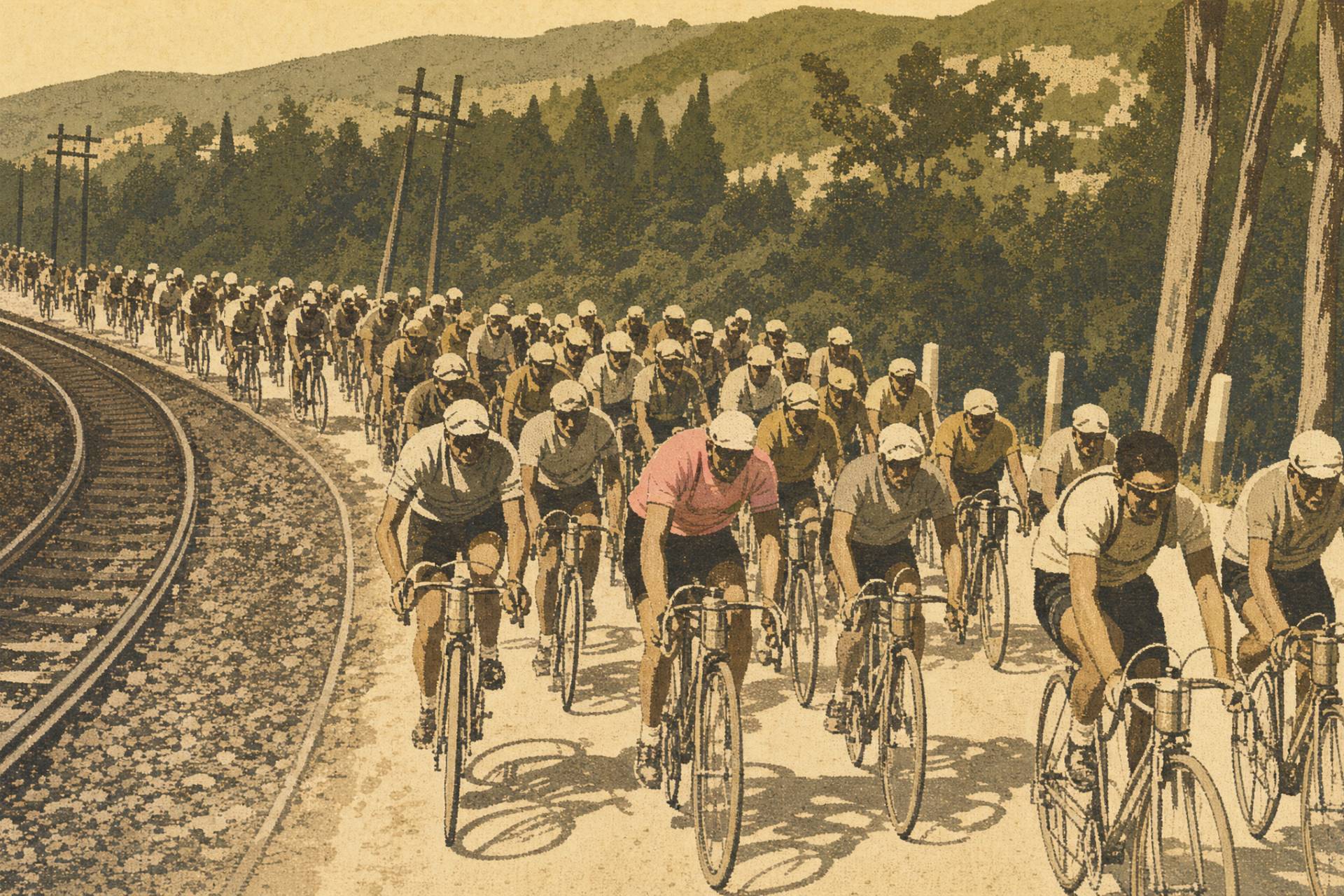
How a “soft” color became a mark of toughness in Italian sport
The objection that pink was too soft for a nation meant to project hardness was answered not by argument but by repetition. The maglia rosa belonged to the leader of one of the most punishing endurance events in sport, a three-week race that climbs the Alps and the Dolomites and is decided again and again in cold, altitude and exhaustion, on passes like the Stelvio and the Gavia where the road runs above two thousand meters and the weather turns without warning. Generation after generation of Italians grew up watching the hardest riders in cycling crowned in rosa, and the jersey took its character from the days on which it was won.
The greatest of those days came on June 10, 1949, on the road from Cuneo to Pinerolo. Fausto Coppi, who needed only to mark his rivals, attacked instead on the first of five Alpine passes with 192 kilometers still to ride, crossed the Maddalena, the Vars, the Izoard, the Montgenèvre and the Sestriere alone in the cold and the mud, and reached Pinerolo almost twelve minutes ahead of his great rival Gino Bartali. As the radio carried the stage to the country, the commentator Mario Ferretti opened with a line every Italian still knows: a man alone in the lead, his jersey sky blue, his name Fausto Coppi. Coppi was not yet in pink that afternoon, but the ride carried him toward the maglia rosa he would wear into Milan, and it fixed the rivalry between him and Bartali, the secular champion against the devout one, as the central drama of postwar Italy.
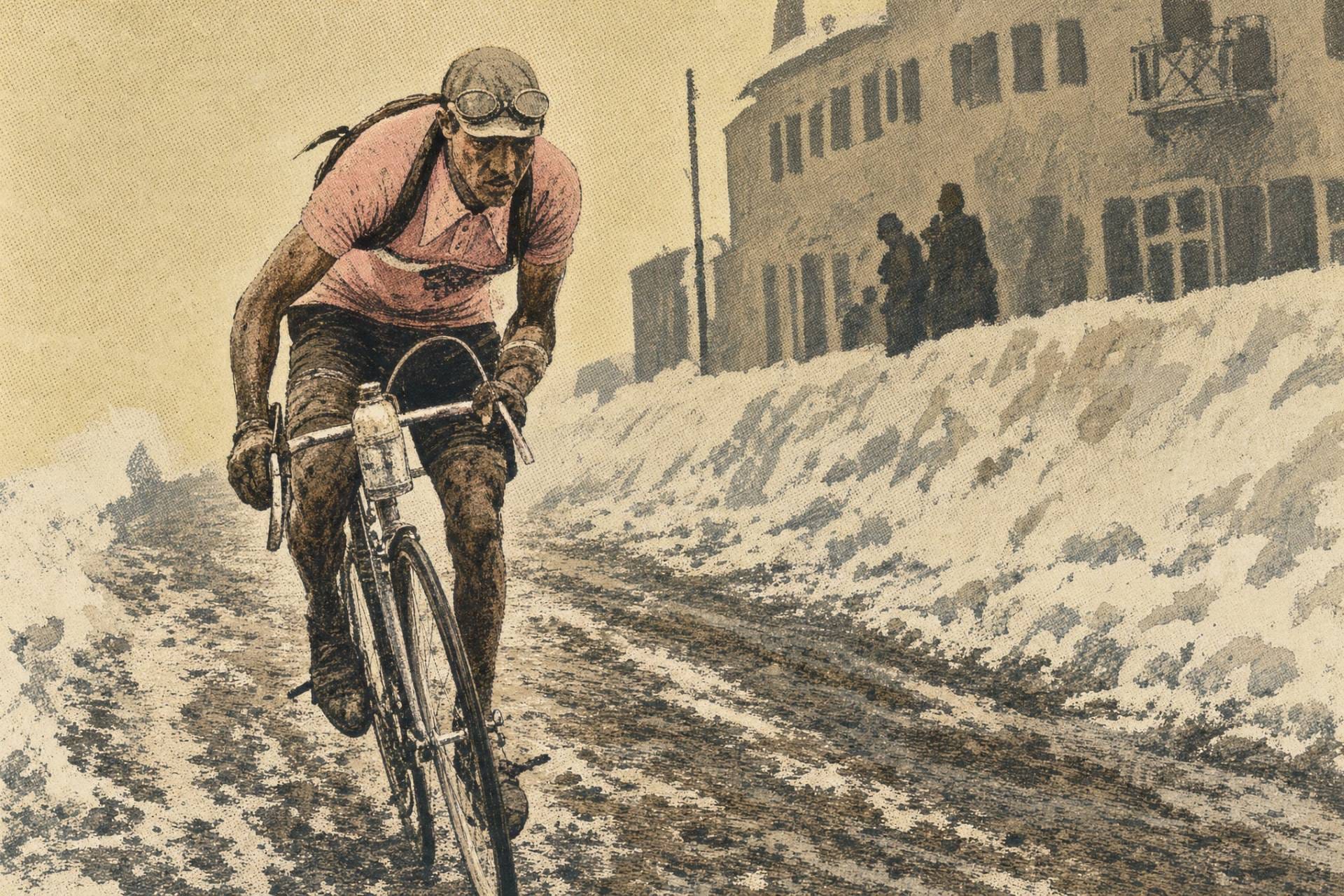
The most extreme day belonged to an outsider. On June 5, 1988, the fourteenth stage ran from Chiesa in Valmalenco to Bormio over the Passo Gavia, and as the riders climbed, the rain turned to snow and then to a full blizzard. The American Andy Hampsten, riding for the 7-Eleven team whose managers had stocked up on ski gear in anticipation, attacked into the storm while others stopped to pull on warm clothes or climbed off to walk the frozen descent. Erik Breukink took the stage in Bormio, but Hampsten took the maglia rosa in the snow, and held it to the finish to become the first and so far only American to win the Giro. The Gazzetta called it the day the strong men wept.
The list of those who wore it reads like a roll of the sport's hardest men: Guerra and Bartali, Coppi and the Belgian Eddy Merckx, the home favorite Francesco Moser, and Marco Pantani climbing away from the field in the late 1990s. Merckx, known as the Cannibal, would pull on the jersey more times than any rider in history and stand with Coppi and Binda on the record of five overall victories. The color that the regime had once thought unworthy of strength had become, through this succession, the opposite of soft. It was fixed in Italy as a mark of severity and command decades before much of the world began to debate whether pink could be anything but gentle.
Italy, unscripted
Privately yours.
A monthly masterclass in Italian culture. Decode the local lifestyle through expert analysis and hidden gems.
What the maglia rosa is made of, from wool to wind tunnel
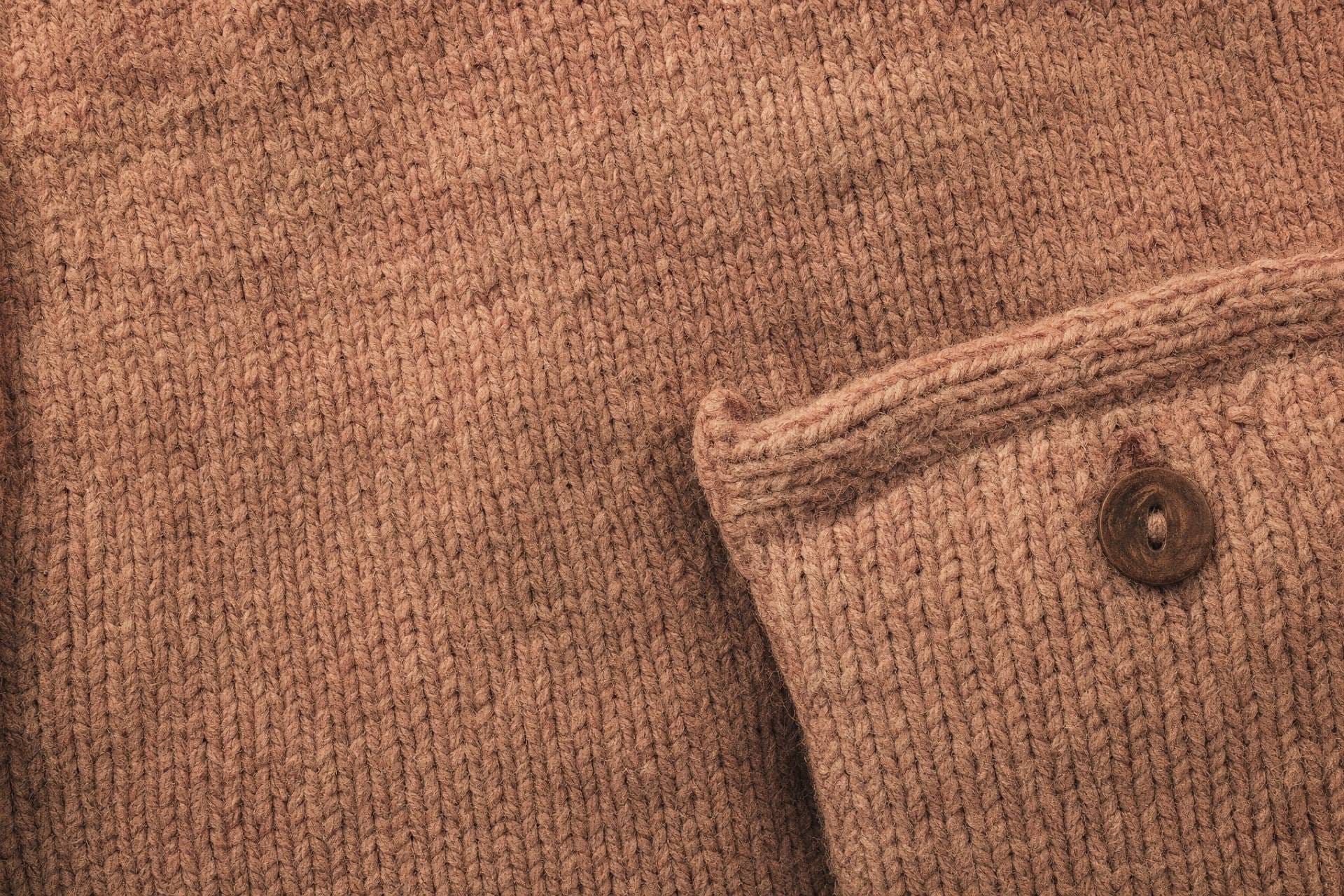
Guerra's woolen jersey, with front pockets a rider would stuff with food, shares almost nothing with the garment awarded today. It was thick and heavy, dyed a flat pink, and on the long wet stages of an early Giro it soaked through and clung to the body, adding weight to men who were already starving and frozen. For its first two decades it stayed plain pink, without team name or logo, until writing and sponsors began to appear from 1951. The front pockets survived into the 1970s, when changing equipment and the way riders were fed on the road finally made them obsolete.
The current maglia rosa is produced by Castelli, the clothing house now based in the Veneto, which first made the jersey in the 1980s and, after years in which the Italian manufacturer Santini held the contract, returned as official supplier in 2018. The modern version is developed in a wind tunnel at the Politecnico di Milano, cut close for aerodynamics and woven from recycled fibers, with special editions designed each year to mark particular stages or anniversaries. One garment, two technologies separated by more than ninety years, holding a single idea steady between them.
What the maglia rosa means today
For its first twenty years the maglia rosa said nothing at all: no name, no slogan, no logo. It did not need to. Pink was the whole statement, and nearly a century of champions has only deepened it. The jersey is usually called a piece of cycling history. It is more exactly a piece of Italy, a printer's decision from 1899 that hardened, through repetition and reverence, into one of the few colors anywhere that means a single, specific thing. To pull it on is to step into a line that runs from Guerra through Coppi and Merckx to whoever leads the race this year, and the weight of that line is part of why riders speak of the maglia rosa with a tenderness they reserve for almost nothing else in the sport.
Giro d'Italia 2026
The Giro d'Italia 2026 — stages, riders and the story of the 109th Corsa Rosa.
This article is part of our coverage of the 2026 Giro d'Italia. For the full story of the race — stages, contenders and key moments — read our main piece on the Corsa Rosa.
Latest Info
You can also find all the latest information on the Official Giro d'Italia website.
giroditalia.it
Guide to Italy is a letter from an Italy that doesn't write to everyone.
Become a member


