
By early July, Perugia stops being only a medieval hill town in central Italy and becomes an instrument. The sound carries up the Etruscan walls at dusk, spills out of Piazza IV Novembre, and threads through the arcades of Corso Vannucci, where a brass section plays for whoever happens to pass. This is Umbria Jazz 2026, the fifty-third edition of a festival that has tuned the city to one frequency every summer for more than half a century. Terraces fill, doorways turn into makeshift stages, and the last notes of one set drift into the first of another somewhere down the hill. The roster of names that have played here, from Miles Davis and Ella Fitzgerald to Dizzy Gillespie and Chick Corea, reads like an abbreviated history of the music itself. What began in 1973 as a free, roving experiment across the region long ago settled into Perugia and became one of the events that shapes the European summer.
The 2026 edition runs from July 3 to 12, and it turns a stone town in the Umbrian hills into one of the places jazz still calls home.
In this article
Essentials
Why Umbria Jazz is worth a trip to Perugia
Umbria Jazz is among the most established jazz festivals in Europe, and its character comes from a decision made early in its history: the festival does not confine itself to a single stage. Large evening concerts fill the Arena Santa Giuliana, a purpose-built venue that seats around ten thousand, while a second, free program unfolds across the historic center from morning until past midnight. That double structure is what sets the week apart. A ticket buys an evening with a headliner, and the city itself, at no cost, offers marching bands, afternoon sets in the gardens, and club dates in Renaissance halls. In 2026 the scale is considerable: more than 275 events across the ten days, over half of them free, spread across some fifteen stages. The lineup has never been strict about genre either, moving between straight-ahead jazz, soul, funk, and the occasional pop or rock name, which is part of why the festival draws an audience well beyond jazz devotees.
The festival's roots explain its shape. Umbria Jazz was founded in 1973 by Carlo Pagnotta, a Perugia clothing merchant with a lifelong passion for the music, and its first editions were itinerant and entirely free, turning the squares of Umbrian towns into open-air stages for Count Basie, Charles Mingus, and Miles Davis. The crowds soon outgrew that roving format, Perugia became the permanent home, and in 2003 the festival settled into the structure it keeps today: headline concerts at the arena, pure jazz in the theaters, and free music in the piazzas. The result works equally well for someone building a trip around one specific artist and for someone who simply wants to be in Perugia while the music is on.
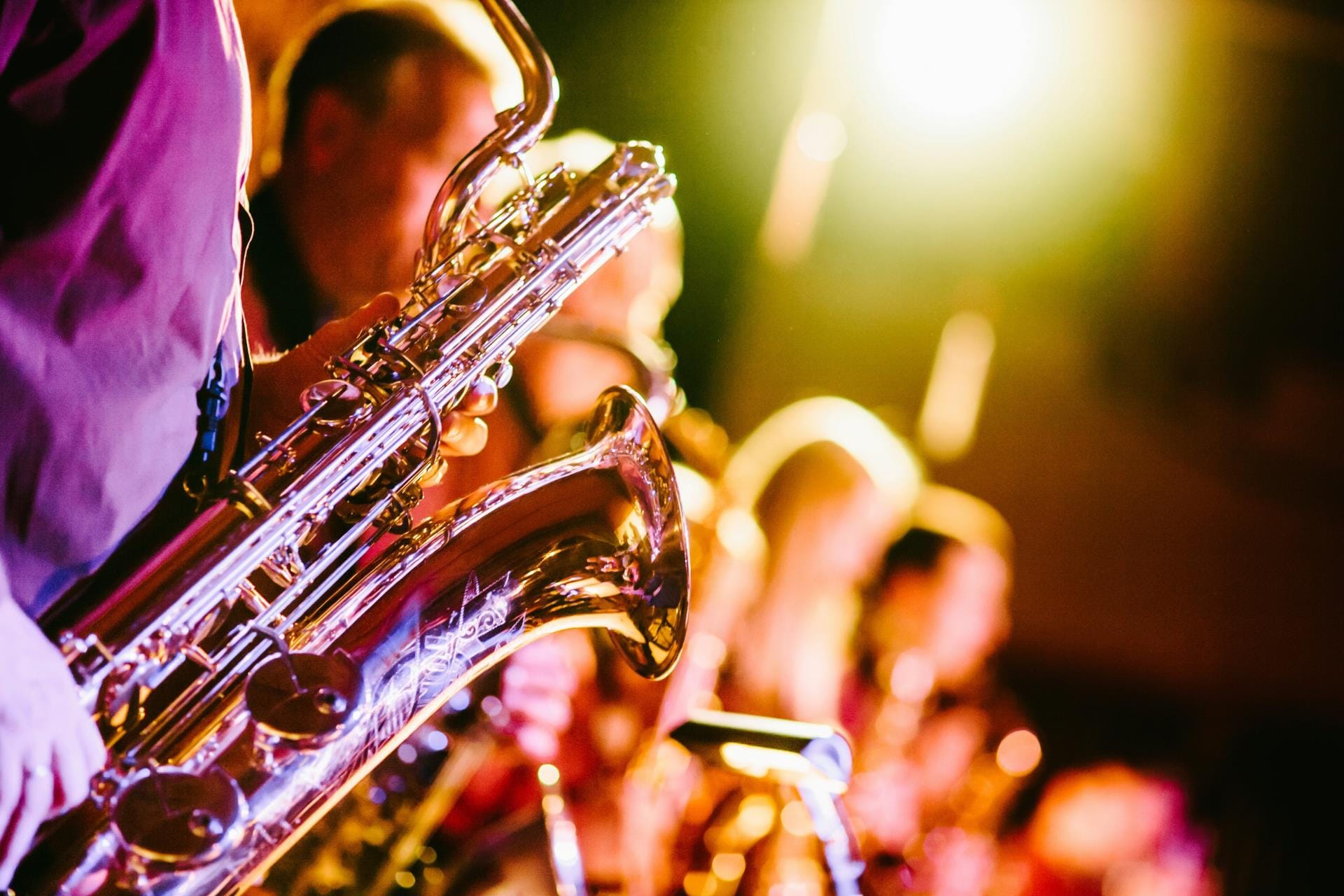
The Umbria Jazz 2026 lineup, day by day
The Umbria Jazz 2026 lineup at the Arena Santa Giuliana runs one headline concert each evening from July 3 to 12, and the edition carries a theme: a centennial tribute to Miles Davis and John Coltrane, both born in 1926. The festival opens on July 3 with Sting, whose stripped-back Sting 3.0 trio sold out the arena's first night. July 4 pairs Perigeo, the reunited Italian jazz-rock group, with BEAT, the project of Adrian Belew, Steve Vai, Tony Levin, and Danny Carey performing the music of King Crimson. On July 5, in one of three Italy-exclusive dates, Jon Batiste, the American musician and bandleader, headlines, with the gospel and soul group Annie and the Caldwells opening.
July 6 belongs to the centennial: Charles Lloyd, the veteran American saxophonist and National Endowment for the Arts Jazz Master, brings his quartet, followed by the tribute of trumpeter Terence Blanchard and Ravi Coltrane, the saxophonist son of John Coltrane. July 7 brings Laurie Anderson with Sexmob and the blues of Christone "Kingfish" Ingram; July 8 the only Italian date of Snarky Puppy with the Metropole Orkest; July 9 the All Stars band led by pianist Stefano Bollani. July 10 is the traditional Brazilian night with Gilberto Gil, July 11 belongs to Zucchero, whose concert is sold out, and the festival closes on July 12 with Elvis Costello and the Imposters.
Alongside the arena, the Teatro Morlacchi hosts what the festival calls the festival within the festival, a program of pure jazz each evening that in 2026 includes Paolo Fresu's "Kind of Miles," Cécile McLorin Salvant, Bill Frisell, and Kenny Barron, while the Sala Podiani of the Galleria Nazionale dell'Umbria holds more intimate, chamber-scale sets. The confirmed evening concerts are set out in the schedule below.
2026 program: Arena Santa Giuliana evening concerts
How to plan a trip to Umbria Jazz 2026
Reaching Perugia, understanding how the concerts are organized, and booking a bed in a city that fills up are the three things worth settling before Umbria Jazz 2026. Each is straightforward with a little planning.
Umbria Jazz tickets and the free city program
The festival runs on two tracks: ticketed evening concerts at the Arena Santa Giuliana, and a free program that fills the historic center from midday until past midnight. The marquee concerts at the arena require paid tickets, sold through the official festival site and the usual platforms including TicketOne, Ticketmaster, Vivaticket, and Boxol, with prices starting around €35 and rising for the biggest names; a 20 percent discount applies to visitors under twenty-six. The highest-profile nights sell quickly, and several 2026 dates, among them Sting and Zucchero, sold out before the festival began. Everything else radiates out from the arena at no cost. The Giardini Carducci, Piazza IV Novembre, the Sala dei Notari inside the Palazzo dei Priori, the Teatro Morlacchi, and the Teatro del Pavone host a rotating program of free and low-cost sets, while brass bands and buskers work Corso Vannucci through the afternoon and into the night. A traveler who never buys a single ticket can still spend every day inside the festival. The practical takeaway: budget for the one or two headliners worth the arena, and leave the rest of the schedule open to the free program.
How to get to Perugia for the festival
Perugia sits in the center of the peninsula, roughly equidistant from Rome and Florence, and reaching it takes some planning because it is not on the main high-speed rail spine. The closest airport is Perugia San Francesco d'Assisi, about twelve kilometers from the city, though its schedule of flights is limited and seasonal. Most international visitors arrive instead through Rome Fiumicino or Florence and continue by train or car. By rail, regional and intercity trains connect Perugia to Florence in roughly two hours and to Rome in two to three, arriving at the Fontivegge station below the old town. From there the minimetrò, a small automated line, climbs to the edge of the historic center in a few minutes.
Perugia's centro storico falls inside a restricted-traffic zone (ZTL), so driving gives more freedom for exploring Umbria but complicates the city itself, since the medieval streets are largely closed to cars. The established solution is to leave the car in one of the perimeter parking structures, several of which connect to the center by escalator through the Rocca Paolina, the buried fifteenth-century fortress that now works as a covered passage. During the festival the center is pedestrian and compact, and almost everything on the free program is reachable on foot. For the evening concerts, the minimetrò runs on extended hours through the festival, with a last departure around 1:45 a.m. from July 4 to 12, easing the trip back from the arena after the late sets.
Where to stay in Perugia during Umbria Jazz
Perugia fills during Umbria Jazz, and accommodation in the historic center is limited and reserved months ahead. Anyone set on staying within walking distance of the free program should book early. Rooms in the centro storico put every venue at the end of a short walk, but they are the first to go and the most expensive during the festival week. Properties lower down the hill, near the minimetrò or the station, offer easier arrival by car and a quick ride up. Travelers who find the city full have good alternatives within half an hour: Assisi to the east, the villages around Lake Trasimeno to the west, and the smaller Umbrian hill towns all make workable bases, with a train or a short drive back into Perugia for the evening. Dinner during the festival calls for the same foresight as a bed: the trattorias of the centro storico fill in the hours before the arena concerts, and a table booked ahead is worth more than a table hunted for at nine.
What to see in Umbria beyond the festival
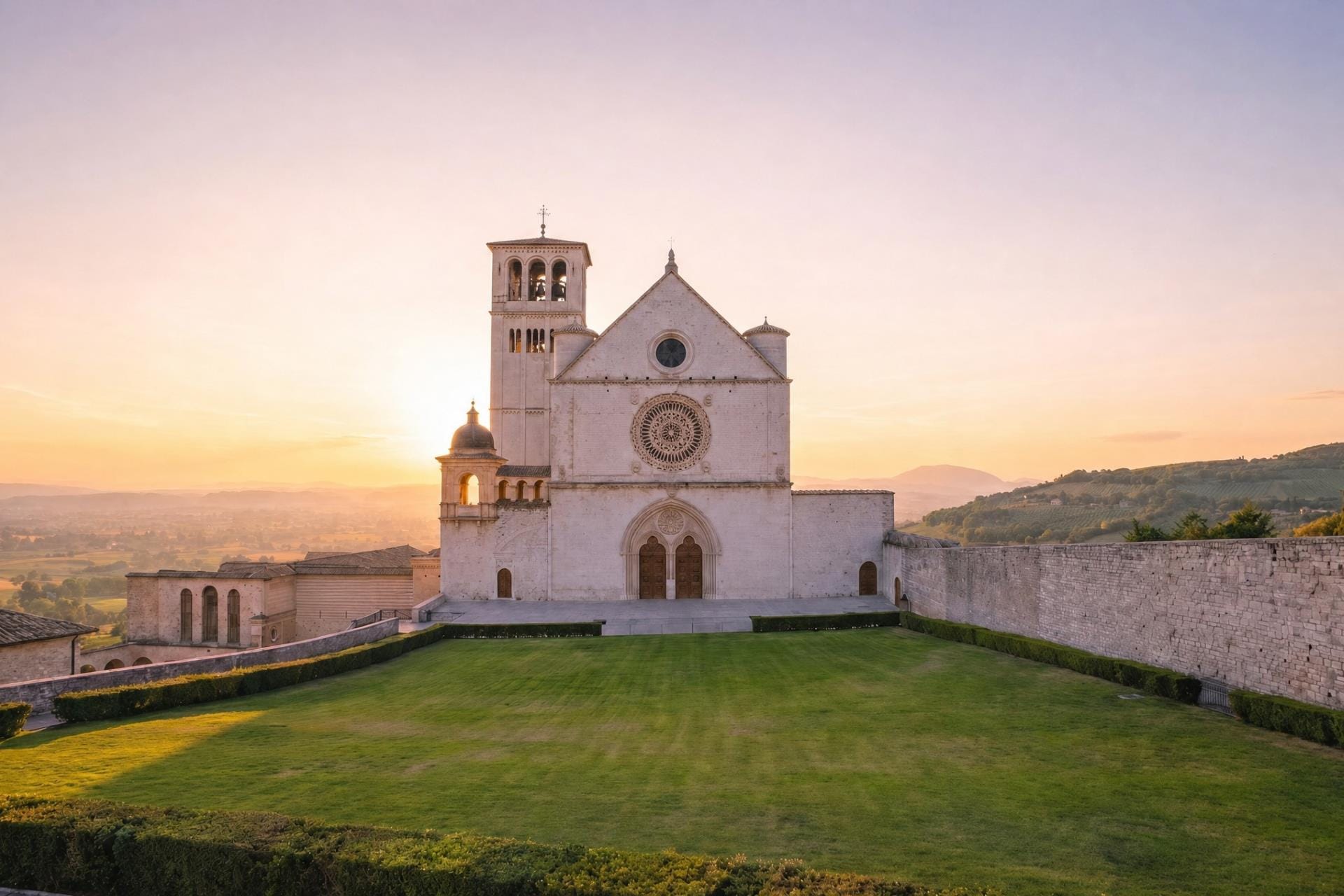
The festival rewards visitors who treat it as the reason to spend a week in a region that draws less attention than Tuscany next door. Perugia itself holds the Galleria Nazionale dell'Umbria, a major collection of medieval and Renaissance Umbrian painting, and the Collegio del Cambio, whose walls Perugino frescoed at the height of his career. The Etruscan Arch anchors one end of the old town, the underground chambers of the Rocca Paolina run beneath it, and the whole center is compact enough to cross on foot in an afternoon. Perugia is also a chocolate town, home to Perugina and its Baci, with a confectionery tradition that predates the tourists.
Assisi, half an hour east, draws visitors to the Basilica of San Francesco and its Giotto frescoes. The hill towns of Spello, Montefalco, and Bevagna sit within easy reach, and to the west Lake Trasimeno offers islands and quiet lakeside villages. The Umbrian table is its own argument for staying on: the Sagrantino of Montefalco and the wines of Torgiano, the black truffle of the eastern valleys, and the pork of Norcia, which gave the Italian language its word for a certain kind of butcher, the norcino. A festival ticket, in other words, opens onto a week of central Italy at its least crowded.
Frequently asked questions about Umbria Jazz 2026
What is the difference between Umbria Jazz and Umbria Jazz Winter?
Umbria Jazz runs two separate festivals. The main summer edition takes place in Perugia in July. A second, smaller winter edition, Umbria Jazz Winter, has been held in Orvieto since 1993, running for five days around the New Year, roughly from late December into the first days of January. The winter program leans toward soul, gospel, and intimate club sets inside Orvieto's theaters and historic palazzi, a quieter, indoor counterpart to the open-air scale of July.
What is the weather like in Perugia in early July?
Early July in Perugia is warm and largely dry. Daytime highs commonly reach the low thirties Celsius, around ninety Fahrenheit, with cooler evenings that make the open-air arena concerts comfortable after dark. Brief afternoon thunderstorms are possible but rarely last long. Light clothing, sun protection for the daytime program, and a layer for the cooler night air cover most days.
How far in advance should Umbria Jazz tickets be booked?
The biggest names at the Arena Santa Giuliana sell quickly, and the highest-profile concerts can sell out well before the festival opens; in 2026 both Sting and Zucchero were gone by the time the gates opened. Anyone set on a specific headliner should buy as soon as tickets are released and secure accommodation at the same time. The free program requires no ticket and no advance planning.
Is Umbria Jazz suitable for families with children?
Yes. The festival is open to all ages, and much of the free daytime program, from marching bands in the streets to sets in the gardens, suits families well. Umbria Jazz also runs dedicated activities for children through its UJ4KIDS program, and children under six enter the arena free, without a seat. Evening concerts at the arena vary by artist, so parents planning a late night out may want to check the specific act.
What time do the concerts start, and how late do they run?
The festival fills the whole day. Free performances begin around midday and continue through the afternoon and evening across the historic center, while the ticketed headline concerts at the Arena Santa Giuliana begin at nine in the evening, with gates from seven. Street sets and club dates can run past midnight, so a single day can hold everything from a lunchtime set to a late-night jam.
The magic of Umbria Jazz in Perugia
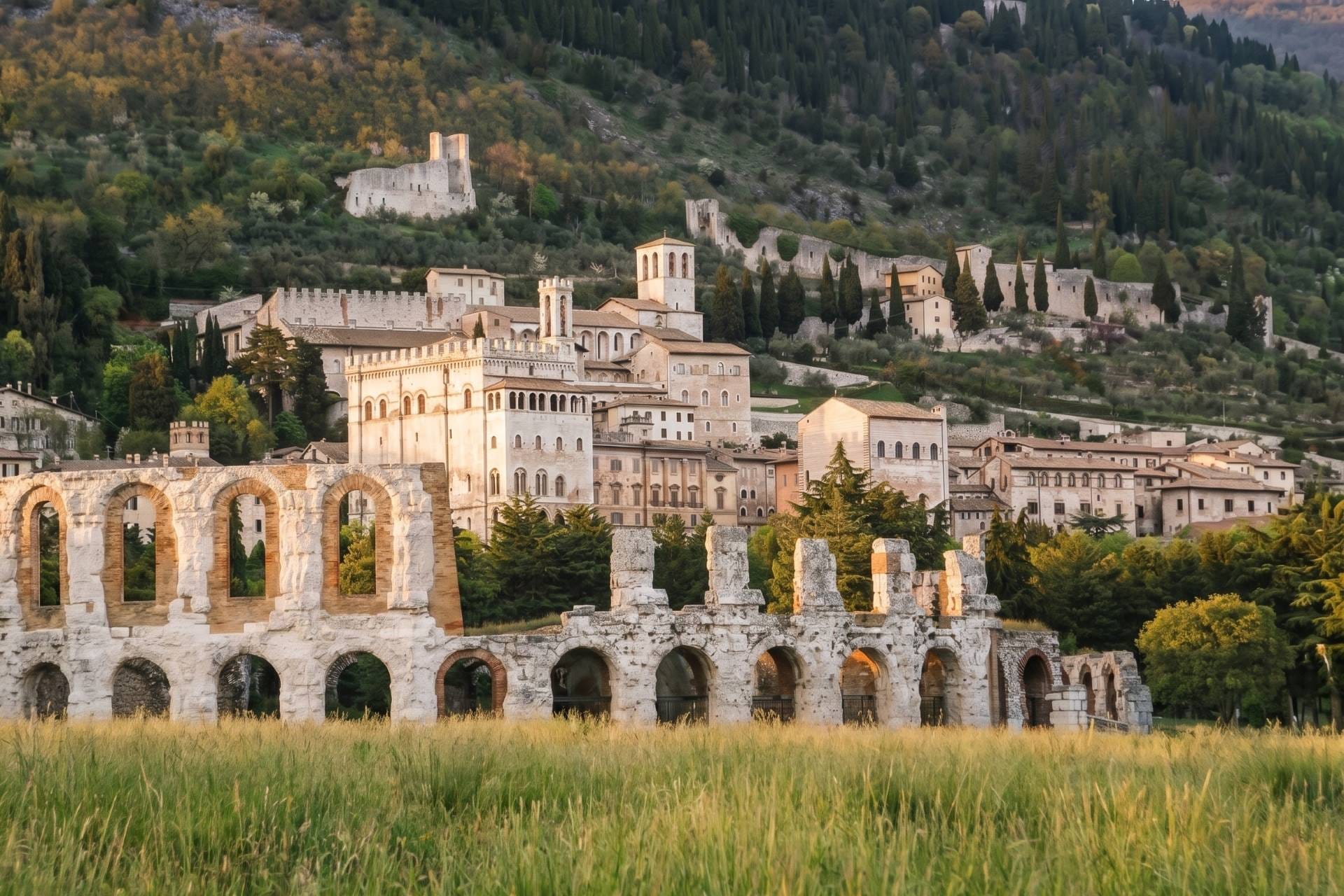
What lingers after Umbria Jazz is harder to pack than a ticket stub. It is the memory of a trumpet line carried up a stone staircase after dark, the particular way a Renaissance hall holds a piano's decay, the sound of a marching band turning a corner into a crowd that parts and re-forms around it. For ten days Perugia gives itself over completely: cafés stay open late, strangers share tables to catch a set, and the music finds its way into streets that have carried sound for two thousand years. That is the quiet magic of the festival, the sense that the city and the music belong to each other for one week each summer. Perugia will still be here in August, unhurried and beautiful, and the arena will fall silent. But those who came for Umbria Jazz tend to measure the year by it, and to start, somewhere around the last encore, already counting toward the next July.
Summer 2026
Italy in summer 2026: the complete guide
Where to go and what is on across the country, from the coast and islands to the festivals of the interior.
Guide to Italy is a letter from an Italy that doesn't write to everyone.
Become a member


