
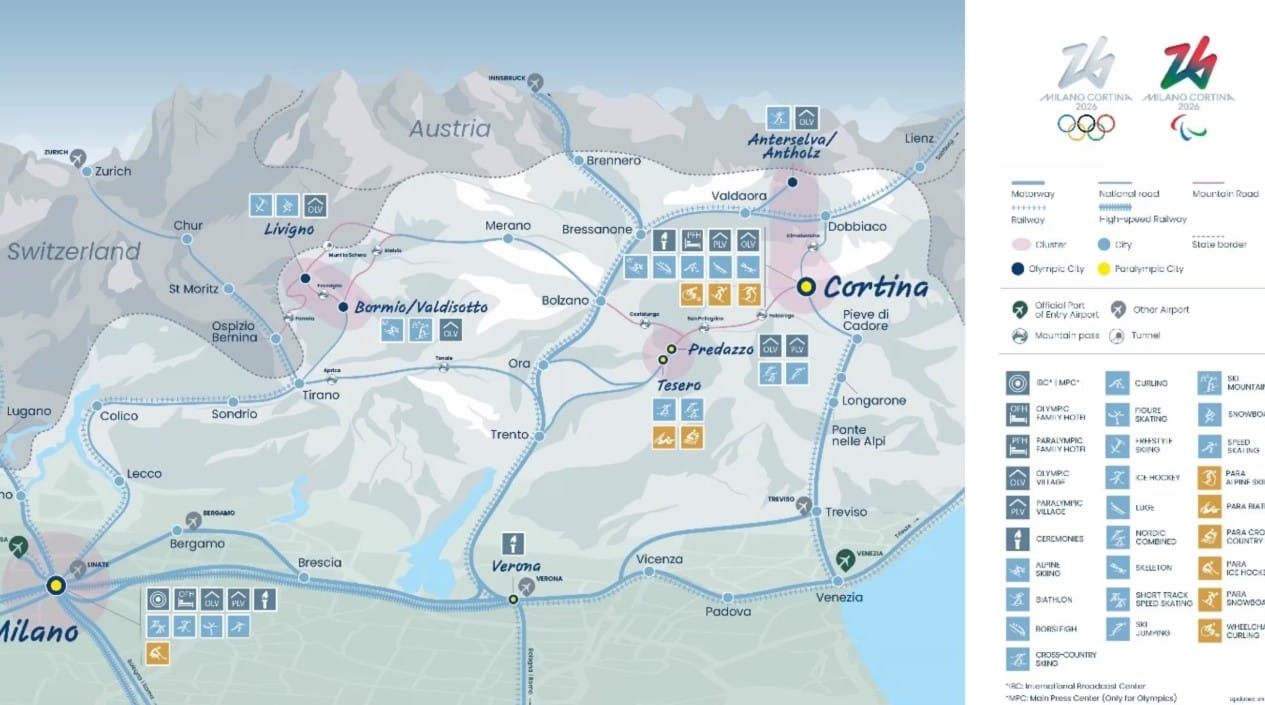
Italy stands at the threshold of a historic milestone. It is January 2026, and the Italian Alps have become the epicenter of the sporting world. Unlike previous iterations of the Winter Games, the XXV Olympic Winter Games are characterized by a "diffuse" geography, spanning over 22,000 square kilometers across the regions of Lombardy, Veneto, and the autonomous provinces of Trento and Bolzano. While this decentralized model preserves the authentic charm of the mountain territories, it presents a sophisticated logistical puzzle for the independent traveler.
The Olympic Shuttle project serves as the vital connective tissue of this event. It is important to note that the "Olympic Shuttle" is not a single commercial brand, but rather the comprehensive mobility concept designed by local authorities to ensure a seamless transition between the urban sophistication of Milan, the rugged verticality of Bormio, and the refined elegance of Cortina d’Ampezzo. For the meticulous planner, understanding this intricate transport network is the key to transforming a complex journey into a sophisticated Italian pilgrimage. This guide illuminates the path from arrival at the gateway airports to the final last-mile ascent to the competition venues.
- Landing in the heart of the Games: airport gateways for international travelers
- The Olympic corridor: navigating the Milan, Cortina, and Bormio transit network
- Reaching the specific clusters: practical logistics for every venue
- Arriving by car: what you need to know about Olympic restrictions and parking
- Last-mile mobility: getting from your hotel to the Olympic grandstand
- Digital tools and real-time resources for navigating the Games
- Embracing the legacy: your journey through the Milano Cortina 2026 landscape
Landing in the heart of the Games: airport gateways for international travelers
For international visitors, the journey begins at one of northern Italy’s primary aviation hubs.
While the International Olympic Committee (IOC) and the Organizing Committee officially promote Milan Malpensa (MXP), Milan Linate (LIN), as the primary gateways, several other airports offer strategic advantages for the traveler. Selecting the correct arrival point is contingent upon the specific Olympic venue you intend to visit first: whether it is the ice sports in the city or the alpine events in the high peaks.
- Milan Malpensa (MXP) and Milan Linate (LIN): these remain the primary conduits for those focusing on the ice sports in Milan or the alpine events in the Valtellina cluster. Malpensa, in particular, offers the most robust international connections: the Malpensa Express train provides a direct link to Milano Centrale, the main hub for shuttles to Bormio and Livigno.
- Milan Bergamo Orio al Serio (BGY): a strategic gateway for travelers from across Europe: this airport is exceptionally well-positioned for those heading toward the Val di Fiemme and South Tyrol clusters. It serves as a major hub for low-cost carriers, offering flexible options for the budget-conscious yet sophisticated traveler.
- Venice Marco Polo (VCE) and Treviso (TSF): these are the optimal gateways for the Venetian cluster. Travelers bound for Cortina d’Ampezzo or the Antholz biathlon center will find Venice to be the most efficient starting point: this is followed by a northern trajectory via private transfer or dedicated Olympic bus lines moving toward the Dolomites.
- Verona Valerio Catullo (VRN) and Bolzano (BZO): strategically vital for the core of the Alps: Verona offers excellent proximity to the Nordic centers, while the smaller Bolzano airport provides the closest possible access to the biathlon venues in South Tyrol and the mountain passes.
- Innsbruck (INN) and Munich (MUC): for those arriving from long-haul destinations, Munich serves as a high-capacity alternative: despite being in Germany, its rail connections to South Tyrol via the Brenner Pass make it a viable entry point for the northernmost Olympic venues.
The Olympic corridor: navigating the Milan, Cortina, and Bormio transit network
The spine of the 2026 Winter Games is an ambitious, multi-modal transit network. However, travelers should be aware of the Olympic Lanes (Corsie Olimpiche): dedicated road lanes reserved for accredited vehicles. These may increase travel times for private cars on the A4 and A22 motorways, making the synchronized fleet of high-capacity coaches and enhanced rail services even more attractive.
- Milan to Cortina d’Ampezzo: the journey is managed through a combination of high-speed rail (Frecciarossa) to Venice or Belluno, followed by dedicated Olympic Express shuttles. Expect travel times to exceed five hours during peak event days due to traffic management.
- Milan to Bormio and Livigno: focus on the Trenord rail link between Milano Centrale and Tirano. During the Games, this line operates with increased frequency, meeting synchronized shuttle buses that whisk spectators directly to the competition heights.
Reaching the specific venues: practical logistics for every venue
Each competition hub requires a tailored approach. The complexity of the mountain terrain necessitates a departure from standard travel habits: prioritizing official Olympic transport is the most efficient way to navigate these protected territories.
The Milan venue: ice sports and ceremonies
Navigation within Milan is facilitated by the city’s world-class ATM Metro and tram network. The Milano Cortina 2026 Official App integrates directly with local transit, providing seamless digital ticketing and real-time crowd alerts.
- Rho Fiera Milano (speed skating): spectators should utilize the M1 (Red line) toward Rho Fiera.
- San Siro Stadium (opening ceremony): the M5 (Purple line) provides the most direct access: it is highly recommended to arrive at least two hours before the start time due to strict Olympic security protocols.
The Valtellina venue: Bormio and Livigno
Accessing the legendary Stelvio slope in Bormio or the snowboarding venues in Livigno involves a scenic but rigorous ascent.
- Tirano rail terminus: this is the main transfer point where travelers switch from regional trains to the Valtellina Shuttle, a dedicated shuttle service that will take them to Bormio or Livigno.
- Bormio pedestrian zones: it is worth noting that Bormio’s historic center remains largely car-free during the Games: this ensures a festive atmosphere but requires visitors to utilize the local circular shuttles to move between the town center and the finish lines.
The Dolomiti venue: Cortina, Anterselva, and Val di Fiemme
This venue spans some of the most dramatic terrain in the Alps, requiring a mix of inter-valley shuttles and regional bus networks.
- Dolomiti Bus network: centered in Cortina, this network has been significantly expanded to connect the town center with the sliding centers and alpine skiing venues.
- Inter-cluster shuttles: travelers moving between Cortina and the Nordic venues in Val di Fiemme or the biathlon center in Anterselva (Antholz) should utilize the dedicated Olympic inter-venues shuttles: these routes bypass valley floor congestion and save hours of transit time by utilizing high-altitude alpine roads restricted to official vehicles.
Arriving by car: what you need to know about Olympic restrictions and parking
While the independence of a private vehicle is tempting for a mountain itinerary, the Italian authorities have implemented stringent traffic management measures: these are designed to protect the fragile Alpine ecosystem and ensure the safety of thousands of spectators. To avoid heavy fines and blocked access, every independent driver must adhere to three main pillars:
- Olympic ZTL (Limited Traffic Zones): temporary ZTLs are active in the historic centers of Cortina d’Ampezzo and Bormio. Access is strictly regulated via camera surveillance: only authorized vehicles and local residents may enter these zones. Unauthorized entry will result in automated heavy fines mailed to the vehicle’s registered address or rental agency.
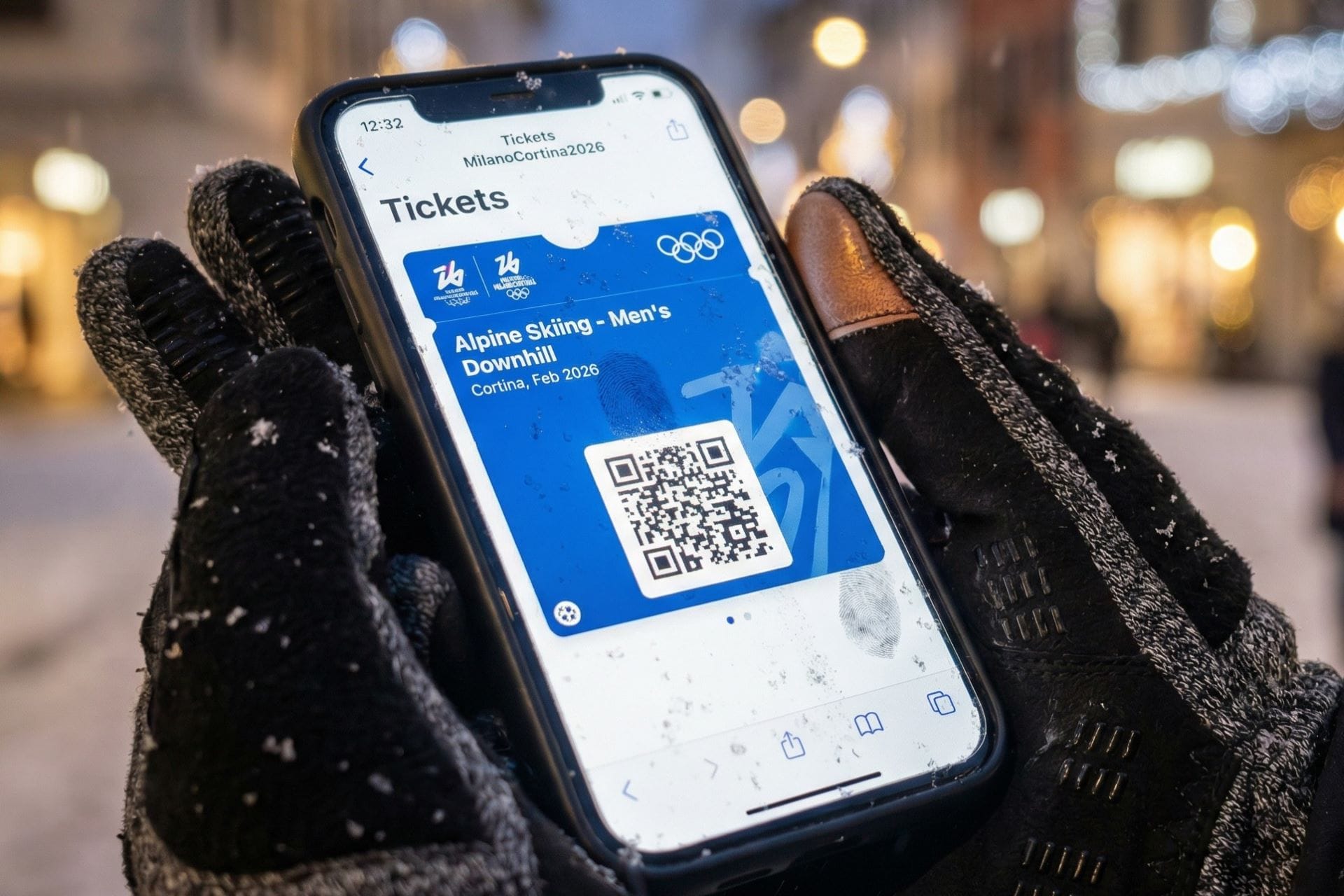
- Mandatory parking reservations: there is no spontaneous parking available near any Olympic venue. All parking spaces must be reserved and paid for in advance through the Milano Cortina 2026 Official App. Upon successful booking, you will receive a digital QR code: this serves as your mandatory entry permit for specific satellite parking lots located on the outskirts of the town centers.
- Winter equipment compliance: according to the Italian Codice della Strada, winter tires (marked with the M+S symbol) or the presence of snow chains on board are mandatory from November 15th to April 15th. When renting a car, specifically request "Pneumatici Invernali": in the event of heavy snowfall, local police (Polizia Stradale) may bar access to mountain passes for any vehicle not properly equipped.
Last-mile mobility: getting from your hotel to the Olympic grandstand
The final leg of the journey—often referred to as the last mile—is designed to be a primarily car-free experience. The goal is to move spectators efficiently from transit hubs to the high-altitude competition gates via a low-emission shuttle fleet.
Once you reach a designated transit hub or a satellite parking area, you will transfer to an official Olympic shuttle. In the centers of Cortina and Bormio, some venues are within walking distance of the drop-off points, but the Alpine terrain is steep and often icy: it is highly recommended to allow a buffer of at least 60 to 90 minutes for this final transition. This timeframe accounts for mandatory security screenings and the significant pedestrian crowds expected at the main stadiums.
Digital tools and real-time resources for navigating the Games
In the fast-moving environment of the XXV Olympic Winter Games, information is the most valuable currency. Maintaining an organized itinerary across a diffuse territory of 22,000 square kilometers requires digital precision: the following assets are indispensable for tracking shuttle schedules and securing transport reservations in real-time.
- Milano Cortina 2026 Official App: the primary source for real-time Olympic shuttle schedules, mandatory parking reservations, and official security alerts: this is the single most important tool for any visitor navigating the competition clusters.
- App Store for iOS devices, click here
- Google Play Store for Android devices, click here
- Moovit: highly accurate for local transit integration, including the complex regional bus networks within the mountain clusters of the Dolomites and Valtellina.
- Trenitalia (and Trenord) and Italo: essential for monitoring Italian rail schedules: high-speed Frecciarossa and Italo tickets between Milan, Venice, and Verona should be booked well in advance to ensure seating during the Olympic peak periods.
- Viaggiare in Trentino and Luceverde: specialized services providing real-time road conditions and mountain pass closures due to Alpine weather: these are critical for travelers utilizing private vehicles or car rentals.
Embracing the legacy: your journey through the Milano Cortina 2026 landscape
The XXV Olympic Winter Games represent a bold vision of a decentralized, sustainable sporting event: they invite the world to discover the Italian Alps in a way that respects the fragile mountain ecosystem while celebrating peak human achievement. By mastering the Olympic Shuttle system and navigating the specific logistical nuances of northern Italy, the traveler ensures that their experience is defined not by the complexity of the journey, but by the grandeur of the destination.
Managing expectations: potential delays and high-volume congestion
It is important to manage expectations regarding transit times during the peak days of the Games. Due to the unprecedented volume of spectators and the logistical complexity of the mountain corridors, travelers should anticipate potential delays, unforeseen transport interruptions, or sudden schedule shifts. High-demand periods may lead to increased wait times at shuttle hubs and security checkpoints: maintaining a flexible itinerary and allowing for significant extra buffer time is the most effective way to navigate these periods without compromising your experience.
Success in navigating this historic event depends on a commitment to sophisticated travel planning: focusing on the Milan-Cortina-Bormio corridor as a unified experience. To ensure your journey is as seamless as the athletes' performances, remember these three core principles:
- Digital readiness: keeping the official 2026 transport apps updated to manage real-time shifts in Alpine transit.
- Environmental respect: utilizing the synchronized shuttle network to minimize your carbon footprint in the Dolomites and Valtellina.
- Cultural immersion: allowing the transit between the urban energy of Milan and the vertical beauty of Bormio to become a fundamental part of your authentic Italian pilgrimage.
By embracing these modern mobility solutions, you ensure that the focus remains exactly where it belongs: on the world-class athleticism and the timeless, snow-covered beauty of the Italian Alpine heritage.
Guide to Italy is more than an editorial project—it’s a curated solution for travelers who demand depth, private access, and expert-led storytelling. Elevate your journey and make Italy yours.


