
Travel Guide
The Giro d'Italia 2026 travel guide
For the complete stage-by-stage breakdown of the Corsa Rosa, including all 21 stages from Bulgaria to Rome, it covers the full route and what each day means on the ground.
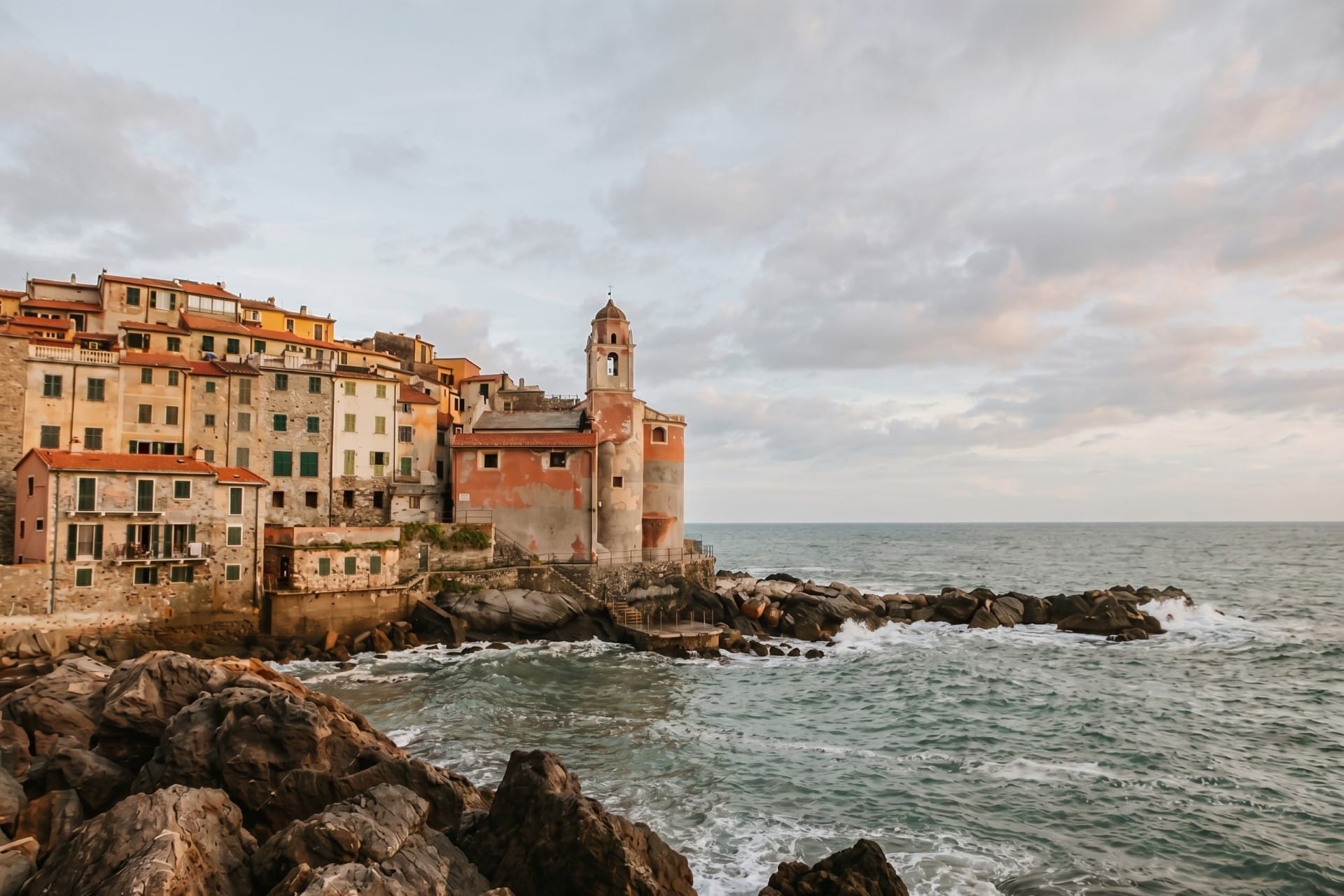
At 9 in the morning on the Passo del Termine, before the peloton arrives, the light already does something strange. The road emerges from chestnut shadow onto a bald ridge, and the Ligurian Sea appears below, far enough down that it looks painted rather than real. The switchbacks toward Vernazza, one of the five villages of the Cinque Terre, begin their descent through vine terraces that hang over the cliff like balconies, and the air changes: brine, oregano, something resinous that is not quite pine. This is not a transition between two Italian landscapes. It is a transition between two different ideas about what land is for. This is the terrain the Giro d'Italia 2026 crosses in Liguria, in stages 11 and 12.
The 2026 Giro d'Italia traverses Liguria across two consecutive stages in the second week of the race: stage 11 from Porcari to Chiavari on 20 May, covering 195 kilometres and 2,939 metres of climbing through the eastern Riviera, and stage 12 from Imperia to Novi Ligure on 21 May, 175 kilometres tracing the western coast before pushing inland over the Ligurian Apennines to Piedmont. Together, they cross the full length of a region that is never wider than 35 kilometres from the sea to the ridge line, and that has compressed into that narrow strip a thousand years of agriculture, maritime trade, and a cuisine so specific it barely translates fifteen kilometres inland.
In this article:
Giro d'Italia 2026 stage 11: from the Tuscan plain to the Cinque Terre coast
Stage 11 departs Porcari, just north of Pisa, tracing the Tyrrhenian coast through Camaiore before joining the Via Aurelia toward La Spezia. The first hundred kilometres are flat and fast, a controlled prelude that gives no indication of what follows. North of La Spezia, the road turns vertical in the space of a few kilometres.
The Cinque Terre terraces: a UNESCO living landscape above the stage route
Two short ascents at La Foce (2.6 kilometres at 6.8 percent) and Pignone (2 kilometres at 7.2 percent) precede the Passo del Termine, 7.4 kilometres averaging 4.9 percent, which marks the inland boundary of the Cinque Terre national park and the true beginning of the Ligurian finale. From the descent of the Termine, the road falls immediately into the Colle di Guaitarola, 9.7 kilometres at 6.3 percent, before the first coastal glimpse at Sestri Levante.
What the riders cross here is a landscape that has been under active human construction since the 12th century. The cultivation terraces of the Cinque Terre extend in some places to two kilometres in length, built from a few metres above sea level to as high as 400 metres altitude, almost entirely by hand. UNESCO, which designated the area a World Heritage Site in 1997, classified it not as a natural landscape but as a "living landscape," one that has an active role in contemporary society, in close connection with traditional lifestyles, where the evolution process is still active. The designation is precise: these are not ruins of past effort but the record of a system still in motion. The vines on those terraces still produce Sciacchetrà, a sweet wine made from partially dried Bosco, Albarola and Vermentino grapes in quantities so small that most of it never leaves the five villages. It is not a wine that travels well, which is why it has not been ruined.
The final approach to Chiavari adds two inland climbs (the Colla dei Scioli at 5.7 kilometres averaging 6.4 percent and the Cogorno rise at 4.6 kilometres averaging 6.7 percent) before the closing 12.6 kilometres onto the Gulf of Tigullio.
Chiavari: medieval arcades, caruggi and ravioli al tocco at the stage finish
Chiavari sits on the gulf that takes its name from the ancient Ligurian tribe of the Tigulli, and it has been a prosperous town for long enough that its historic centre reflects several different centuries of confidence. The medieval arcade network, approximately 3 kilometres of continuous covered passageways, channels daily life through the same geometry that sheltered Genoese merchants in the 13th century. A 12th-century castle presides over the town from its hilltop, and the grid of the caruggi (the narrow lanes of the old centre in Genoese dialect) runs between noble palazzi whose facades reference Genoese Baroque without quite committing to it.
What Chiavari does not do is perform itself for visitors. Bakeries, wine bars and ironmongers operate under the arcades without interruption; the ravioli al tocco, filled with veal, its innards, endive and borage, then finished with a slow-braised Genovese beef sauce called tocco in dialect, is served in the local trattorias with the matter-of-factness of a dish that has no interest in being explained. The stage finish here is an argument for treating the town as a destination rather than a transfer point between Genoa and the Cinque Terre, which is exactly how most people use it on the train.
Italy, unscripted
Privately yours.
A monthly masterclass in Italian culture. Decode the local lifestyle through expert analysis and hidden gems.
Giro d'Italia 2026 stage 12: the Riviera di Ponente, Taggiasca olives and the road to Novi Ligure
The race organisers describe stage 12 as a "reverse Milan-Sanremo" (the spring Classic that covers almost the same coastal road in the opposite direction each March) and the description is accurate in more than one sense. The 175-kilometre route from Imperia follows the Via Aurelia eastward to Savona before climbing inland over the Ligurian Apennines to the Po Valley and the finish in Novi Ligure. But the Riviera di Ponente travelled in this direction reads differently than the westward journey of the spring classic. Going east toward Savona, the olive groves arrive before the capi, and the logic of the western Ligurian landscape becomes legible in its proper sequence.
Imperia and the Taggiasca olive economy: what the inland loop through Pieve di Teco crosses
Stage 12 opens inland, pushing from Imperia toward Pieve di Teco through the Arroscia Valley before returning to the coast at Albenga. Imperia itself was formed in 1923 through the merger of two distinct towns: Porto Maurizio, perched on a hill in a maze of medieval lanes and panoramic views, and Oneglia, on flatter terrain along the harbour. The division is still readable on the ground and neither half of the city has fully resolved its relationship with the other, which is part of what makes the place interesting.
The loop to Pieve di Teco climbs through the Valle Imperia, where olive trees give way to chestnut and the landscape changes from Mediterranean to something wilder. Pieve di Teco itself, a medieval village whose 15th-century collegiate church of San Giovanni Battista anchors its main piazza, marks the altitude at which the olive economy of the Ponente reaches its upper limit.
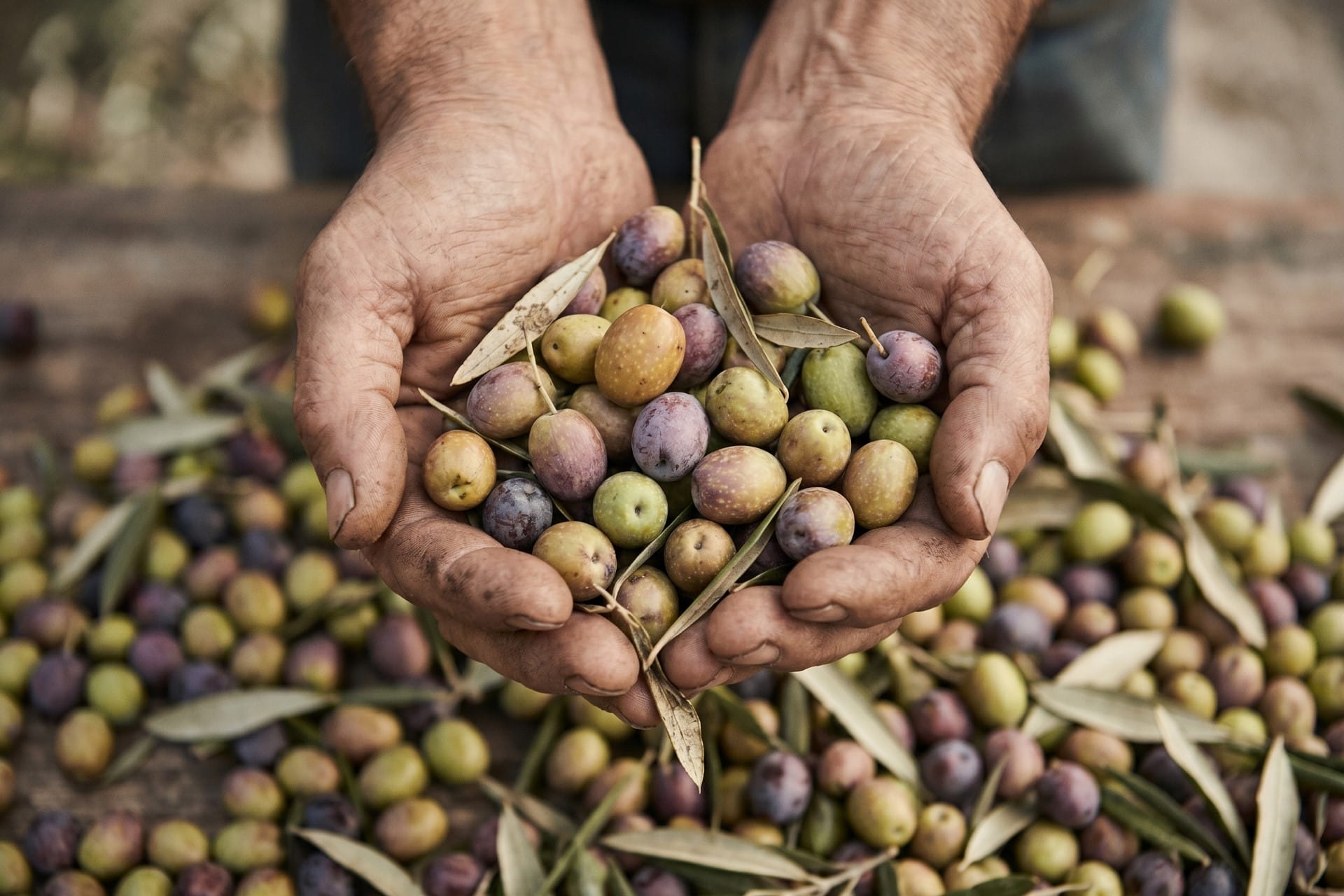
Between the mid-18th and early 19th centuries, the Taggiasca olive reshaped the entire appearance of the Ligurian hills, and Imperia became the capital of an oil industry that still holds. The Taggiasca, grown on the surrounding hills, produces a mild, low-acidity oil entirely different in character from the oils of Tuscany or Puglia. Liguria remains the only European territory to hold a protected designation of origin covering its entire regional landmass, the DOP "Riviera Ligure", with three sub-zones, of which the Riviera dei Fiori around Imperia represents the most concentrated production.
The Via Aurelia, the coastal capi and Fausto Coppi's hometown at Novi Ligure
From Albenga, the route follows the Via Aurelia, the Roman road linked through this coast by the censor Emilio Scauro in 109 BC to connect Liguria to the Gallic provinces and to Rome, tracing the coast through Savona and including several capi: the rocky headlands where the road climbs above the sea and the full arc of the Riviera di Ponente opens to the horizon. The capi are not dramatic in the way that Alpine passes are dramatic. They are oblique and luminous, the kind of landscape where the interest is in the quality of the light rather than the scale of the terrain.
Past Savona, the Colle Giovo, in the Ligurian Apennines above Savona, makes its entrance at 11.4 kilometres averaging 4.4 percent from the Mediterranean side, followed by the third-category Bric Berton, also in the Ligurian Apennines, at 7.5 kilometres averaging 4.9 percent, before the road descends to the Po Valley. The final 50 kilometres to Novi Ligure run essentially flat.
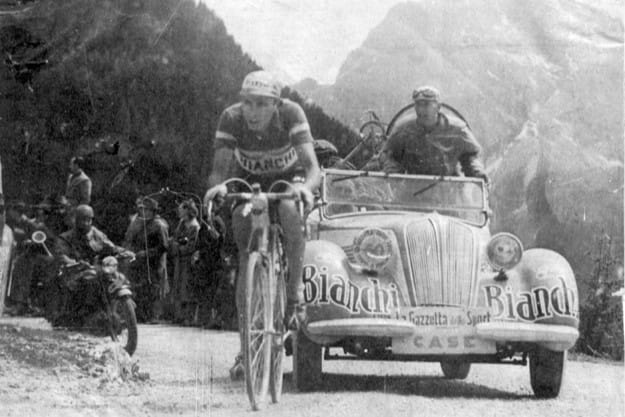
Novi Ligure, where the stage finishes, is the town most closely identified with Fausto Coppi (1919–1960, born in the nearby village of Castellania), winner of five Giro d'Italia titles and two Tours de France, and still the most mythologised figure in Italian cycling. Racing through the town where Coppi grew up and first raced, in the week when the Giro presses northward toward the mountains where he made his name, carries a particular kind of weight that the organisers placed here deliberately.
The Giro d'Italia 2026 in Liguria: Levante, Ponente and the forgotten hinterland
Two days, two personalities. The Riviera di Levante is jagged and vertical, its villages historically accessible only by sea, its terraced agriculture the result of communities working in collective proximity over centuries. The Riviera di Ponente is longer, softer at the edges, oriented toward the flower and oil trades that gave it its economic independence from Genoa. The Ligurian hinterland, which both stages touch, is a third thing entirely: forested, medieval, and almost entirely absent from travel conversation about the region.
Watching the Giro at the roadside in Liguria involves no tickets, no barriers, and no distance from the spectacle. The peloton arrives in silence, builds to a sound unlike anything else in sport, and is gone in seconds. What remains is the village, the slope, the particular quality of afternoon light on the Ligurian coast in late May, and the precise landscape the riders just crossed at speeds that compress an hour's worth of geography into eight minutes of racing. Understanding what they crossed is the reason to be there.
Travel Guide
The 2026 Giro d'Italia travel guide
This article is part of the Guide to Italy coverage of the 2026 Giro d'Italia. For spectator logistics, stage-by-stage travel itineraries, and the best positions from which to watch the Corsa Rosa live, this complete resource covers everything needed to experience the race in Italy.
Latest Info
You can also find all the latest information on the Official Giro d'Italia website.
giroditalia.it
Guide to Italy is more than an editorial project—it’s a curated solution for travelers who demand depth, private access, and expert-led storytelling. Elevate your journey and make Italy yours.


