
After three stages raced on the Black Sea coast of Bulgaria, the 109th edition of the Giro d'Italia touches down in Italy with something close to a homecoming. And what a homecoming it is. The peloton lands not in Rome or Milan but in Calabria, the rugged, sun-scorched toe of the boot, and over the course of three consecutive race days in mid-May 2026, it traces one of the most culturally layered arcs in the entire race: south to north, from the Ionian hinterland all the way to the waterfront of Naples, passing through landscapes shaped by Greeks, Normans, Lombards, and Byzantines. For the traveler willing to follow the race off the roadside barriers and into the territory itself, Stages 4, 5, and 6 of the 2026 Giro amount to an unscripted masterclass in the depth and strangeness of the Italian south.
This is what those three days — and the landscapes behind them — actually contain:
- Stage 4 — May 12: Catanzaro to Cosenza, through the heart of Calabria
- Stage 5 — May 13: Praia a Mare to Potenza, deep into the silence of Basilicata
- Stage 6 — May 14: Paestum to Naples, from Greek temples to the bay of Vesuvius
In this article:
- 01 Calabria: two extraordinary cities and a landscape shaped by 3,000 years of history
- 02 Basilicata: a landscape of silence, pilgrimage routes, and the Tyrrhenian's most beautiful coast
- 03 Campania: Greek temples, the Cilento coast, and the inexhaustible city of Naples
- 04 The Giro d'Italia 2026: a journey that goes far beyond the finish line
Calabria: two extraordinary cities and a landscape shaped by 3,000 years of history
Catanzaro: the Italian city between two seas
Few Italian cities carry a geographical distinction as dramatic as Catanzaro's. The Calabrian capital sits at the narrowest point of the entire Italian peninsula, perched on a ridge where the Ionian Sea is visible to the east and the Tyrrhenian to the west, a panorama of two coastlines that has defined the city's identity, and its climate, for millennia. Known since antiquity as the Città tra i due mari (the city between two seas) Catanzaro's origins are bound up with legend: some accounts trace its foundation to the ancient Greek colony that later became Scolacium, while others associate it with the strategic routes between East and West.
Catanzaro's cultural depth is considerably greater than its profile on the international travel circuit suggests. The city's most important highlights include:
- MARCA — Museo delle Arti di Catanzaro: a multifunctional museum of excellence spread across three floors, with a collection spanning five centuries of Italian art from the 16th to the 20th century. The permanent Rotella Foundation is dedicated to Mimmo Rotella, one of the great masters of 20th-century avant-garde art and a native son of the city, making the MARCA one of the most significant modern art institutions in southern Italy.
- The Politeama Theatre: the youngest of the great Italian theatres and a remarkable piece of contemporary architecture, with a parterre that follows a wave-like movement on an almost concave surface, an interior quite unlike any other theatre in the country.
- The San Giovanni monumental complex: built between the 15th and 17th centuries on the remains of the ancient Norman castle, it now ranks among the most important cultural and exhibition centres in southern Italy. Since 2017, visitors can descend into the castle's ancient dungeons, restored to exemplary standards.
Beyond the city, the province of Catanzaro offers landscapes of equally striking contrasts. To the east, the Gulf of Squillace — one of the most beautiful stretches of Ionian coastline in Calabria — opens onto a wide bay of white-sand beaches and clear water that remains largely unknown to non-Italian visitors. To the west, the Sila Plateau stretches across three provinces in a vast highland of ancient pine forest, glacial lakes, and alpine meadows where wolves still move through the undergrowth. The Sila is a UNESCO Global Geopark and one of the most rewarding destinations for slow, nature-based tourism in the entire south.
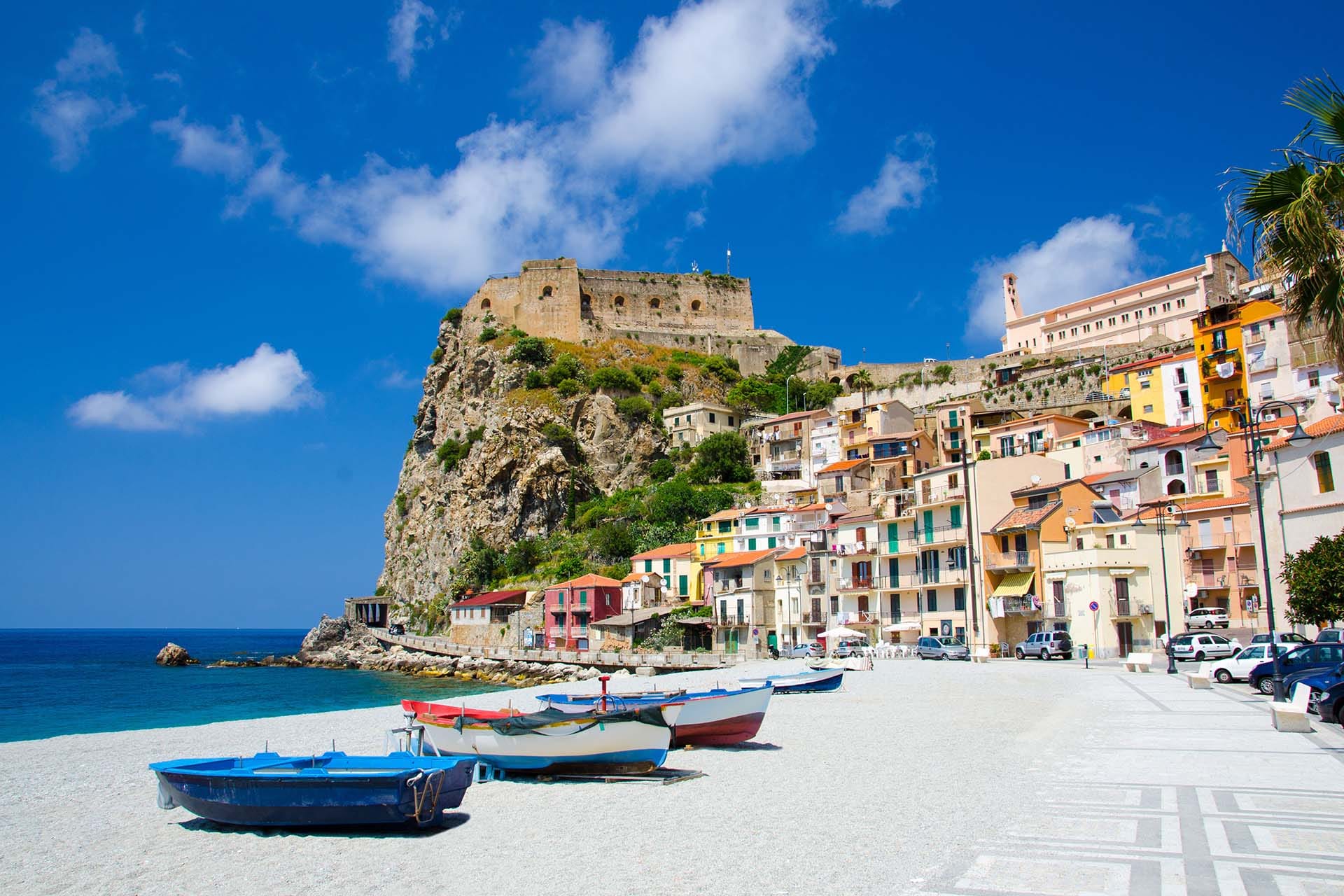
Cosenza: a UNESCO cathedral, a Norman castle, and the oldest street gallery in Italy
Cosenza is one of the most layered and underrated cities in southern Italy, and one of the very few in the Mezzogiorno that can trace an unbroken urban identity from the pre-Roman era to the present. Known as the Atene d'Italia for its centuries-long tradition of learning and philosophy, and in particular for being the birthplace of the Renaissance philosopher Bernardino Telesio, the city was successively a Bruttian capital, a Longobard and Byzantine dominion, and a Norman stronghold. Its old town, climbing along the banks of the Crati and Busento rivers in a labyrinth of medieval streets, palaces, and churches, is one of the largest and best-preserved medieval historic centers in all of Italy.
The must-see landmarks of Cosenza include:
- The Cathedral of Cosenza (Duomo): originally built in the 11th century and rebuilt in the 13th, the cathedral was consecrated in 1222 in the presence of Emperor Frederick II — who donated the extraordinary Stauroteca, a Byzantine reliquary cross of exceptional artistic and historical value, now housed inside. The cathedral also contains the tomb of Isabella of Aragon, Queen of France, who died near Cosenza in 1271. In 2011, UNESCO recognized the Cathedral of Cosenza as a Heritage Witness to the Culture of Peace, in acknowledgment of its role as a crossroads of civilizations across nearly a millennium.
- The Norman-Swabian Castle: built on an earlier fortification and expanded by Frederick II in the 13th century, the castle dominates the city from its strategic hilltop and offers sweeping views over the surrounding Apennine valleys.
- The Bilotti Open-Air Museum: one of the most unusual cultural experiences in the Italian south — a free, open-air gallery lining Corso Mazzini, the city's main pedestrian avenue, with large-scale works by Giorgio de Chirico, Salvador Dalí, Emilio Greco, and other 20th-century masters. It is, quite simply, one of the most original public art spaces in Italy.
The Pollino National Park: Europe's wildest mountain landscape
Immediately beyond Cosenza's hinterland begins the Pollino National Park — at over 190,000 hectares, the largest national park in Italy, straddling the border between Calabria and Basilicata. Designated a UNESCO Global Geopark in 2015, the park contains 69 officially classified geosites, from glacial cirques and river gorges to fossilized rudist reefs and Pleistocene-era deposits. Its most iconic natural symbol is the loricato pine (Pinus leucodermis) — an ancient tree species that grows in dramatic, wind-sculpted forms at altitudes above 2,000 meters, some of them estimated to be over 1,000 years old. There is nothing quite like it in southern Europe.
Calabrian food and wine: what to eat in the region
Calabria announces itself at the table with the same directness it brings to its landscapes. The defining flavors of Calabrian cuisine include:
- Lagane e ceci: a pasta-and-chickpea dish cited in Roman texts, making it one of the oldest continuously prepared recipes in Italian cuisine
- Fusilli al ferretto with slow-cooked pork ragù — hand-rolled pasta wrapped around a thin iron rod, a technique unchanged for centuries
- 'Nduja di Spilinga: the intensely spicy, spreadable cured pork salami that has become the most internationally recognized product of Calabrian gastronomy
- Bergamot: a citrus fruit grown almost exclusively on the Calabrian Ionian coast, used to flavor Earl Grey tea and in the finest French perfumery, and revelatory when tasted as juice, marmalade, or liqueur at the source.
Basilicata: a landscape of silence, pilgrimage routes, and the Tyrrhenian's most beautiful coast
Praia a Mare and the Riviera dei Cedri: the gateway to Basilicata
A clarifying note on geography: Praia a Mare sits in the province of Cosenza, Calabria — but it functions, in every practical and atmospheric sense, as the threshold between Calabria and Basilicata. The Giro d'Italia 2026 Stage 5 departs from here precisely because it stands at this frontier: the point where the Tyrrhenian coast gives way to the Pollino massif, and where the Italian south shifts register entirely.
Praia a Mare itself is worth arriving early for. The long curving shoreline is backed by the forested wall of the Pollino mountains, creating one of the most dramatic coastal panoramas in the region. Offshore, Isola di Dino rises from the water like a fortress of dark rock: an uninhabited island riddled with sea caves and blue grottoes accessible only by boat, and one of the most spectacular natural landmarks on this stretch of the Tyrrhenian.
The surrounding coast is known as the Riviera dei Cedri named for the cedro, a large, intensely perfumed citrus fruit that has been cultivated here since antiquity. Unlike the lemon or the orange, the cedro is grown almost exclusively in this narrow coastal strip, and its uses in local pastry, liqueur, and jam production make it one of the most distinctive gastronomic products of the entire south. The annual Cedro Festival in Santa Maria del Cedro draws visitors from across Italy every August.
Into Basilicata: the Pollino valleys and the road to the interior
From Praia a Mare, the landscape changes within minutes. The road climbs into the Pollino massif, and here Basilicata begins to reveal what makes it unlike anywhere else in Italy. This is not a landscape that performs for visitors. The Sinni and Agri river valleys run between limestone ridges and densely forested slopes in a silence that is genuinely unusual in 21st-century Europe, threading through a succession of small medieval towns — Francavilla in Sinni, Viggiano, Marsico Nuovo — each organized around its church, its castle, and the rhythms of an agricultural calendar that has changed slowly over centuries.
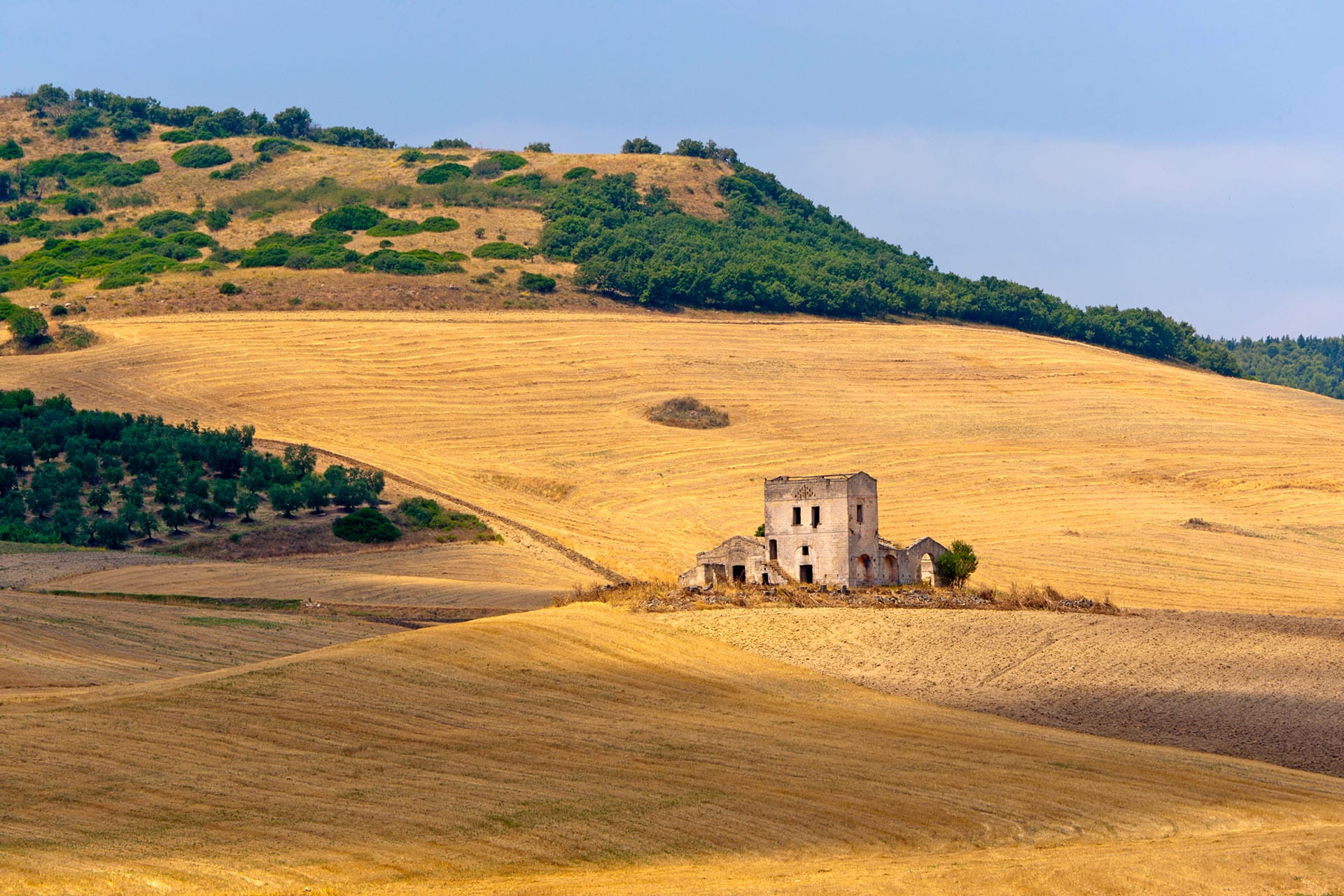
The Pollino National Park, which the route traverses at its heart, is the largest National Park in Italy (over 190,000 hectares) and a UNESCO Global Geopark since 2015. But where the Calabrian side of the park is defined by its geological drama and ancient pine forests, the Basilicata side opens into something more intimate: river gorges, upland meadows, and abandoned masserie — the large stone farmhouses of the Lucanian interior — that represent some of the most rewarding slow-tourism territory in the entire country.
Viggiano and the Black Madonna of the Sacro Monte
No stop in this valley deserves more time than Viggiano. The village crowns a limestone ridge above the Val d'Agri at around 1,000 meters, and it has been one of the most important Marian pilgrimage destinations in southern Italy for over a thousand years. The object of this devotion is the Black Madonna of the Sacro Monte, a 9th-century Byzantine icon housed in the mountaintop sanctuary of the Sacro Monte di Viggiano, one of the oldest and most deeply venerated Marian shrines in the entire Mezzogiorno.
Every year in early September, in one of the most atmospherically charged religious events in Italy, the statue is carried in a candlelit procession from the mountaintop sanctuary down through the valley to the village church, accompanied by thousands of pilgrims who have traveled, in some cases, for days. The return procession takes place the following May — which means that visitors following the Giro d'Italia through this valley in mid-May arrive at exactly the moment when the Madonna is making her way back up the mountain. The coincidence of the Corsa Rosa and this ancient rite, in this landscape, is not something easily forgotten.
Maratea: the most beautiful coastline in Basilicata
Basilicata has only 32 kilometers of coastline, and almost every one of them belongs to Maratea. This is the region's single opening onto the Tyrrhenian Sea, and it is an extraordinary one: a succession of dramatic cliffs, hidden coves, and small pebble beaches set against the wooded slopes of the Apennines, with a clarity of water that rivals anything on the Amalfi coast, and without a fraction of the crowds.
Maratea is officially recognized as one of the Borghi più belli d'Italia, and it is easy to understand why. The town is not a single settlement but a constellation of eight distinct hamlets scattered across the hillside, each with its own character. The must-see landmarks and experiences of Maratea include:
- The statue of Christ the Redeemer on Monte San Biagio: at 22 meters tall, this white marble statue dominates the Gulf of Policastro from the mountaintop with a visual authority comparable to Rio de Janeiro's Christ the Redeemer — and far fewer visitors. The panorama from the summit is among the finest on the entire Tyrrhenian coast.
- The old town (Maratea Paese): a medieval hill town of stone alleys, baroque churches, and belvederes with views over the sea that stop conversation.
- The Porto di Maratea and the Fiumicello beach: the main harbor and the longest beach on the Maratea coast — the practical base for boat excursions to the sea caves and offshore grottos.
- The Basilica of San Biagio: the patron saint's church, built adjacent to the Christ statue, dating from the 5th century on the site of an ancient temple to Minerva.
Maratea is approximately 45 minutes by car from Potenza and 30 minutes from Praia a Mare, making it a natural and highly rewarding detour for anyone following Stage 5 of the Giro.
Potenza: Italy's highest regional capital and its most unexpected bridge
At approximately 820 meters above sea level, Potenza is the highest-lying regional capital in Italy — a fact that shapes everything about the city, from its urban layout to its climate to the panoramic views that open unexpectedly at the end of its medieval streets. The historic center stretches along a limestone ridge above the Basento valley, with Via Pretoria — the main pedestrian artery — running the full length of the old town in a sequence of churches, palaces, and piazzas that reveal their age gradually and without fanfare.
The key landmarks of Potenza:
- The Cathedral of San Gerardo: the patron saint's cathedral, combining Romanesque foundations with a neoclassical facade rebuilt after the 1857 earthquake, dominates the highest point of the ridge. The crypt holds the relics of San Gerardo, bishop of Potenza in the 12th century.
- The Musmeci Bridge: the city's most celebrated and most visited architectural landmark — a 1970s reinforced-concrete structure by engineer Sergio Musmeci that crosses the Basento River in a single, uninterrupted organic curve. Unlike any conventional bridge, the Musmeci appears to grow from the riverbanks like a natural form, its surface molded into shell-like folds that distribute structural load with minimal material. It has been exhibited at the Museum of Modern Art in New York and is universally considered one of the masterpieces of 20th-century structural engineering — the kind of object that justifies a detour of several hundred kilometers.
- The National Archaeological Museum of Basilicata "Dinu Adamesteanu": an often-overlooked institution with a remarkable collection of finds from the Lucanian and Greek settlements of the Val d'Agri and the Agri basin — essential context for understanding the pre-Roman south.
Basilicatan food and wine: what to eat in Lucania
Basilicata feeds its visitors with the same uncompromising intensity it brings to its landscapes. The region's cuisine is one of the most ancient and least diluted in Italy, shaped by poverty, altitude, and an isolation that preserved recipes long since lost elsewhere. The essential tastes of Lucanian gastronomy:
- Pane di Matera IGP: the iconic sourdough bread of Matera, made with durum wheat semolina, baked in a wood-fired oven, and recognizable by its golden crust and dense, honey-colored crumb — is one of the most celebrated traditional breads in Italy and carries IGP (Protected Geographical Indication) status.
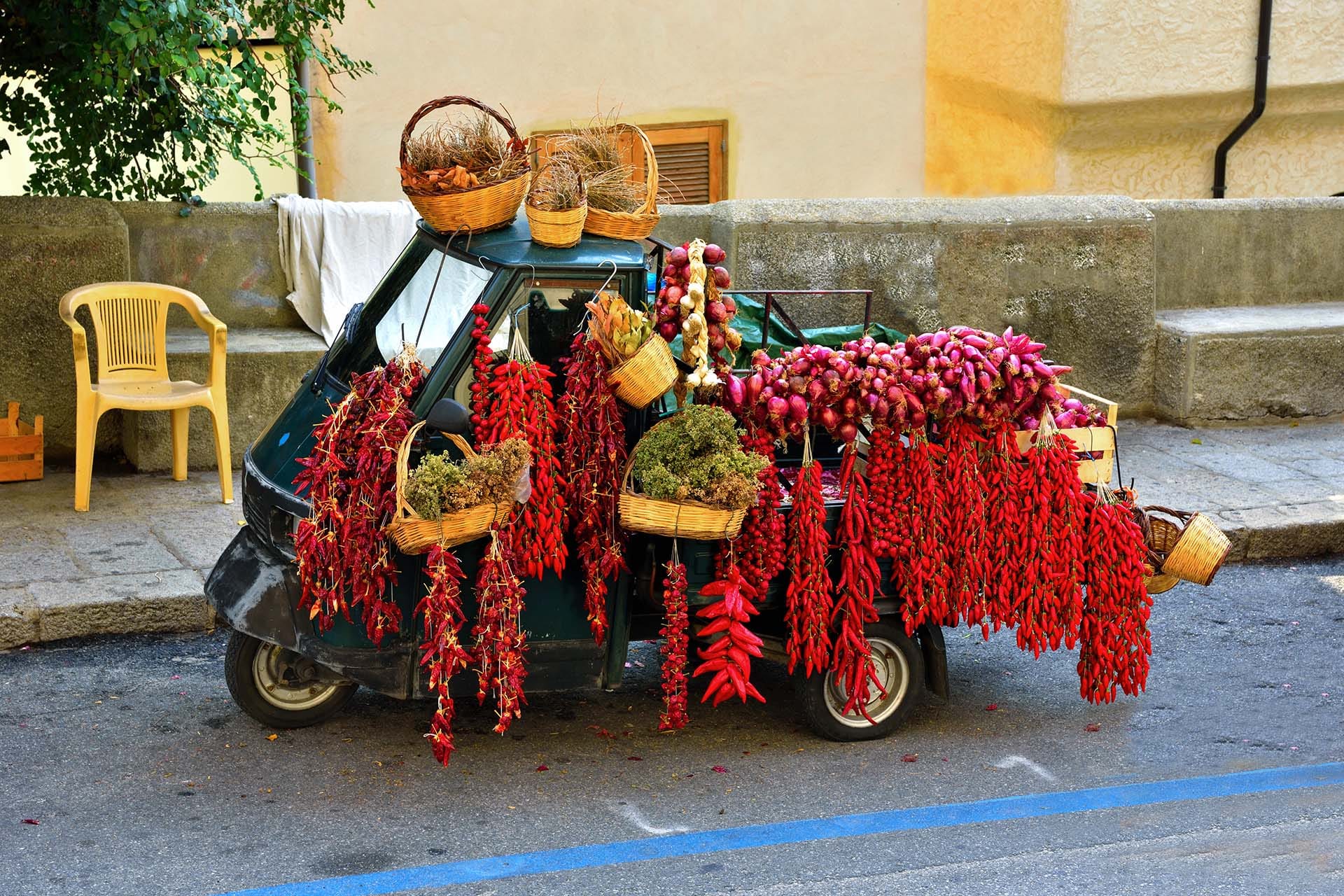
- Cruschi peppers (peperoni cruschi): dried sweet red peppers fried briefly in olive oil until they shatter like glass: the defining flavor of Lucanian cooking, present in pasta sauces, scattered over salt cod, and eaten as a snack. They are to Basilicata what 'nduja is to Calabria: the one ingredient that defines the region's table.
- Lucanica sausage: a spiced, smoked pork sausage whose name is believed to derive from ancient Lucania itself. The Roman gastronome Apicius described a recipe for lucanica in his 1st-century cookbook De re coquinaria, making it one of the oldest documented recipes in Western culinary literature, and still produced here in essentially the same way.
- Sheep's milk cheeses: pecorino di Filiano DOP and Canestrato di Moliterno IGP are the region's two protected-designation cheeses, both made with milk from sheep grazed on Pollino and Lucanian Apennine pastures, with a depth of flavor that reflects the wild herbs of the highland meadows.
- Aglianico del Vulture DOC: produced on the slopes of Monte Vulture, an extinct volcano in the northern part of the region, this is widely considered one of the great red wines of southern Italy, full-bodied, tannic, volcanic in character, with an aging potential that rivals the best Barolo and Brunello. The wine has been produced on these volcanic soils since the time of the Greeks and remains one of Basilicata's proudest exports.
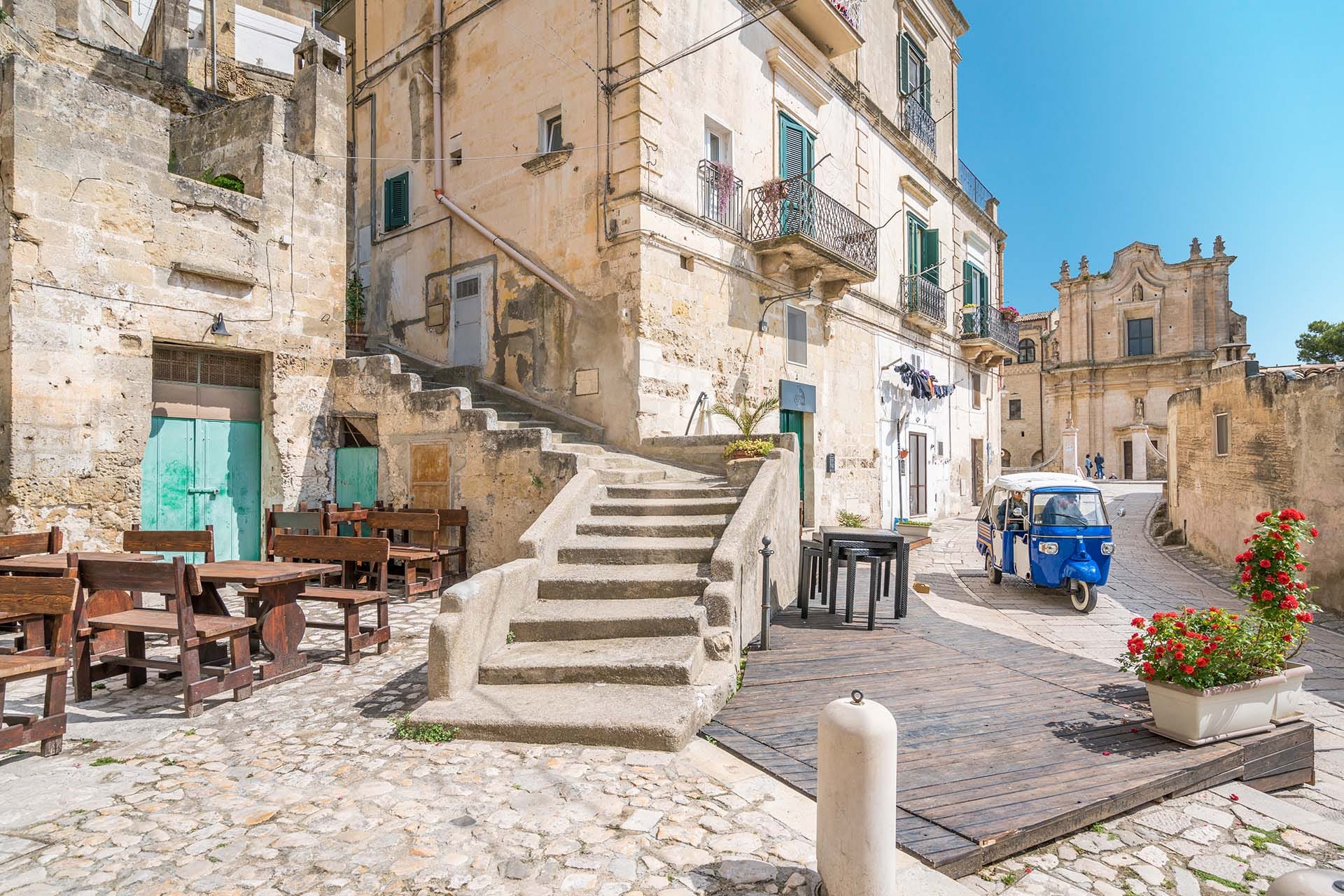
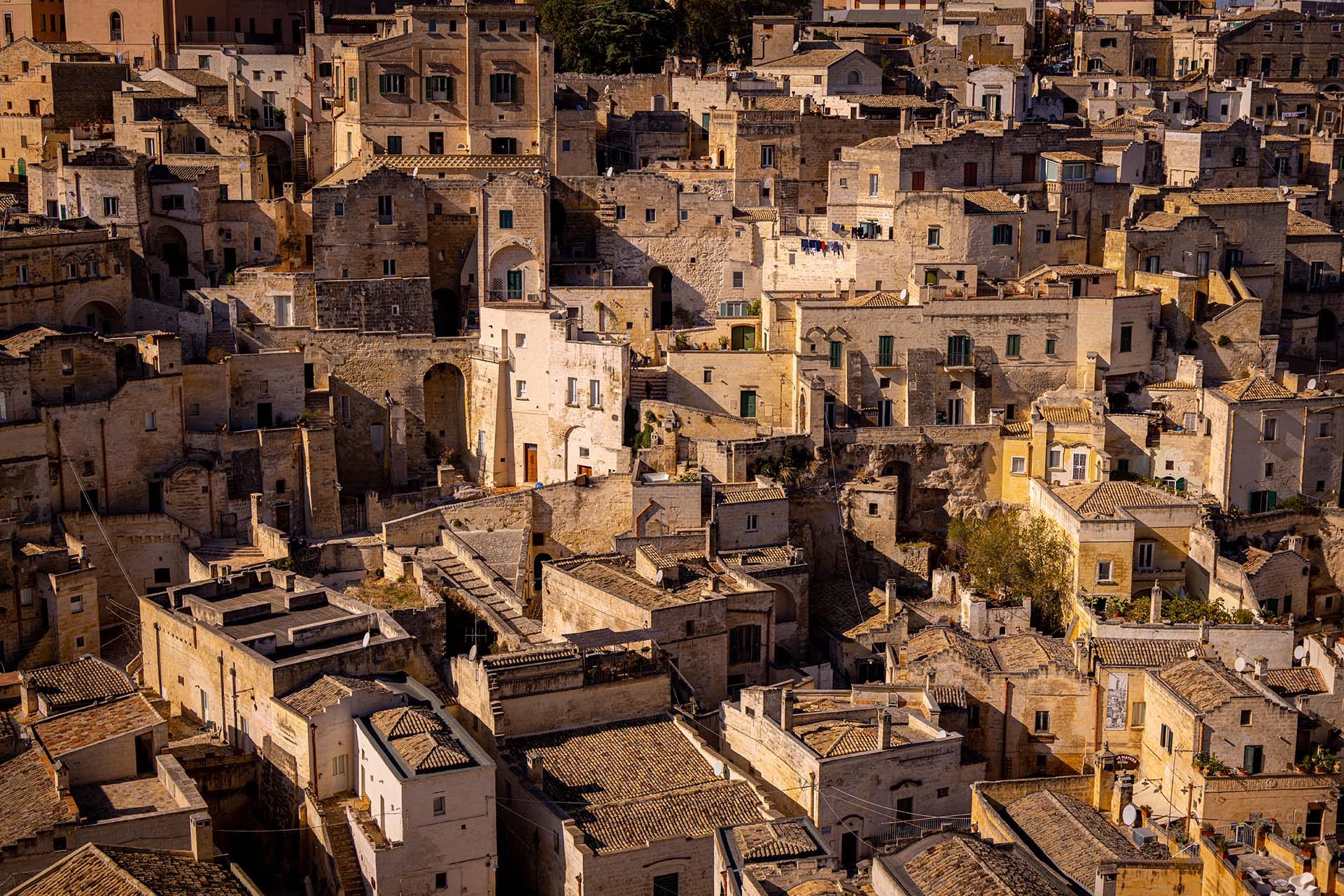
A note for travelers: Matera, the ancient cave city and UNESCO World Heritage Site since 1993, widely regarded as one of the most extraordinary urban landscapes in the world, lies approximately 100 kilometers east of Potenza and deserves an independent visit. No journey through Basilicata is complete without it.
Campania: Greek temples, the Cilento coast, and the inexhaustible city of Naples
Paestum: the best-preserved Greek temples in the world
The Giro d'Italia 2026 Stage 6 departs from here — and there is no more extraordinary starting point in the entire race. But the monuments of Paestum existed long before cycling was invented, and they will outlast it by a considerable margin. Founded in the 6th century BC by Greek colonists from Sybaris under the name Poseidonia, the city passed through Lucanian and then Roman dominion before being abandoned to malaria and forest in the early medieval period. What the forest gave back, after centuries of encroachment, is one of the most astonishing archaeological sites in the world.
Paestum preserves three Doric temples that rank among the best-preserved examples of ancient Greek architecture anywhere on earth — not in Greece, not in Sicily, but here in Campania, in a field where red poppies bloom every May in fierce contrast to the honey-colored limestone. Together with the surrounding city walls, forum, dwellings, and sacred areas, the site has been a UNESCO World Heritage Site since 1998, as part of the broader designation "Cilento and Vallo di Diano National Park with the Archaeological Sites of Paestum and Velia, and the Certosa di Padula."
The three temples of Paestum:
- Temple of Hera I (the "Basilica"): dating from approximately 560–520 BC, this is the oldest of the three temples and the most unusual in its proportions — nine columns across the front rather than the canonical six, giving it a massive, horizontal power that reflects the earliest phase of Doric architecture in Magna Graecia.
- Temple of Hera II (the "Temple of Neptune"): built around 450 BC and widely considered one of the finest examples of mature Doric architecture in existence. Its 36 columns stand virtually intact, with both the outer colonnade and the inner supports still in place, a state of preservation almost without parallel in the ancient world.
- Temple of Athena (the "Temple of Ceres"): the smallest and most elegant of the three, dating from approximately 500 BC, positioned on a slight rise at the northern end of the sanctuary. Unlike the other two, it shows early Ionic elements in its interior columns, evidence of the aesthetic experimentation that characterized this colonial culture.
In the early morning, before the tour groups arrive, the silence around these temples is total. This is one of the few places in Italy where the ancient world is entirely unmediated — no fence, no reconstruction, no museum lighting. Just stone columns against a Campanian sky.
The National Archaeological Museum of Paestum, located adjacent to the archaeological site, houses the collection that completes what the temples begin. Its centerpiece is the Tuffatore fresco (the Diver): a painted slab discovered in 1968 on the interior lid of a tomb dated to approximately 480/470 BC, showing a lone male figure arcing through the air above a dark sea. It is the only surviving example of classical Greek figurative painting found anywhere in Magna Graecia — and one of the most haunting objects in all of ancient art. No reproduction does it justice.
A note on Velia: approximately 40 kilometers south of Paestum, the ruins of Velia (ancient Elea) — the Greek city where the philosopher Parmenides founded the Eleatic school of philosophy in the 5th century BC — form part of the same UNESCO designation and are visited by a fraction of the visitors who come to Paestum. The site is extraordinary, the crowds nonexistent.
The Cilento National Park: a UNESCO coast of cliffs, ancient cities, and the world's healthiest diet
North of Paestum, the stage route follows the edge of one of Italy's most remarkable and least-visited protected areas. The Cilento and Vallo di Diano National Park covers approximately 181,000 hectares of the southern Campania coastline and interior, a landscape of limestone sea cliffs, deep river gorges, fishing villages clinging to rocky promontories, and chestnut forests that descend almost to the waterline. It is a UNESCO World Heritage Site, part of the same inscription that covers Paestum and Velia.
The essential highlights of the Cilento:
- The Certosa di Padula (Certosa di San Lorenzo): founded in 1306, this Carthusian monastery in the Vallo di Diano is the largest monastery in Italy and one of the largest in the world, with a baroque cloister of approximately 10,000 square meters, reputedly the most extensive cloister in existence. It is a UNESCO World Heritage Site and one of the most remarkable and undervisited monuments in all of the south.
- The coastal villages: Acciaroli, Pisciotta, and Palinuro are among the most beautiful and least developed fishing villages on the Tyrrhenian — each with its own character, its own anchovies, and its own stretch of coast that rivals anything on the Amalfi Peninsula with a fraction of the visitors.
- The Mediterranean Diet: the Cilento was the primary research site for the landmark studies by American physiologist Ancel Keys in the 1950s and 60s that first identified the health benefits of the Mediterranean diet. In 2010, UNESCO inscribed the Mediterranean Diet as Intangible Cultural Heritage — with the Cilento specifically recognized as one of the emblematic communities of this tradition. The local olive oil, legumes, anchovies, and vegetables are not merely ingredients; they are the subject of a half-century of nutritional science.
Cava de' Tirreni: the Norman arcaded town that Amalfi visitors always miss
Between the Cilento and Naples, the stage climbs briefly to Cava de' Tirreni — a compact Norman town in the hills above Salerno that almost no visitor to the Amalfi Coast ever thinks to include in their itinerary, despite being less than 20 minutes from both Salerno and the Amalfi Peninsula.
Cava de' Tirreni's most remarkable feature is its medieval arcaded main street, the Corso Umberto I, a continuous sequence of Gothic and Renaissance porticos under which the entire town conducts its daily life, from morning coffee to evening passeggiata. The arcade runs for nearly a kilometer, making it one of the longest and best-preserved medieval covered streets in southern Italy. The effect — of a town that moves, shops, and socializes under a vaulted stone canopy — is utterly unlike anything on the more famous roads nearby.
Above the town, the Abbey of the Holy Trinity (Badia della Santissima Trinità di Cava), founded by the Benedictines in 1025, houses one of the most important medieval archives in southern Italy, with over 15,000 parchment documents including Norman royal charters and papal bulls. It is open to visitors and almost always empty.
Naples: what to see in one of the world's great cities
Naples is the oldest continuously inhabited city in Italy, founded by the Greeks as Neapolis in the 5th century BC, it has never been abandoned, never reduced to ruins, never stopped being a functioning urban organism. Its historic center, a UNESCO World Heritage Site since 1995, is one of the largest in Europe — a dense, layered accumulation of Greek foundations, Roman insulae, early Christian catacombs, Norman castles, Angevin churches, Renaissance palaces, and Baroque oratories, stacked on and through each other in a geological continuity that no other Italian city can match.
The essential landmarks of Naples:
- The National Archaeological Museum (MANN): holds the greatest collection of Greco-Roman antiquities in the world, including the treasures of Pompeii and Herculaneum, the Alexander Mosaic, the Farnese Hercules, the Farnese Bull, entire rooms of frescoes and household objects rescued from the eruption of 79 AD. An essential full day.
- The Cappella Sansevero: a small private chapel in the historic center containing the Veiled Christ by Giuseppe Sanmartino (1753) — a marble sculpture of such improbable technical perfection (the translucent veil carved from the same block of stone as the figure beneath) that it has been attributed, by successive generations of stunned visitors, to supernatural intervention. It remains, by common consent, one of the most extraordinary objects ever made by human hands.
- The Duomo di San Gennaro: the city's cathedral, built on the site of earlier Roman and early Christian structures, is the setting for Naples' most passionately observed annual ritual: the liquefaction of the blood of San Gennaro, the city's patron saint, which is said to occur three times a year before a congregation whose emotional investment in the outcome is entirely genuine and entirely serious. The event has been documented since 1389.
- Pompeii and Herculaneum: neither is technically within Naples, but both are reachable in under 30 minutes by the Circumvesuviana railway. Pompeii — the Roman city buried by Vesuvius in 79 AD and partially excavated since the 18th century — is the most visited archaeological site in Italy and one of the most important in the world. Herculaneum, smaller and less visited, is in many respects more revelatory: preserved to a greater depth by the volcanic mud that engulfed it, its buildings stand to their second stories, with wooden beams, painted walls, and household objects intact in a way that Pompeii's open excavations cannot match.
- The underground city (Napoli Sotterranea): beneath the historic center, the Greco-Roman tunnel system (quarried from the tufa rock over two millennia) forms a subterranean city of aqueducts, cisterns, wartime shelters, and early Christian burial chambers as spatially complex as the city above.
- The Castel dell'Ovo and the Castel Nuovo (Maschio Angioino): the two castles that frame Naples' waterfront — the first built on a Roman island villa dating to the 1st century BC, the second erected by the Angevin kings in 1279 with a triumphal arch added by the Aragonese in 1471 that is considered one of the masterpieces of early Renaissance sculpture in Italy.
A practical note: the Amalfi Coast is accessible from Naples in approximately 90 minutes and deserves a dedicated visit. The towns of Positano, Ravello, and Amalfi itself are covered in detail in the dedicated Guide to Italy Amalfi Coast hub.
Neapolitan food: what to eat in Naples
No city in Italy takes its food more personally than Naples, and no food in Italy is more consequential than what Naples invented. The city's culinary identity is one of the oldest, most codified, and most jealously defended in the world.
The essential tastes of Neapolitan gastronomy:
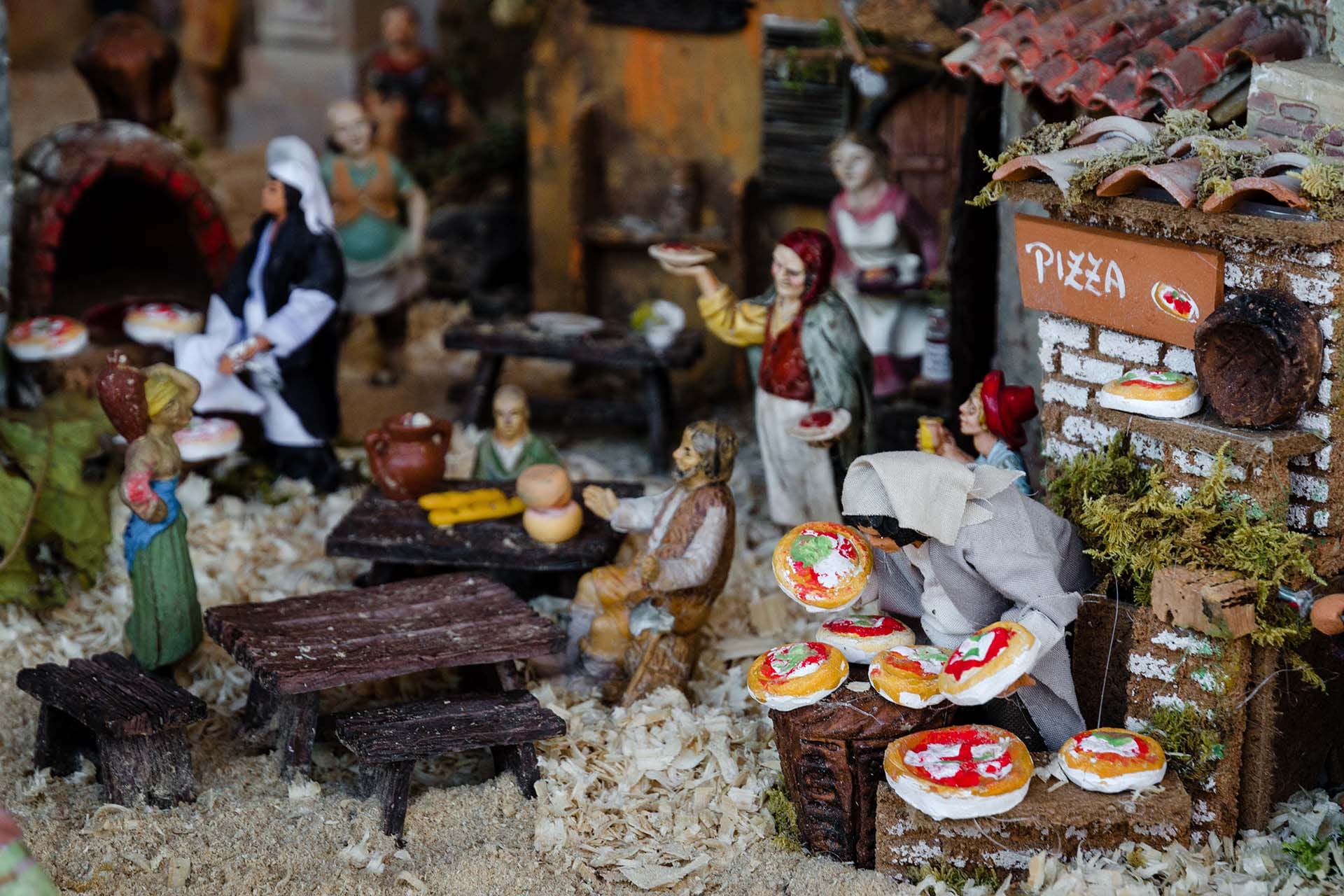
- Pizza Napoletana: invented here, protected here, and — by the near-universal consensus of anyone who has eaten it in both Naples and anywhere else, still made better here than anywhere else on earth. The dough ferments for at least 24 hours; the cornicione (crust) emerges from the wood-fired oven slightly charred and blistered; the tomato sauce comes from San Marzano DOP tomatoes grown on the volcanic soils of the Vesuvian slopes. In 2017, the art of Neapolitan pizza-making (pizzaiuolo) was inscribed by UNESCO as Intangible Cultural Heritage of Humanity.
- Sfogliatelle: the city's defining pastry, a shell-shaped, flaky case of layered dough (sfogliatella riccia) or shortcrust (sfogliatella frolla) filled with ricotta, semolina, candied citrus, and cinnamon. Dating from the 17th century, when it was invented by Cistercian nuns in the convent of Santa Rosa on the Amalfi Coast.
- Ragù Napoletano: a slow-cooked meat sauce of extraordinary depth — beef, pork, and sometimes sausage braised for a minimum of four hours (traditionalists say eight) in tomato, onion, wine, and lard, served over ziti or candele pasta. It is Sunday in a pot.
- Frittura di paranza: a mixed fry of tiny, fresh-caught fish coated in the lightest possible dusting of flour and served immediately from the oil. Best eaten standing at a street counter in the Quartieri Spagnoli.
- Neapolitan coffee: Naples' espresso is not merely a beverage; it is a civic institution. Ground finer, pulled shorter, and served at a higher temperature than the Roman standard, it is the product of a water chemistry (the city's water is naturally low in calcium) that no other Italian city can fully replicate. The caffè sospeso — the Neapolitan tradition of paying for a coffee in advance for a stranger who cannot afford one — is perhaps the most eloquent expression of the city's character.
The Giro d'Italia 2026: a journey that goes far beyond the finish line
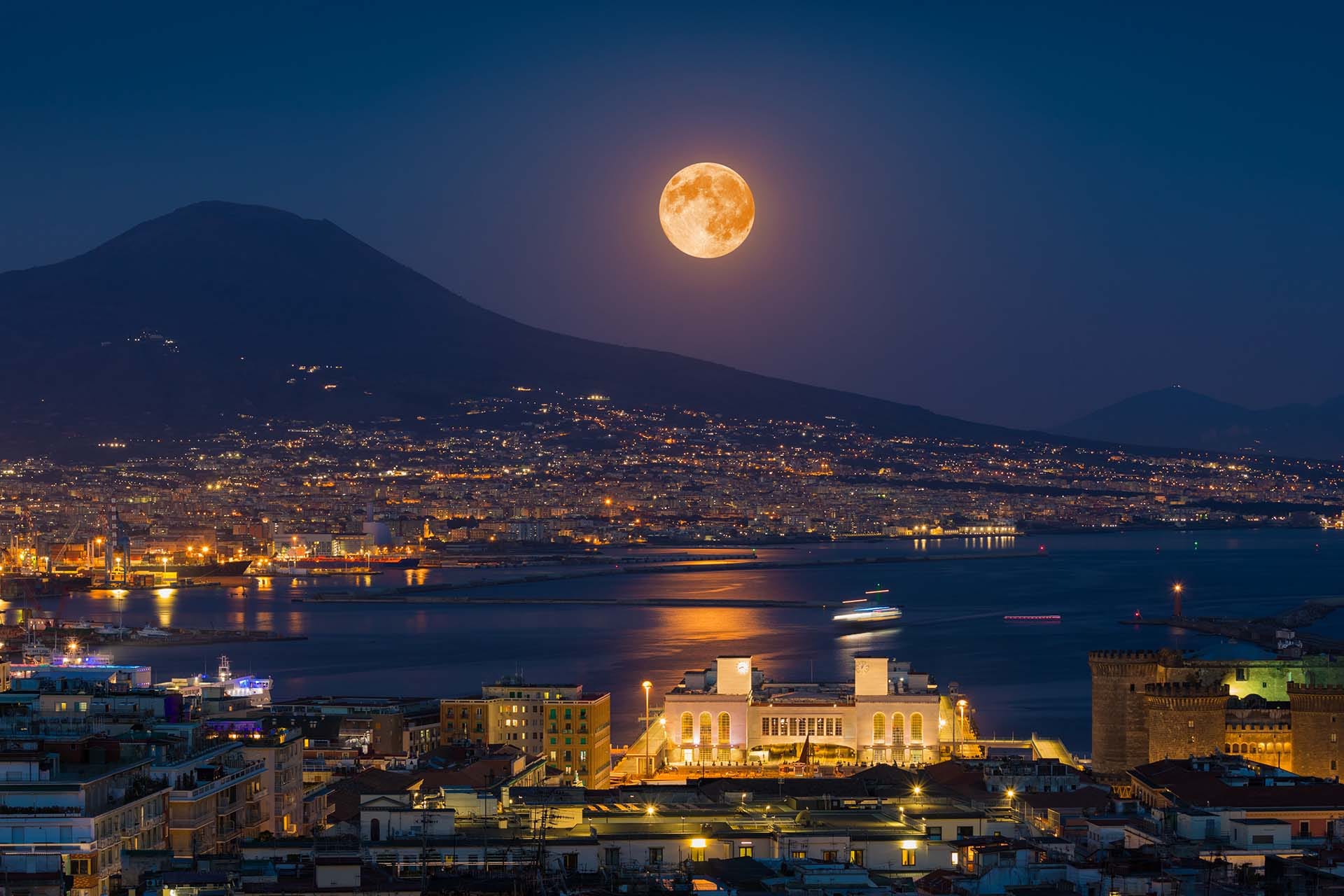
There is something particular about watching a cycling race move through landscape. The peloton crosses the temples of Paestum, crests a mountain pass above a Byzantine valley, descends toward a bay where a volcano rises against the sky, and is gone in less than a minute. What it leaves behind is a silence that makes you look up, look around, and actually see where you are.
That is, in essence, what the Giro d'Italia does better than any other sporting event: it draws a line across a country and invites the world to follow it. And the line drawn by these three May days in Southern Italy is one of the most beautiful in the race's 109-year history, a route that connects destinations that most travelers have never thought to connect, moving from the toe of the boot northward through landscapes that shaped Western civilization and never entirely stopped doing so.
From Naples, the Corsa Rosa continues its journey. Stages 7 through 12 cross northern Campania, climb into the Gran Sasso massif of Abruzzo, and cut across the Apennine spine toward the Adriatic. The high mountain stages follow, through the Alps and over the passes of the Dolomites, before the race makes its final approach to Rome, where it concludes on May 31, 2026, after 21 stages and more than 3,460 kilometers. The south is where the Giro rediscovers its oldest roots. The rest of the journey is what those roots grew into.
Guide to Italy is more than an editorial project—it’s a curated solution for travelers who demand depth, private access, and expert-led storytelling. Elevate your journey and make Italy yours.


