
Italy in February is a living theater of masks, allegorical floats, and historical pageantry. Yet, pinning down the exact dates for Carnival can be a logistical challenge due to its reliance on the complex lunar liturgical calendar.
Unlike fixed national holidays such as Ferragosto or Liberation Day, Carnival is a "movable feast," intrinsically linked to the ecclesiastical calculation of Easter. For anyone finalizing an itinerary for early 2026, understanding this timeline is critical. Arriving even one day late could mean missing the grand finale of the Venice masquerade or the historic Battle of the Oranges in Ivrea.
- The 2026 timeline: calculating the feasts
- The Milanese exception: the Ambrosian Carnival
- Origins and ancestry: from pagan rites to Catholic liturgy
- Symbols of subversion: Italian masks and the Commedia dell'Arte
- The disputed history of coriandoli: why Italy throws paper
- FAQ: understanding the culture and logistics of Carnival 2026
The 2026 timeline: calculating the feasts
The scheduling of Carnival is dictated entirely by the moon. The central anchor for the entire spring calendar is Easter Sunday, which, in 2026, falls relatively late in the season on April 5th (the first Sunday following the first full moon of the vernal equinox).
To determine the season's window, the calendar counts backward approximately seventy days from Easter to Septuagesima Sunday. Consequently, the 2026 Carnival season officially opens on February 1st. However, travelers must note a crucial distinction: while the liturgical season begins early in the month, the intensity of the public celebrations culminates during the final week, specifically between "Giovedì Grasso" and "Martedì Grasso."
Key dates for the Roman Rite (National)
The vast majority of Italy—including Venice, Tuscany (Viareggio), Rome, and the South—follows the Roman Rite. If you are planning a trip to any of these regions, these are the essential dates for your 2026 itinerary:
- Official start of festivities: Sunday, February 1, 2026.
- Giovedì Grasso (Fat Thursday): February 12, 2026.
- The main weekend: February 14–15, 2026 (expect the highest crowd density and major parades).
- Martedì Grasso (Fat Tuesday): February 17, 2026.
Fat Tuesday marks the definitive climax of the season. It is the final opportunity for culinary indulgence and revelry before Ash Wednesday (February 18, 2026), which signals the beginning of Lent (Quaresima), a period of fasting and spiritual reflection leading up to Easter.
The Milanese exception: the Ambrosian Carnival
A significant anomaly exists in the calendar for those visiting Milan or the surrounding archdiocese (including parts of Lake Como and Monza). Travelers often arrive in Milan on Fat Tuesday expecting a party, only to find the city relatively quiet. This is because, in this specific region, the festivities do not end on Fat Tuesday but continue for an additional four days.
In the Ambrosian Rite, the 2026 celebrations extend through the week, culminating in the "Carnevalone" (Big Carnival):
- Sabato Grasso (Fat Saturday): February 21, 2026.
History vs. legend: why the discrepancy?
Local folklore often attributes this extension to the city's patron, Saint Ambrose. Legend holds that the Bishop, delayed from a pilgrimage, requested the city postpone the beginning of Lent until his return so he could join the final rites.
However, historical and liturgical analysis provides a more factual explanation. The divergence stems from the method of calculating the forty days of Lent. The Roman Rite begins Lent on Ash Wednesday to ensure exactly forty days of fasting (excluding Sundays). The Ambrosian Rite, maintaining a more ancient tradition, counts the weeks continuously, starting Lent on the first Sunday of Quadragesima. This liturgical technicality allows the "profane" celebrations to occupy the ensuing days, granting Milan a unique, extended festival window that is perfect for travelers who may have missed the events in Venice or Rome.
Origins and ancestry: from pagan rites to Catholic liturgy
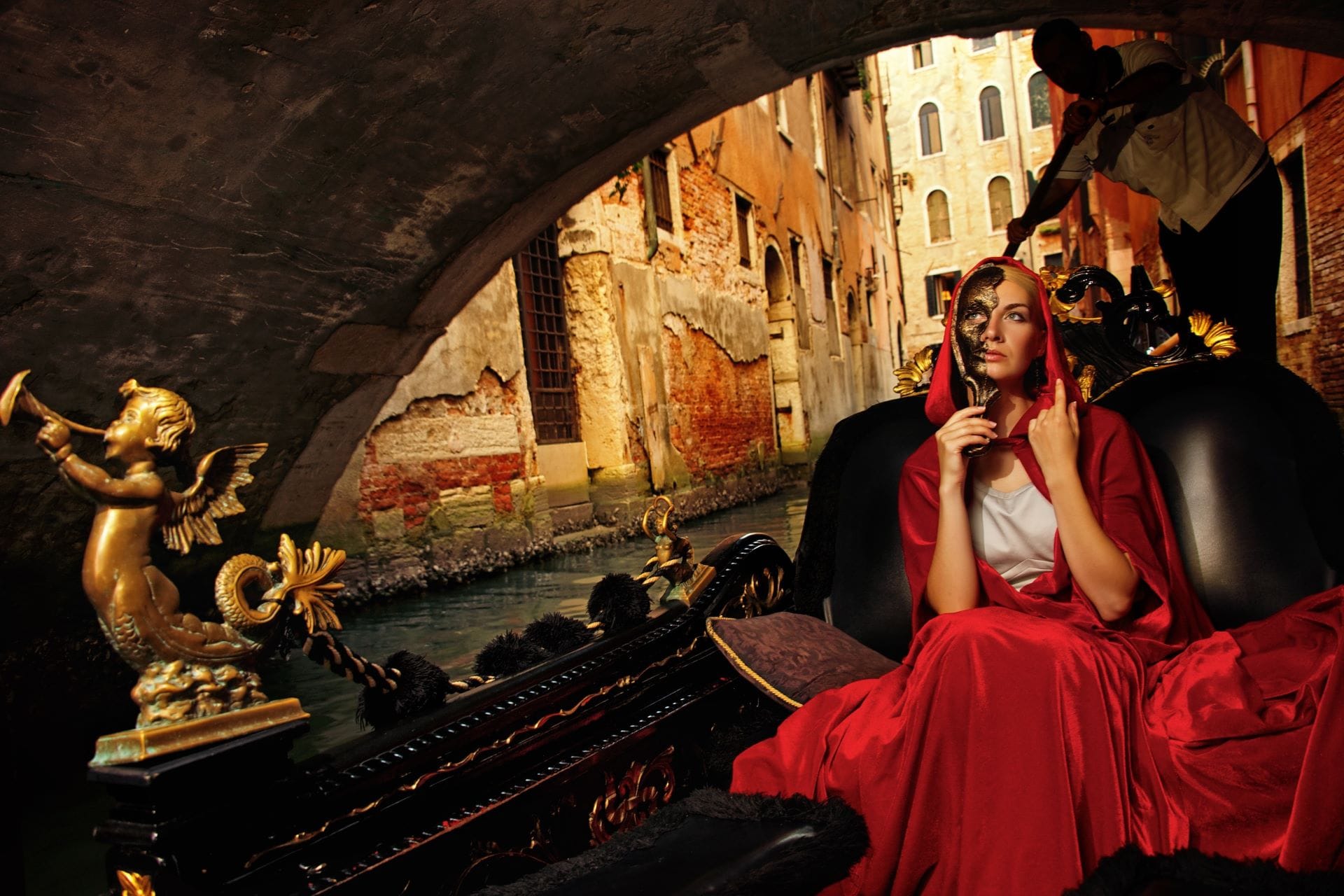
To understand Carnival is to understand a dual heritage that balances sacred discipline with profane excess. Etymologically, the term is widely accepted to derive from the Latin carnem levare ("to remove meat"), a direct reference to the impending dietary restrictions of Lent and the final banquets held before Ash Wednesday.
Yet, the spirit of the festival predates Christianity by centuries. Anthropologically, the Italian Carnival is the direct heir to the Roman Saturnalia and the Greek Dionysian festivals. These were periods of "controlled chaos," where the rigid social order was temporarily inverted. Slaves dined with masters, and excess was encouraged to regenerate the cosmos in preparation for spring. This ancient need for subversion remains palpable in modern celebrations, where the city streets still serve as a stage for collective catharsis.
Symbols of subversion: Italian masks and the Commedia dell'Arte
The temporary overturning of social hierarchies is best represented by the mask. By concealing identity, the mask historically granted the wearer—regardless of class—the freedom to mock authority and indulge in vices without consequence. In Italy, this tradition evolved into the Commedia dell'Arte, a form of theater where specific archetypes represent regional identities and biting social critiques.
Travelers exploring Italy in February 2026 will likely encounter a diverse cast of characters derived from the Commedia dell'Arte. Beyond the "Big Three," the peninsula is populated by a rich variety of regional archetypes:
- Arlecchino (Bergamo): Perhaps the most famous mask in the world. Arlecchino is the iconic multicolored servant, representing the wit, hunger, and acrobatic agility of the poor. His patchwork costume originally symbolized poverty (wearing leftover scraps) before becoming a stylized geometric design.
- Pulcinella (Naples): A complex figure of melancholy and irony. Dressed in baggy white with a black mask and a hooked nose, Pulcinella embodies the philosophical spirit of the South—a character who survives hardship through humor and cunning.
- Pantalone (Venice): The antagonist of the young lovers. Depicted as a hunched, miserly old merchant in red tights and a black cape, he represents the wealth and greed of the Venetian commercial class. He is the archetype of the "old man" (Il Vecchio)—lustful, wealthy, but constantly outsmarted by his servants.
- Colombina (Venice): The female counterpart to Arlecchino and often the smartest person in the room. Unlike the exaggerated male masks, she wears a delicate half-mask (or loup) that highlights her beauty. She represents the shrewd, independent maidservant who navigates the intrigues of her masters with quick wit and female agency.
- Meneghino (Milan): The symbol of the city's industriousness. Unlike his counterparts, Meneghino is often portrayed unmasked, representing the pragmatic, honest, and hardworking nature of the Milanese people who do not hide behind a facade.
- Il Dottor Balanzone (Bologna): Hailing from the seat of the world's oldest university, this character is a biting satire of intellectual arrogance. Dressed in black academic robes with a white collar, he is a pompous lawyer or doctor who speaks in endless, nonsensical Latin, representing the "know-it-all" who uses complex language to confuse rather than clarify.
- Gianduja (Turin): The honest, jovial peasant of the Piedmont region. Dressed in a brown jacket and tricorn hat, he represents the gentlemanly yet stubborn nature of the locals (bogia nen). His legacy extends beyond the theater; his name is immortalized in the region's famous hazelnut and chocolate delicacy, the gianduiotto.
The disputed history of coriandoli: why Italy throws paper
No Italian Carnival is complete without the throwing of coriandoli. It is vital for the international traveler to note a linguistic distinction: in Italy, the word "confetti" refers exclusively to sugared almonds given at weddings. The paper discs thrown at parades are called coriandoli.
The evolution of this tradition mirrors the democratization of the festival:
- Renaissance origins: originally, revelers threw actual coriander seeds coated in sugar (hence the name).
- The plaster era: by the 19th century, expensive seeds were replaced by cheaper, yet painful, plaster pellets.
- The paper revolution: The invention of modern paper confetti is a subject of historical debate. It is often attributed to the Milanese industrialist Enrico Mangili, who in 1875 purportedly repurposed perforated paper waste from silkworm bedding. However, authoritative sources also point to Ettore Fenderl of Trieste, who is documented to have cut paper triangles as early as 1876 due to a lack of funds for plaster.
Regardless of the inventor, the transition to paper allowed for the famous "battle of flowers" and confetti to become a universal, painless, and colorful phenomenon that defines the modern street party.
FAQ: understanding the culture and logistics of Carnival 2026
1. Is Carnival in Italy merely a tourist spectacle, or is it historically authentic?
While the masked balls of Venice have become globally renowned, Carnival remains a deeply felt, authentic tradition across the peninsula, linked to ancient agricultural cycles and social release. It is a living tradition, not a museum exhibit.
Beyond the Grand Canal, authenticity is best found in:
- Viareggio (Tuscany): Famous for satirical papier-mâché floats that reflect contemporary political discourse.
- Mamoiada (Sardinia): Home to the ancestral, almost menacing rites of the Mamuthones, whose black masks and heavy bells speak to pre-Christian, pagan roots.
- Cento (Emilia-Romagna): Twinning with Rio de Janeiro, offering a unique blend of Italian folklore and Brazilian rhythm.
2. What are the culinary imperatives of the season?
The etymology carnem levare implies a final indulgence before the rigors of Lent. The sophisticated palate must seek out the regional variations of "fried sweet dough." These caloric excesses were historically necessary to consume lard and sugar stocks before the fasting period.
Tasting these ephemeral treats is as vital to the experience as the visual pageantry. Look for:
- Frittelle (Venice): small, fried doughnuts often filled with raisins, pine nuts, or zabaglione cream.
- Cenci (Tuscany): "rags" of fried dough dusted with powdered sugar.
- Chiacchiere (Lombardy): crispy, ribbon-like pastries whose name translates to "chatter" or "gossip."
3. What is the proper etiquette regarding masks for the visitor?
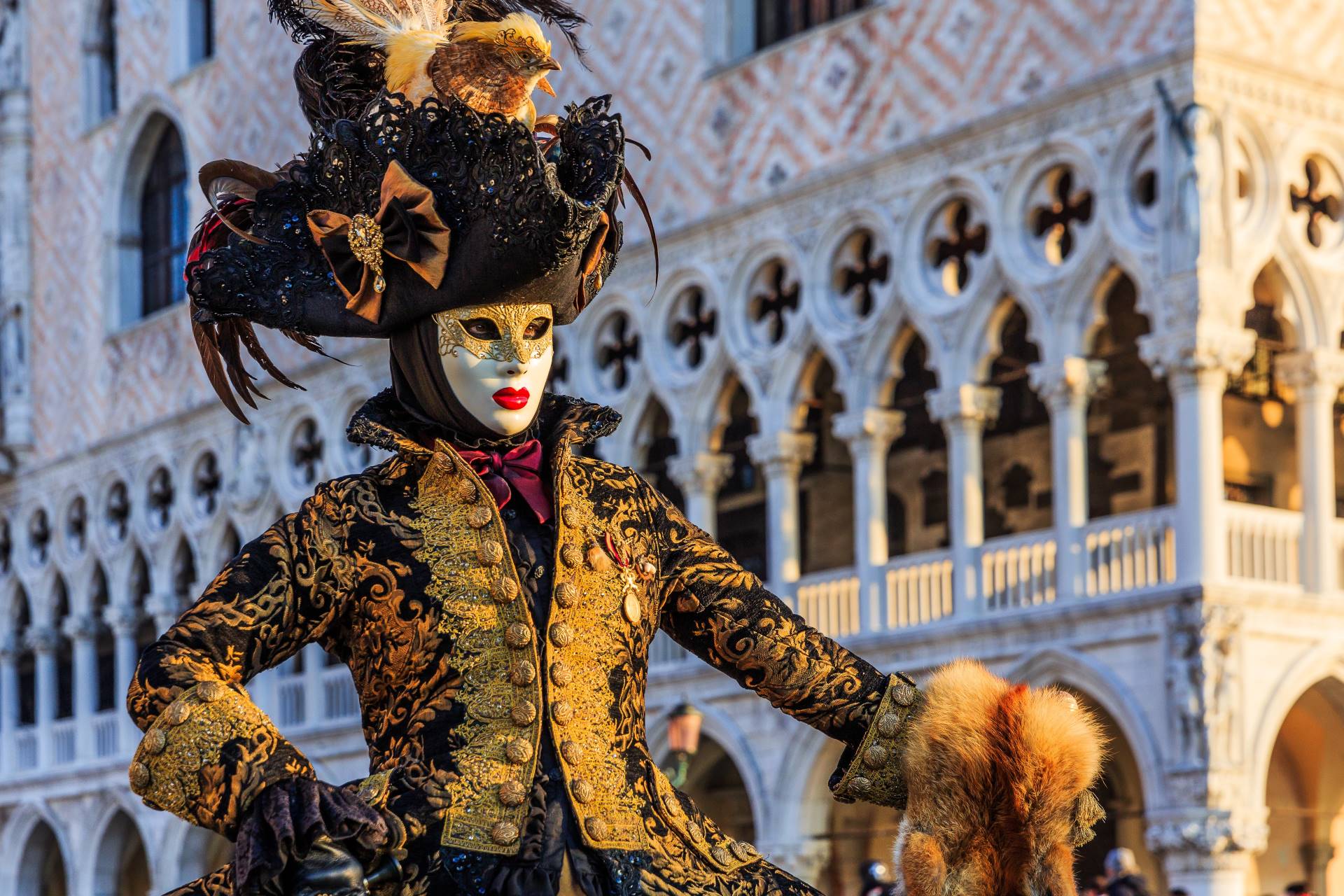
In cities like Venice, masking is an art form, not an obligation: it is perfectly acceptable to remain unmasked. However, participating by wearing a classic Bauta (a square-jawed mask allowing eating and drinking) or a Volto allows for a different psychological experience—the anonymity that fueled the social subversion of the 18th century.
Pro Tip: Avoid cheap, imported plastic souvenirs. It is highly recommended to purchase masks from authentic artisan laboratori (workshops). This supports a centuries-old craft and ensures you are wearing a piece of history, not a disposable prop.
4. How does the "Ambrosian" extension in Milan differ in atmosphere?
The Carnevale Ambrosiano offers a distinct, more localized experience. Because it occurs after the rest of Italy has already entered Lent, the "Sabato Grasso" (February 21, 2026) in Milan feels like a defiant, final burst of joy.
The atmosphere is less about the silent mystery of Venice and more about public street parades featuring the specific character of Meneghino. It serves as an excellent "encore" for travelers who may have missed the earlier dates in other regions or who wish to extend their itinerary.
5. Where can one witness the most ancient, pre-Roman expressions of Carnival?
For the traveler interested in anthropology and folklore, two specific events offer a glimpse into the festival's raw, Dionysian origins:
- The battle of the oranges (Ivrea, Piedmont): a visceral reenactment of a medieval revolt involving thousands of citizens in a messy, citrus-fueled combat.
- The Mamuthones and Issohadores (Sardinia): a dark, rhythmic procession of heavy steps and ringing bells designed to exorcise winter spirits.
These events are less about elegance and more about community catharsis and ritual combat, offering a stark contrast to the refined costumes of the mainland.
Guide to Italy is more than an editorial project—it’s a curated solution for travelers who demand depth, private access, and expert-led storytelling. Elevate your journey and make Italy yours.


