
In the spring of 1181, or perhaps the following year, a merchant household inside the walls of Assisi welcomes a boy the mother baptizes Giovanni. The father, Pietro di Bernardone, is away on business in France at the time. On his return, loaded with fine cloth bought at the great fairs of Champagne and Provence, he imposes a new name on the boy: Francesco, "the Frenchman," known to later centuries as Francis of Assisi, in tribute to the land that made the family's fortune and to the culture beyond the Alps. Twenty years later, that same man will stand naked in a square of the city, before the bishop, returning to his father every coin and every garment he owns. Between these two points, birth into a comfortable household and public stripping, lies the least told chapter of Francis of Assisi's early life: not a sudden leap from wealth to sainthood, but a sequence of precise ruptures, each with a date, a place, a witness.
In this article
- 01 The early life of Francis of Assisi: the house of Pietro di Bernardone
- 02 Collestrada, November 1202: war and imprisonment
- 03 Francis of Assisi in Puglia: illness and the voice of Spoleto
- 04 The crucifix of San Damiano and the break with his father
- 05 The bishop's square, 1206: the stripping before Guido
The early life of Francis of Assisi: the house of Pietro di Bernardone
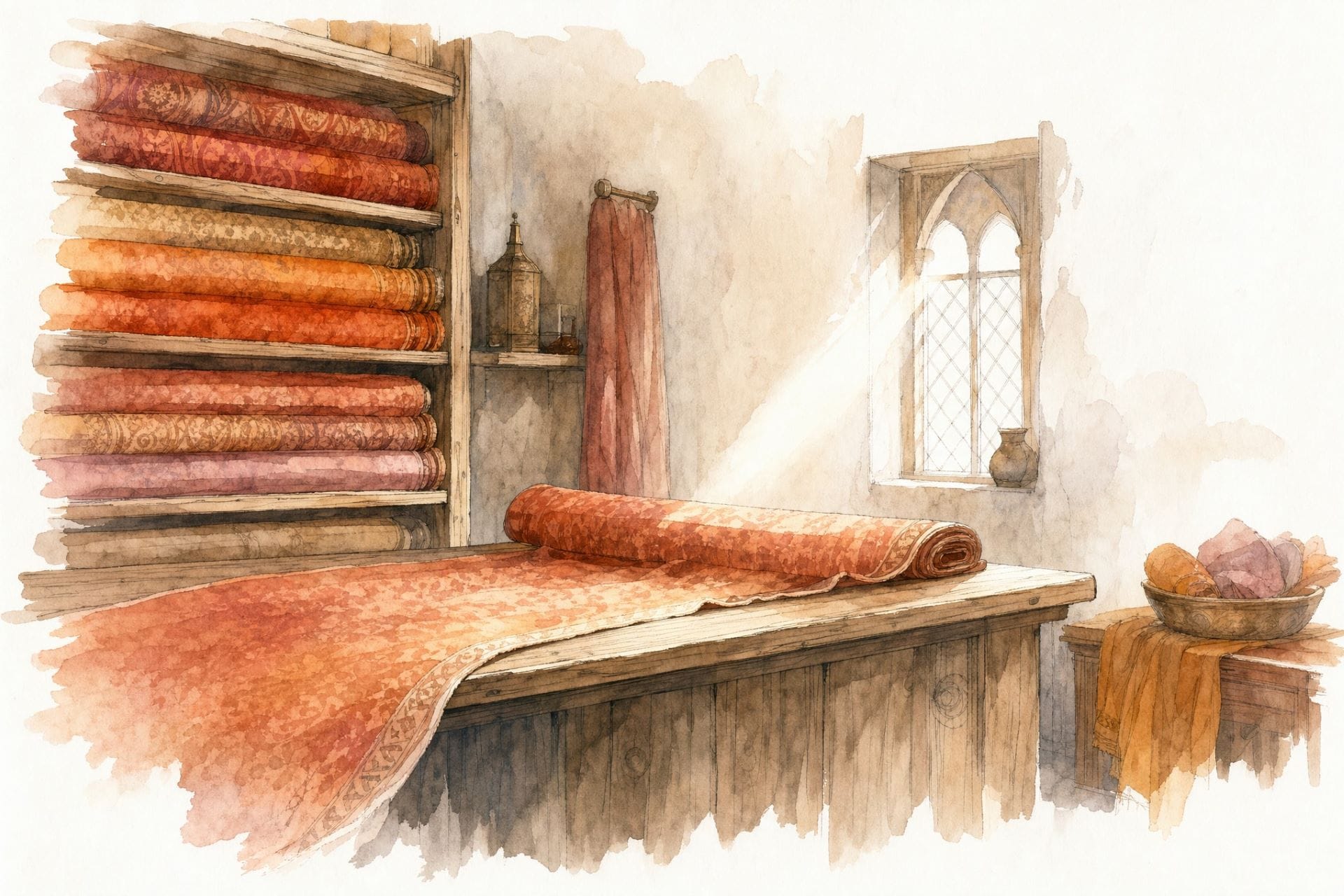
Pietro di Bernardone deals in luxury cloth, traveling tirelessly along the European trade routes to resell his goods in Assisi, and belongs to the rising merchant class that, within two generations, is displacing the city's old feudal nobility. The family wants for nothing: his mother, Giovanna, known by the nickname Pica, raises the boy in a comfortable household, often letting him have his way. Francesco receives a basic education from the canons of the church of San Giorgio, where he learns to read, to write a little Latin and, above all, French, a language essential to his father's business and to singing the courtly romances and chansons de geste, the medieval epic poems of northern France. As a young man, drawn to chivalric ideals, he prefers the company of the city's wealthier youths, hosting lavish banquets and nighttime serenades through the streets of Assisi. Thomas of Celano's Vita Prima, the earliest biography of Francis, describes him as the undisputed ringleader of Assisi's golden youth, courteous in manner but so generous with his father's money that he verged on prodigal waste.
Historical note
Francis's birth date is not settled. Franciscan sources place it between the summer and autumn of 1181; other historians argue for 1182, with some proposing specific dates such as June 24 or September 26 of that year.
The uncertainty is not an oversight. Medieval hagiography rarely recorded a saint's earthly birth with precision, since the date that mattered to the tradition was the dies natalis, the day of death marking the birth into eternal life: for Francis, October 3, 1226. Guide to Italy cites both candidate birth years together rather than favoring one.
Collestrada, November 1202: war and imprisonment
In 1198, the townspeople of Assisi tear down the imperial fortress of Duke Conrad of Urslingen and found a free commune, a rupture that draws the city into open war with Perugia within four years. Many noble families, threatened by the popolani, take refuge in nearby Perugia, which seizes the chance to expand its own power. In November 1202, armed conflict between the two cities comes to a head on the hill of Collestrada: the army of Assisi suffers a heavy defeat, and numerous citizens are taken prisoner. Francesco is among them. He has chosen to fight among the knights despite holding no noble title, equipped at his father's expense, and it is precisely this evident display of wealth in his weapons that leads the Perugians to see him as a prisoner worth a substantial ransom. They lock him in their cramped cells for about a year, confined alongside the city's nobility. The chronicles recall that even under those harsh conditions, Francesco kept a cheerful disposition, constantly lifting the spirits of his fellow prisoners. He is finally freed in 1203, physically weakened and ill, only after Pietro di Bernardone pays the Perugians the substantial ransom demanded.
Francis of Assisi in Puglia: illness and the voice of Spoleto
Back in Assisi, Francesco's convalescence stretches through the rest of 1203 and proves long and difficult. When he finally gets back on his feet, Francesco finds that the world he once knew has lost its appeal. The Umbrian countryside no longer lifts his spirits, and he feels no interest in his old companions in revelry. Yet ambition has not entirely burned out. Between late 1204 and the spring of 1205, he decides on one last, great feat of arms: to join in Puglia the mercenary troops of Gualtiero di Brienne, count of Lecce, who is fighting in the south to defend the interests of Pope Innocent III against the imperial Markward faction. His goal is to win on the battlefield the knighthood that his merchant origins deny him at home. He leaves Assisi with lavish equipment, finer even than that of his blue blooded companions. But the adventure ends almost as soon as it begins. At the first stop, in Spoleto, he is struck by another attack of fever and spends the night in the grip of an inner vision. A voice, as the earliest Franciscan sources agree in reporting, asks him where he is headed and whether it makes more sense to serve the master or the servant. When he gives the obvious answer in favor of the master, the voice asks why, then, he is chasing after the servant, abandoning the Lord. In the morning, heeding that warning, Francesco gives up his dreams of military glory and turns back toward Assisi, facing the inevitable mockery of his fellow citizens. He will never speak of the Puglia expedition again.
The crucifix of San Damiano and the break with his father
The months that follow are a time of quiet searching and solitary prayer in the countryside, mostly undated. It is during this period that a pivotal episode takes place, one Francesco himself recalls near the end of his life in his Testament: an encounter with a leper. Where once the mere sight of the sick provoked an unshakable revulsion in him, on this occasion he dismounts, gives alms, and kisses the man, turning, as he will later write, "what was bitter into sweetness of soul and body." In the autumn of 1205, praying before a large Byzantine crucifix in the crumbling little church of San Damiano, outside the walls of Assisi, he hears the words that will change his destiny: "Francesco, go and repair my house, which, as you see, is falling entirely into ruin." Taking the command literally, he takes fine bolts of cloth from his father's fondaco, the family's cloth warehouse and shop, rides to the market at Foligno, and sells both the fabric and his horse to raise the money the restoration requires. He returns to San Damiano and offers the proceeds to the church's poor priest, who refuses them out of fear of Pietro di Bernardone's reaction. Francesco, by now contemptuous of the money, simply throws it onto a windowsill. Pietro, furious over the financial loss and the disgrace, has him tracked down, drags him home, and chains him in a dark room. It is his mother Pica who frees him, taking advantage of a moment when her husband is away on business. On his return, Pietro, having failed at physical coercion, tries the legal route, summoning his son before the city's consuls to recover what was taken. Francesco, however, declares that he has consecrated himself to the service of God, placing himself beyond the civil authority of the communal magistrates. His father is therefore forced to bring the case before the ecclesiastical court, turning to the bishop.
The bishop's square, 1206: the stripping before Guido
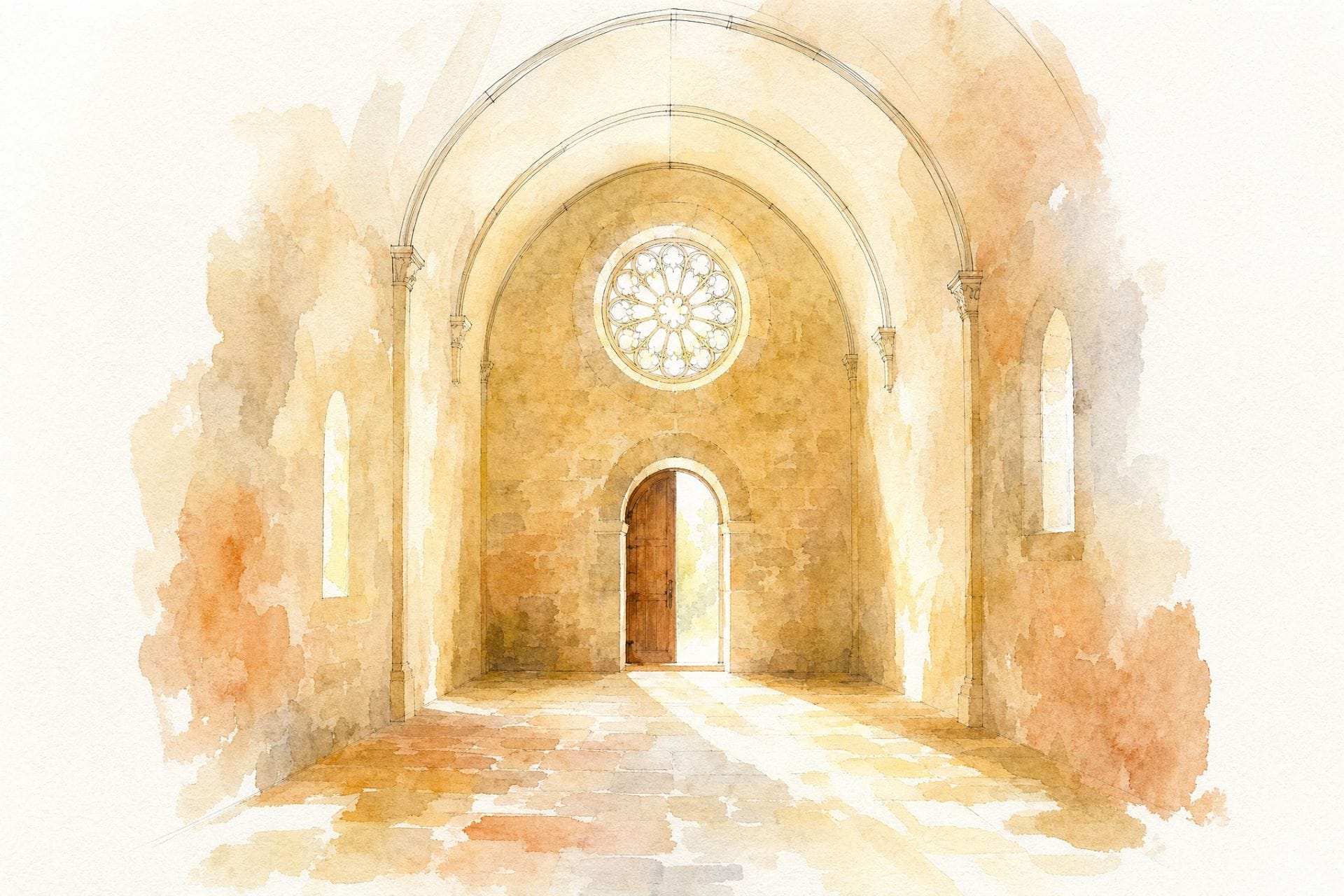
Summoned to trial before Bishop Guido between January and February 1206, Francesco appears in the square in front of the episcopal palace of Assisi, in the area now occupied by the church of Santa Maria Maggiore. Before his father, the bishop, and a crowd of citizens gathered for the sensational event, he does not even wait to be formally questioned. He returns the leftover money and, in a startling gesture, strips off every garment until he stands completely naked. Hagiographic sources, in particular The Legend of the Three Companions, record his solemn declaration before the stunned crowd: "Until now I have called Pietro di Bernardone my father, but from now on I can truly say: Our Father, who art in heaven." Bishop Guido, grasping the profound spiritual nature of this act of radical self dispossession, rises to his feet, moved, and covers him with his own cloak, publicly taking him under the jurisdiction and protection of the Church. It is from that public square, not from the reassuring isolation of a traditional monastery, that Francesco's public life begins: a man who cuts, for good, every tie to the prosperous cloth merchant society expected him to become.
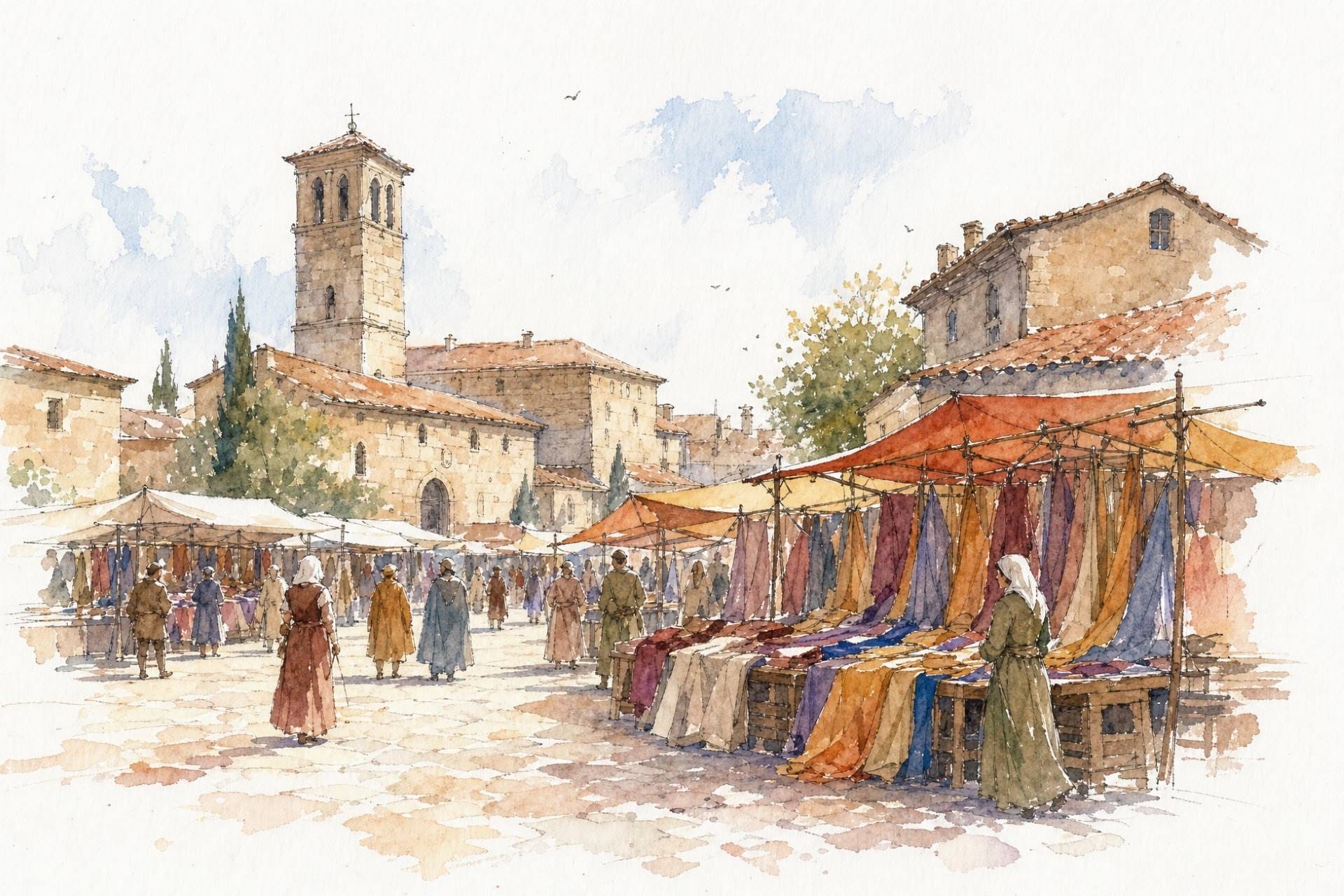
No chronicle of the time records what Pietro di Bernardone felt as he gathered the abandoned clothes from the ground and walked out of his firstborn son's life for good. His son, whom he had fed, dressed in fine cloth, and trained to succeed him at the head of the family business, set off in the opposite direction, heading toward San Damiano wearing only a poor hermit's tunic lent to him by a peasant in the bishop's service, on which he traced a cross in chalk. The merchant household that had seen him born would never again see him as a son, nor as heir to its fortune.
The story of the fraternity that will take shape from that radical choice, the arrival of the first companions willing to follow his path, and the return to San Damiano, no longer as a merchant or a knight but as a humble stonemason, belong to the next installment of this series.
Special series
The 800th anniversary of Saint Francis of Assisi
Guide to Italy's coverage of the anniversary year: the life of the saint, the places that shaped him, and where to follow his path today.
Guide to Italy is a letter from an Italy that doesn't write to everyone.
Become a member


