
As the global spotlight intensifies on the glittering peaks of Cortina d’Ampezzo and the high-octane urban venues of Milan for the 2026 Winter Olympics, a silent majesty remains undisturbed just a few ridges away. While the Olympic flame illuminates the Tofane and the celebrated slopes of the Ampezzo Valley, the nearby Val Fiorentina offers a masterclass in alpine serenity.
In this protected corner of the UNESCO World Heritage Dolomites, time operates on a different scale. Here, the air carries the scent of seasoned larch wood and the faint chime of cowbells: a stark and welcome contrast to the construction noise and crowd chatter expected in the neighboring Olympic hubs.
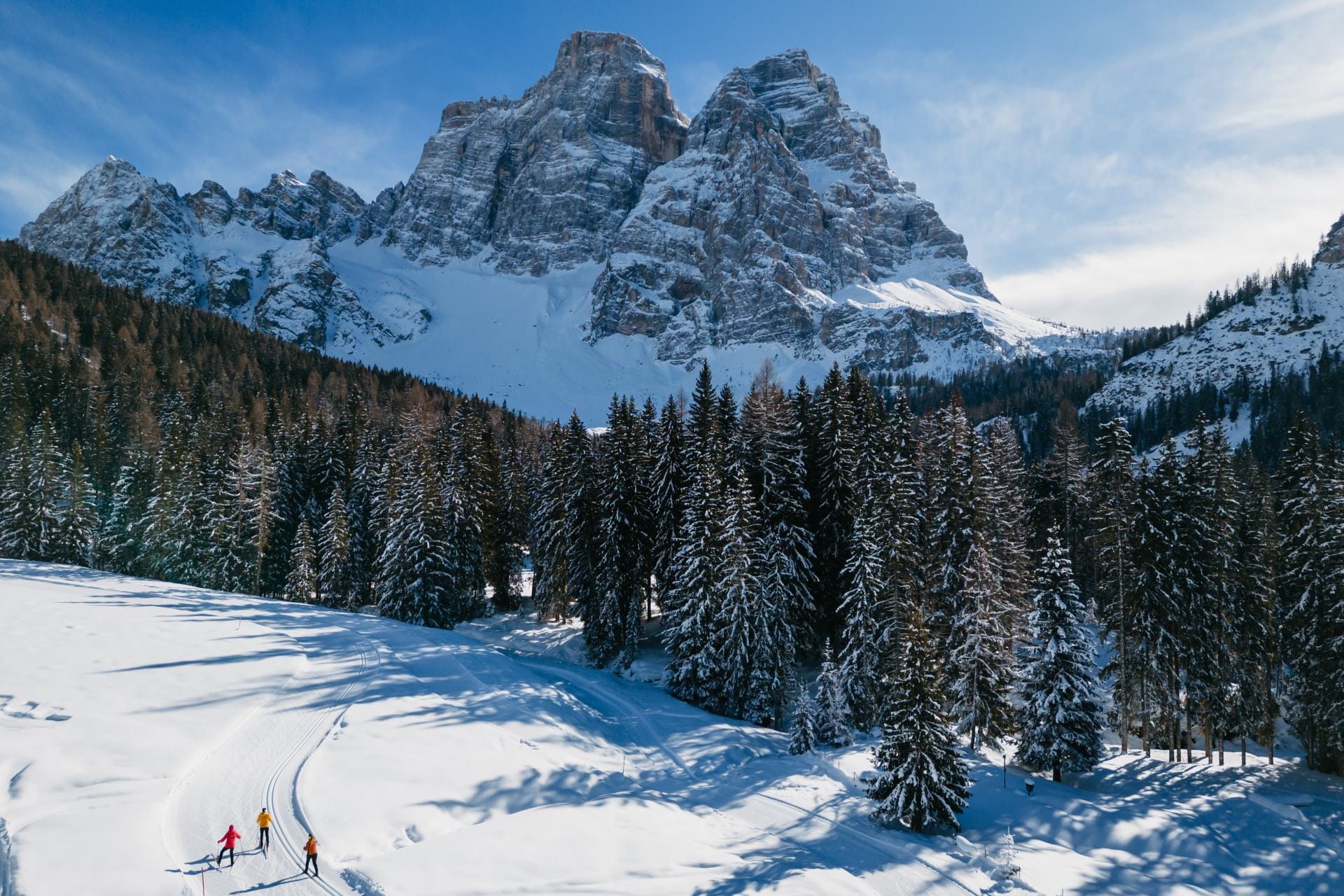
Val Fiorentina is dominated by the colossal presence of mount Pelmo, often called "Carega del Padre Eterno" (the throne of God). This valley is not a place of transit but a destination of residence: it is designed not for the fleeting tourist, but for the traveler seeking the "Genius Loci" of the Italian Alps. It is a sanctuary where the Ladin culture is not a costume for folklore evenings but a lived reality, and where the silence is so profound it becomes a physical presence. To enter Val Fiorentina during the 2026 Olympic season is to choose the authentic pulse of the Dolomites over the manufactured spectacle.
A valley protected by geography and determination
Val Fiorentina sits in the northern reaches of the Province of Belluno, Veneto, effectively acting as a strategic yet secluded gateway between the Val di Zoldo, the Val Cordevole, and the high-altitude passes leading toward the Badia and Ampezzo valleys. The valley is anchored by the municipality of Selva di Cadore, which encompasses several characteristic hamlets: Santa Fosca, Pescul, and the historically significant L'Andria.
Geographically, the valley has remained "protected" from the aggressive mass-tourism development seen in the late 20th century due to a combination of physical barriers and local preservation:
- Topographical isolation via mountain passes: while the valley is accessible via the Passo Giau (SP638) and the Passo Staulanza (SP251), these winding, high-altitude roads act as natural filters. They discourage the high-volume coach tours that plague more accessible regions, ensuring that a sense of arrival must be earned by those who appreciate the journey.
- The UNESCO "buffer zone" status: a significant portion of the territory falls under strict environmental protections as part of the UNESCO Dolomites system 1 (Pelmo-Croda da Lago). This designation has strictly limited the expansion of large-scale hotel infrastructure, favoring the preservation of the original village clusters and sustainable slow tourism.
- Persistence of the agricultural landscape: unlike neighboring valleys that pivoted entirely to industrial tourism, Val Fiorentina has maintained a strong connection to its malghe (alpine summer farms) and traditional forestry. This commitment has ensured the landscape remains a working cultural landscape—a lived-in heritage rather than a sterilized mountain resort.
- Proximity to the Civetta ski area: despite its quiet demeanor, the valley offers direct access to the Civetta ski circuit through the lift systems in Pescul. This allows the 2026 traveler to enjoy world-class skiing during the day while retreating to the privacy and authenticity of a silent valley at night.
Choosing Val Fiorentina as a base offers a premium experience of privacy. The location remains close enough to capture the Olympic energy of Cortina via the Giau Pass, yet it is fundamentally insulated from the logistical strain, facilitating a customized Italian itinerary that prioritizes quality of life and cultural depth.
The genius loci: Ladin identity and the living museum
The cultural fabric of Val Fiorentina is meticulously woven from an ancient Ladin heritage. This Rhaeto-Romanic identity is not merely a historical footnote but a vibrant, living reality visible in the valley's distinct architecture, audible in the rhythmic local dialect, and tangible in the community's stoic hospitality. To truly understand why this valley remains the authentic alternative to the Olympic bustle, one must look at the symbols of its survival: a culture that has flourished in the shadow of giants for millennia.
The architectural fingerprint: tobià barns and the legacy of Molin dei Padre
The landscape of Val Fiorentina is defined by the tobià, traditional wooden barns that serve as the valley's architectural signature. These structures are masterclasses in vernacular Alpine engineering:
- Ancient joinery: most tobià were constructed using complex interlocking joints and wooden pegs, famously utilizing no iron nails. This technique allowed the wood to expand and contract with the extreme mountain temperatures, ensuring durability over centuries.
- Functional design: notice the intricate wooden lattices (the linde) designed to facilitate air circulation, a natural system for drying hay and grains that remains more sustainable than any modern equivalent.
A quintessential symbol of this technical and cultural heritage is the Molin dei Padre in Selva di Cadore. This historic sawmill and mill complex represents the beating heart of the valley's pre-industrial economy. It is not merely a relic but a profound narrative of Alpine self-sufficiency. By visiting this site, you witness how the inhabitants harnessed the hydraulic power of the Fiorentina stream to process both timber and grain. The Molin dei Padre stands as a monument to a time when the rhythm of life was dictated by the seasonal harvest of timber and the flow of water.
Prehistoric enigmas: the Vittorino Cazzetta museum and the Mondeval man
For the traveler seeking deep historical context, the Vittorino Cazzetta Civic Museum in Selva di Cadore is an unmissable destination. It elevates the valley from a scenic retreat to a site of global archaeological significance.
The museum’s crown jewel is the remains of the Mondeval Man, a Mesolithic hunter-gatherer who lived approximately 7.500 years ago. His discovery was a watershed moment for European history for several reasons:
- High-altitude survival: found at an elevation of 2.150 meters on the Mondeval de Sora plateau, the burial proved that prehistoric humans were not just passing through the peaks but were inhabiting the high Dolomites long before previously hypothesized.
- The burial kit: the exceptional preservation of his gear—including flint tools and organic remains—offers an intimate look at the sophisticated survival strategies of the first Alpine dwellers.
- The paleontological bridge: beyond human history, the museum also displays triassic dinosaur footprints discovered on the slopes of mount Pelmo. This allows the visitor to bridge the gap between deep geological time and the rise of human civilization in the Dolomites.
This museum experience provides the intellectual grounding for your visit. It ensures that when you look up at mount Pelmo during the 2026 Olympic season, you aren't just seeing a mountain; you are seeing a witness to over 200 million years of history, from the dawn of the dinosaurs to the resilient Ladin spirit of today.
Low-impact exploration: activities beyond the infrastructure
During the 2026 Winter Olympics, when the lift systems and transit hubs of the primary venues reach peak capacity, Val Fiorentina offers a sophisticated alternative based on "human-powered" movement and contemplative observation. While the world focuses on the velocity of the slopes, this valley invites you to rediscover the rhythm of the mountains through activities that require no infrastructure and offer total immersion in the UNESCO World Heritage landscape.
High-altitude trekking: the Mondeval plateau
A summer and autumn masterpiece, the trek to the Mondeval plateau is an essential experience for those seeking isolation.
- The route: starting from the Passo Staulanza (1.773 m), the trail ascends through ancient forests to the wide, high-altitude meadows of Mondeval de Sora.
- The reward: this is where the Mondeval Man was discovered, and the sense of prehistoric history is palpable. The view of the colossal north face of mount Pelmo from this vantage point is arguably the most soul-stirring and iconic panorama in the entire Dolomite range. It is a place of profound stillness, even during the peak of the Olympic season.
Cultural immersion: the "Sentiero dei Vecchi Mestieri"
For travelers interested in the intersection of nature and human history, the Sentiero dei Vecchi Mestieri (old crafts path) is a low-altitude circuit that connects the valley’s hamlets. This path serves as an open-air museum of Ladin industrial history, connecting:
- Ancient water-powered mills and the historic sawmill sites.
- Old lime kilns used for centuries in local construction.
- Smelting and iron-working sites that once supplied the Republic of Venice. This walk is a journey through the "Genius Loci" of the valley, offering a tactile connection to the resilience of mountain life.
Winter silence: snowshoeing and trekking in Peronaz
While the neighboring Olympic valleys will be dominated by the sound of snow cannons and public address systems, the Peronaz plateau at the foot of mount Pelmo remains a sanctuary of winter silence.
- The experience: starting from the rifugio Peronaz, a network of trails winds through snow-laden larch and fir forests.
- The appeal: these trails are designed for snowshoeing and winter hiking, providing an intimate encounter with the winter landscape. It is the perfect environment for those who wish to experience the "white desert" of the Dolomites without the commercial pressure of a major ski resort.
Meditative pace: Nordic skiing in Santa Fosca
The Santa Fosca Nordic center provides a rhythmic alternative to the frantic pace of alpine skiing. While the masses flock to the Civetta circuit, the cross-country trails here offer:
- Panoramic loops: the trails are meticulously groomed and offer constant, unobstructed views of mount Pelmo and the Civetta massif.
- Physical wellness: nordic skiing in Val Fiorentina is a meditative practice, allowing for a deeper connection with the winter environment through steady, rhythmic effort.
- Authentic atmosphere: the Nordic center remains a local hub, where the focus is on the sport and the scenery rather than the spectacle.
Planner’s toolkit: organizing the visit
Navigating Val Fiorentina requires more intentionality than visiting a major city or a mainstream resort. This geographical barrier is precisely why the valley remains a preserved sanctuary for those who seek it.
How to get there: navigating the alpine passes
Accessing the valley is a scenic experience in itself, but it requires careful route planning, especially during the 2026 Olympic season when traffic patterns in the neighboring Ampezzo valley may fluctuate.
- By car: from the south (Venice and Treviso): take the A27 motorway to its northern terminus in Longarone. From here, follow the signs for Forno di Zoldo and ascend via the Staulanza Pass (SP251). This route offers a dramatic entrance as the massif of mount Pelmo suddenly dominates the horizon.
- By car: from the north and Cortina: if you are coming from the Olympic hub of Cortina d’Ampezzo, the valley is accessed via the Giau Pass (SP638). This is one of the most legendary drives in the Dolomites, though it is recommended only for confident drivers and requires winter tires or chains during the Olympic window.
- The necessity of a vehicle: a private car is highly recommended for the individual traveler. While the hamlets of Selva di Cadore are walkable, a car provides the freedom to reach trailheads like Peronaz or visit the valley at your own pace.
- Local transport: the DolomitiBus network connects the valley to the main hubs of Belluno and Agordo. During the 2026 season, check for updated schedules as regional shuttle services may be enhanced to accommodate the Olympic period.
Where to stay in Val Fiorentina - Selva di Cadore Dolomiti
Accommodation in Val Fiorentina favors intimacy and architectural heritage over large-scale luxury chains.
For boutique hotels and garni, the hamlet of Santa Fosca remains the primary focus. Establishments here blend modern wellness amenities with traditional alpine aesthetics, offering a sophisticated base for exploring the valley's hidden corners. Furthermore, this location serves as a strategic outpost for occasional visits to the nearby 2026 Winter Olympic venues; its position allows for a seamless transition between the high-octane energy of the games in Cortina and the restorative silence of a true mountain sanctuary.
Best time to visit: the seasonal choice
The character of Val Fiorentina shifts significantly with the seasons. Choosing your window depends on your tolerance for the Olympic atmosphere.
- Late January to February 2026: this is the strategic choice for the Olympic escape. By staying in Val Fiorentina during this window, you can witness the energy of the world's greatest winter event in nearby Cortina during the day, while retreating into the profound silence of the valley as the sun sets.
- June to July: ideal for experiencing the blooming alpine meadows and the traditional practices of the malghe as they move livestock to the high pastures.
Finding beauty in the shadow of giants
The 2026 Winter Olympics will undoubtedly be a magnificent display of human athleticism and organizational prowess. It is a moment of global celebration that will bring unprecedented attention to the peaks of Northern Italy. However, for the discerning traveler, there is an inherent risk that the sheer scale of such a massive event can obscure the very qualities that make Italy a peerless destination: a sense of place, a deep history, and an unhurried, lived beauty.
Val Fiorentina serves as a vital reminder that the true soul of Italy is often found in the valleys that the world forgot to watch. It is a destination that prioritizes the "being" over the "seeing." Its value is not derived from temporary infrastructure or international headlines, but from an intrinsic heritage that has been carved by glaciers and preserved by a community that understands the fundamental difference between being a spectacle and being a home.
For the traveler choosing Val Fiorentina in 2026, the experience is defined by:
- Authentic craftsmanship: witnessing the meticulous, centuries-old engineering of the Molin dei Padre sawmill.
- Cultural continuity: hearing the Ladin dialect spoken not for performance, but as a daily expression of identity over a morning coffee.
- Geological majesty: standing before the stoic, timeless face of mount Pelmo, a landmark that remains indifferent to the transient nature of modern events.
- Privacy and space: while Olympic venues manage crowds of tens of thousands, Val Fiorentina offers a premium on personal space, where you can find yourself alone on a trail even during the busiest winter weeks.
The reward for choosing this valley is not a ticket to a race or a seat in a stadium; it is a front-row seat to the enduring majesty of the Dolomites. It is an invitation to witness a version of Italy that remains unchanged by the seasons of sports. Long after the Olympic torches have been extinguished and the crowds have returned home, the quiet resonance of Val Fiorentina will remain, a profound, indelible memory of an Italy that is both ancient and eternally present.
Practical resources for the traveler
To ensure a seamless experience, the following institutional and official resources should be consulted for real-time updates on schedules, pricing, and accessibility:
- Val Fiorentina - official tourism portal: The primary digital hub for Selva di Cadore and its hamlets. This site provides updated hours for the Vittorino Cazzetta museum, local cultural event calendars, and details on artisan sawmill demonstrations at the Molin dei Padre.
- Visit Dolomites: A comprehensive repository for the UNESCO World Heritage systems. This site is invaluable for downloading technical trail maps, geological reports, and environmental safety guidelines specifically curated for the mount Pelmo and Croda da Lago territory.
Guide to Italy is more than an editorial project—it’s a curated solution for travelers who demand depth, private access, and expert-led storytelling. Elevate your journey and make Italy yours.


