
The pristine silence of the Vedrette di Ries-Aurina Nature Park is periodically punctuated by the rhythmic breathing of world-class athletes and the sharp, clinical crack of rifle fire. This is Anterselva (known in German as Antholz), a valley where the rugged grandeur of the Dolomites meets the surgical precision of Nordic sport. As the global sporting community prepares for the Milan Cortina 2026 Winter Olympics, this South Tyrolean enclave stands ready to reclaim its title as the undisputed capital of biathlon.
Anterselva offers more than just a competition site; it represents a sophisticated blend of Germanic efficiency and Italian Dolce Vita, set against a backdrop of UNESCO World Heritage peaks. The valley serves as a cultural bridge, offering an experience that is simultaneously rigorous and indulgent.
- The Südtirol Arena: a temple of precision for the 2026 Games
- Beyond the tracks: the winter allure of Lake Anterselva
- The cultural fabric of the Antholz valley: a fusion of traditions
- South Tyrolean gastronomy: a culinary journey through the Alps
- Logistics and travel planning for the 2026 winter Olympics
- Luxury and wellness accommodations: the pinnacle of alpine hospitality
- The enduring legacy of Anterselva and the 2026 Games
The Südtirol Arena: a temple of precision for the 2026 Games
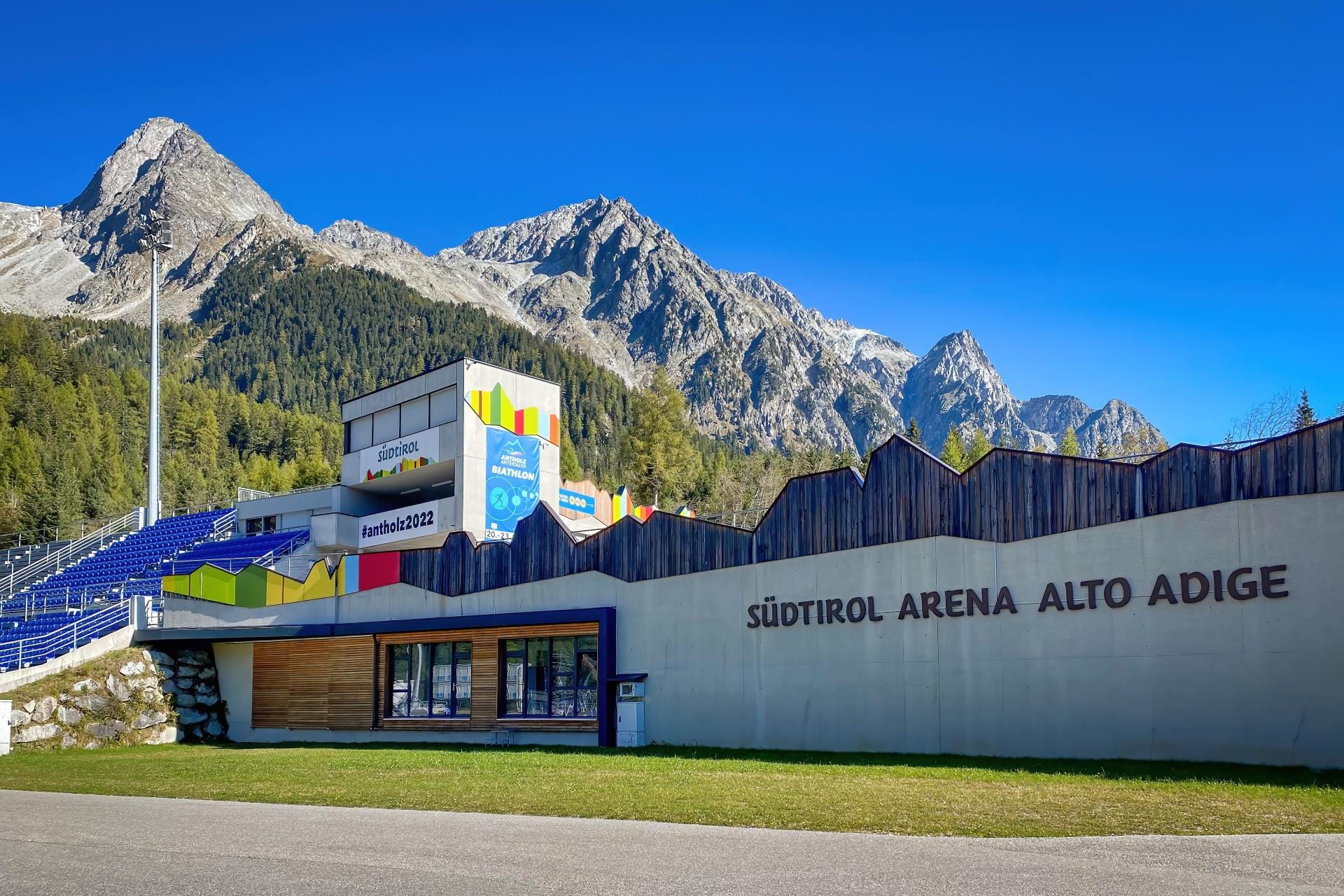
At the head of the valley, where the road climbs toward the Austrian border, lies the Südtirol Arena Alto Adige. Situated at an altitude of approximately 1,600 meters (5,250 feet), it remains one of the highest and most atmospheric venues on the international biathlon circuit. The thin alpine air adds a layer of physiological complexity to the races, demanding peak aerobic capacity and impeccable heart-rate control during the shooting phases.
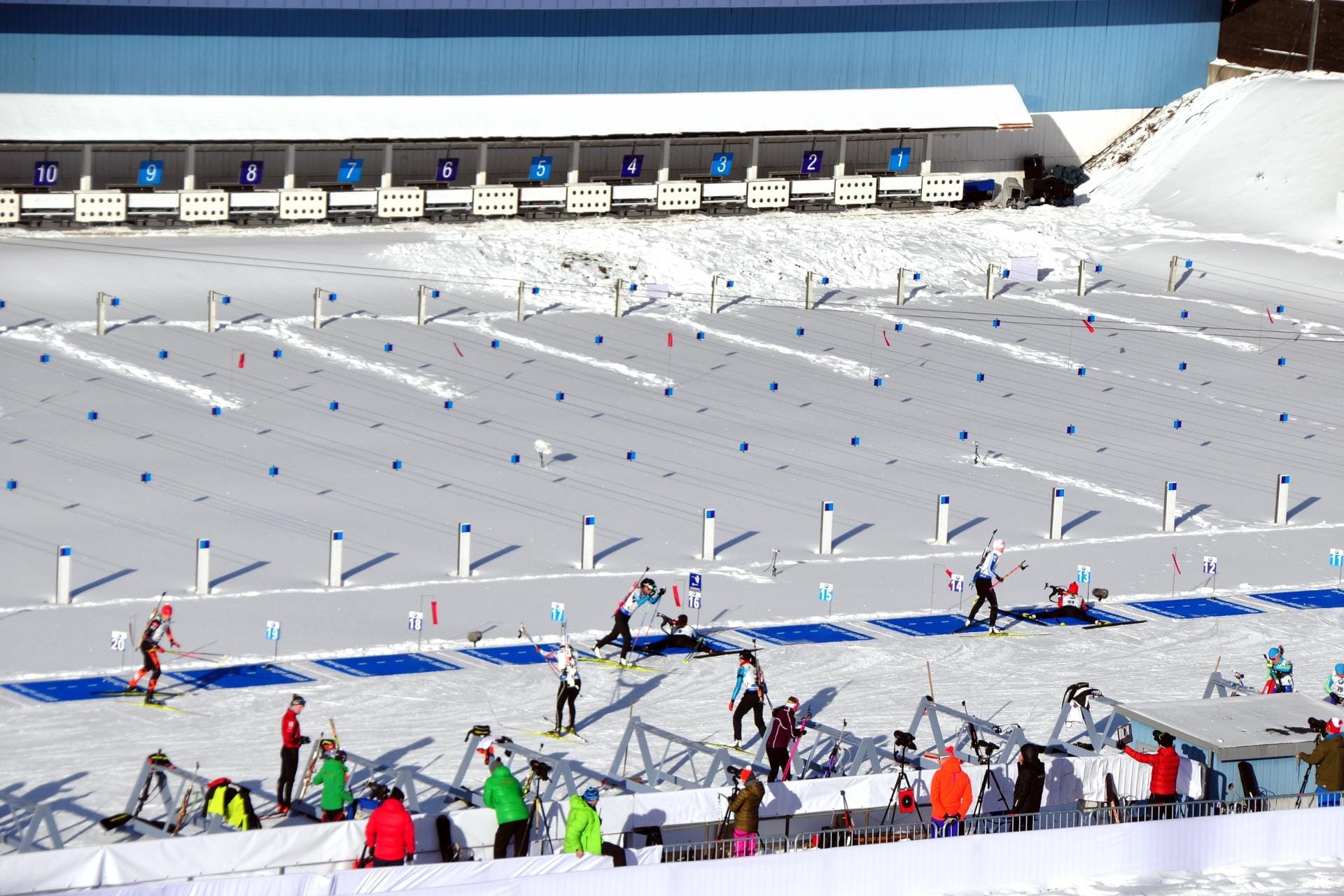
Since hosting its first World Championships in 1975, Anterselva has become synonymous with biathlon: a grueling discipline combining the cardiovascular intensity of cross-country skiing with the meditative calm required for marksmanship. For the Milan Cortina 2026 Games, the arena will serve as the exclusive stage for all biathlon events, including:
- Individual and sprint competitions: testing raw speed and accuracy.
- Pursuit and mass start races: where tactical positioning is paramount.
- Relay events: the ultimate display of national teamwork and pressure management.
The venue is renowned among athletes for its technical shooting range and challenging climbs, while spectators appreciate the "cauldron" effect of the grandstands. This architectural layout ensures an intimate connection with the competition, where the crowd's energy directly influences the momentum on the track.
Innovation and environmental stewardship at the arena
The infrastructure strategy for 2026 focuses heavily on environmental sustainability. Rather than creating permanent scars on the landscape, the organizing committee has prioritized:
- Sustainable facility upgrades: enhancing existing structures to meet Olympic standards without expanding the physical footprint.
- Renewable energy integration: utilizing local hydroelectric and solar sources to power the venue operations.
- Zero-impact logistics: implementing a rigorous "green" transport plan to move spectators through the valley via low-emission shuttles and rail links.
This commitment ensures that the temporary upgrades required for the Olympics leave a minimal footprint on the delicate alpine ecosystem, preserving the valley's natural integrity for future generations of hikers and skiers.
Beyond the tracks: the winter allure of Lake Anterselva
Just a short distance from the high-octane energy of the biathlon stadium lies Lake Anterselva (Lago di Anterselva), the third-largest lake in South Tyrol. During the winter season, this alpine gem undergoes a dramatic transformation into a crystalline expanse of ice and snow, framed by the jagged summits of the Riesenferner Group. For the Milan Cortina 2026 visitor, the lake represents the contemplative soul of the valley.
- The circular winter trail: a groomed path allows travelers to walk the entire perimeter of the frozen lake, offering a sensory experience defined by the scent of frost-covered pines and the profound silence of the Dolomites.
- A photographer’s paradise: the interplay of the "blue hour" light against the white peaks provides a world-class opportunity for high-end landscape photography.
- Accessibility: despite its wild appearance, the lake remains easily accessible via local shuttle services, making it a mandatory stop for those seeking the "authentic" side of the Antholz valley.
The cultural fabric of the Antholz valley: a fusion of traditions
Anterselva is a primary jewel of the Val Pusteria (Pustertal), a region defined by a fascinating linguistic and cultural duality that serves as a bridge between the Mediterranean and Central Europe: the valley offers a unique opportunity to witness a society where Germanic precision meets Italian warmth.
The municipality of Rasun-Anterselva (Rasen-Antholz) is historically organized into three distinct hamlets, each offering a window into centuries of alpine resilience:
- Anterselva di Sotto (Antholz Niedertal): the gateway to the valley, characterized by rolling meadows and traditional farmsteads.
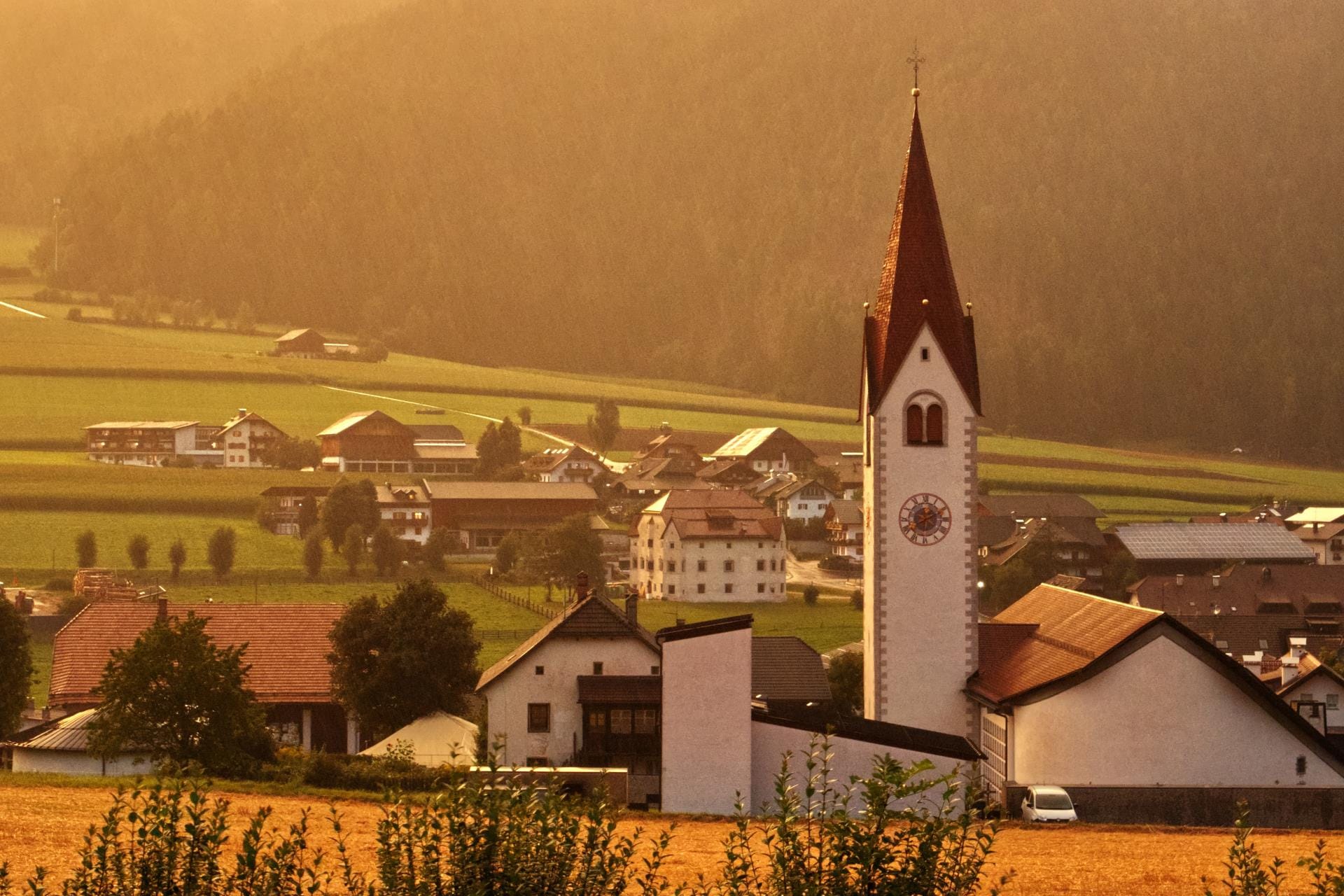
- Anterselva di Mezzo (Antholz Mittertal): the administrative and cultural heart, home to the parish church and authentic local gathering spots.
- Anterselva di Sopra (Antholz Obertal): the highest settlement, where the landscape becomes more rugged as it leads toward the biathlon arena and the Austrian border.
In these villages, the skyline is dominated by Gothic-style church spires and ancestral homes featuring the stube: a traditional wood-paneled living room centered around a masonry stove. This architectural element is not merely decorative; it remains the social nucleus of South Tyrolean life, representing a commitment to hospitality and "gemütlichkeit" (coziness) that is especially palpable during the winter months.
South Tyrolean gastronomy: a culinary journey through the Alps
The culinary landscape of the valley is a direct reflection of its borderland identity. During the 2026 Winter Games, the local food scene will be as significant an attraction as the sporting events themselves. South Tyrolean cuisine is characterized by a "farm-to-table" philosophy that predates the modern trend, relying on seasonal mountain ingredients and artisanal techniques.
Signature dishes to experience in Anterselva
To truly understand the spirit of the Dolomites, one must sample the traditional fare served in the mountain huts (rifugi or hütten) scattered throughout the valley:
- Canederli (knödel): these iconic bread dumplings are the soul of South Tyrolean comfort food. Often flavored with Speck Alto Adige IGP (a cured, lightly smoked ham) or local mountain cheeses, they are typically served in a clarified beef broth or with melted butter and chives.
- Schlutzkrapfen: elegant, half-moon shaped ravioli made from a blend of rye and wheat flour. They are traditionally filled with a mixture of spinach and ricotta and finished with browned butter and Parmesan.
- Alpine deer: reflecting the valley’s hunting heritage, wild game is a staple of high-altitude dining. It is frequently slow-cooked and paired with mountain cranberries (lingonberries) and creamy polenta.
- Strudel di mele: made exclusively with South Tyrolean apples, which benefit from the region's 300 days of sunshine, this dessert is a masterclass in pastry technique, featuring pine nuts, raisins, and a hint of cinnamon.
The art of South Tyrolean wine: from Kerner to Lagrein
South Tyrol is one of Italy’s most prestigious—though geographically small—wine regions. The unique microclimate of the nearby Isarco Valley and the Adige Valley allows for the cultivation of high-altitude vineyards that produce world-class labels.
For a post-race evening during the Olympics, look for these specific varietals:
- Kerner: a crisp, aromatic white wine with notes of green apple and apricot, perfectly suited to the mineral-rich soils of the Alps.
- Lagrein: a bold, indigenous red wine characterized by its deep garnet color and flavors of dark forest berries and velvet tannins.
- Pinot Noir (Blauburgunder): South Tyrol produces some of Italy's finest expressions of this grape, offering complexity and elegance that rivals international standards.
Logistics and travel planning for the 2026 winter Olympics
Reaching the secluded beauty of Anterselva during an Olympic cycle requires meticulous logistical coordination. The valley is nestled within the broader Val Pusteria (Pustertal), a region that pridefully balances high-capacity transit with environmental preservation. For the Milan Cortina 2026 Games, a robust mobility plan is being implemented to ensure seamless access while protecting the alpine landscape.
Getting there: strategic gateways and connectivity
For international travelers, selecting the correct arrival hub is essential for a stress-free transition to the mountains.
- By air: the most efficient international gateways are Innsbruck (INN) in Austria, Munich (MUC) in Germany, and Verona (VRN) in Italy. For those seeking a more exclusive entry point, Bolzano Airport (BZO) offers boutique regional connections and private aviation services, positioning you just an hour’s drive from the valley.
- By rail: Italy’s high-speed rail network connects major cities to the Fortezza-Franzensfeste interchange. From here, the Ski Pustertal Express provides a scenic and frequent service to the Valdaora-Anterselva station. This rail line is the backbone of the region’s sustainable transit strategy, offering panoramic views of the Dolomites.
- By car: while a private vehicle offers autonomy, strict traffic restrictions and "green zones" will be in effect during the 2026 Games. Visitors are encouraged to utilize chauffeured transfers to their accommodations and rely on the Olympic shuttle network for "last-mile" access to the Südtirol Arena.
Luxury and wellness accommodations: the pinnacle of alpine hospitality
South Tyrol is globally recognized as the pioneer of modern alpine wellness. The region’s hospitality sector excels at integrating avant-garde architecture with ancient healing traditions. Choosing a base for the 2026 Olympics is an opportunity to experience world-class spa culture.
Where to stay near the Anterselva venue
Depending on your preference for seclusion or social vibrancy, three primary areas offer the most sophisticated accommodations:
- Anterselva Valley: home to intimate, high-end lodges that emphasize silence and proximity to the biathlon events. These establishments often feature "bio-architecture" and farm-to-table dining.
- Valdaora (Olang): situated at the base of the Plan de Corones (Kronplatz) ski mountain, this area hosts some of Europe’s most famous wellness resorts, including those featuring iconic sky pools and extensive sauna worlds.
- Brunico (Bruneck): the historical and urban heart of the valley. Staying here provides a refined atmosphere with access to Michelin-starred gastronomy, luxury shopping, and the LUMEN Museum of Mountain Photography.
The South Tyrolean wellness philosophy
Anterselva’s luxury hotels are not merely places to sleep; they are destinations in their own right. The wellness experience here is defined by:
- Alpine hydrotherapy: utilizing mineral-rich glacier water in therapeutic pools.
- Local ingredients: spa treatments utilizing mountain pine, hay, and alpine herbs harvested from the surrounding meadows.
- Panoramic saunas: floor-to-ceiling glass installations that allow for contemplative recovery while overlooking the UNESCO Dolomites.
The enduring legacy of Anterselva and the 2026 Games
The selection of Anterselva as a primary host for the Milan Cortina 2026 Olympics is a testament to the region’s decades of expertise in managing world-class events without compromising its environmental integrity. Unlike many Olympic venues that require massive, disruptive construction, Anterselva's strategy is rooted in infrastructure longevity and ecological respect.
Sustainable stewardship and the green event certification
South Tyrol has long been a pioneer in the "Green Event" certification process, a rigorous framework that evaluates the environmental, social, and economic impact of large-scale gatherings.
This approach ensures that the "legacy" of the Games is not a collection of abandoned structures, but a refined blueprint for how international sports can coexist with protected natural landscapes.
Beyond the Games: the authentic italian experience
Choosing to visit Anterselva during the Milan Cortina 2026 Winter Olympics is about experiencing the harmonious coexistence between human ambition and the raw, unyielding power of the Alps.
The true value of this journey lies in the contrast of the experience:
- The adrenaline of the arena: the vibrant, polyglot energy of the crowd at the Südtirol Arena, where the world’s elite biathletes compete for gold.
- The silence of the Dolomites: the profound, contemplative quiet found while walking the snow-covered shores of Lake Anterselva, just minutes away from the stadium.
In this corner of South Tyrol, the visitor discovers a destination that remains fiercely authentic. Whether you are indulging in a glass of Lagrein in a centuries-old stube or cheering as a marksman hits the final target, you are participating in a living culture that values its history as much as its future. Anterselva in 2026 will not just be a venue; it will be a definitive statement on the beauty of responsible, high-end travel in the 21st century.
Practical resources for the traveler
To ensure a seamless experience, the following institutional and official resources should be consulted for real-time updates on schedules, logistics, and alpine safety:
- Antholz Valley Tourist Association (Associazione turistica Valle Anterselva): the primary digital hub for the municipality of Rasun-Anterselva and its three hamlets. This portal provides essential data on the Südtirol Arena event calendars, local cultural festivities, and up-to-date information on the valley’s shuttle network during the Olympic cycle.
- Mountain Guides Val Pusteria (Guide alpine Val Pusteria): an invaluable repository of expertise for those seeking to explore the Vedrette di Ries-Aurina Nature Park safely. Their site offers technical insights into winter mountaineering, ice climbing on frozen waterfalls, and guided snowshoeing tours.
- Location and elevation: the valley floor ranges from 1,000 to 1,600 meters (3,280 to 5,250 feet), with the Südtirol Arena positioned at the highest point.
- Linguistic landscape: a unique trilingual environment where German, Italian, and Ladin are spoken, reflecting South Tyrol's deep-seated heritage.
- Olympic disciplines: the venue will exclusively host all biathlon events, encompassing individual, sprint, pursuit, mass start, and relays.
- Primary landmark: Lake Anterselva (Antholzer See), which serves as the scenic gateway to the competition zone and nature park.
- Winter climate: average February temperatures typically fluctuate between -5°C and 4°C (23°F to 39°F).
- Regional connectivity: the main transit hub is the Olang-Valdaora railway station, linked to the venue via a dedicated shuttle system.
- Cultural hub: the nearby town of Brunico (Bruneck) provides the primary infrastructure for high-end shopping and museum experiences.
Guide to Italy is more than an editorial project—it’s a curated solution for travelers who demand depth, private access, and expert-led storytelling. Elevate your journey and make Italy yours.


